Britain is convening a high-level government emergency session to tackle an escalating climate crisis, as the country faces a convergence of extreme weather events that have stretched emergency services and agricultural sectors to their limits. The Cobra meeting, scheduled for Wednesday, represents an acknowledgment by policymakers that the current situation requires urgent, coordinated intervention across multiple government departments and public services.
Andy Burnham, a senior government figure, will preside over the emergency session. The gathering brings together key stakeholders responsible for managing the disaster response, reflecting the scale of challenges confronting the nation. Officials recognise that the current conditions are placing severe strain on three critical areas: firefighting resources, rural agriculture, and the health service infrastructure, with each sector reporting unprecedented demand and operational difficulties during this period.
The timing of the meeting coincides with intensifying weather pressures across the United Kingdom. The Met Office, Britain's national meteorological authority, has issued a rare amber-level extreme heat warning specifically for Thursday, indicating conditions of unusual severity and potential public health risk. This represents the kind of alert that underscores genuine concern among weather specialists about the trajectory of temperatures over the coming days.
Fresh drought declarations underscored the widening geographical scope of the crisis. On Monday, additional regions across England were formally designated as drought zones, expanding the map of areas facing water scarcity and agricultural stress. This development followed an earlier drought declaration affecting Wales on July 30, where sustained high temperatures had degraded water availability and created conditions harmful to farming operations. The cumulative effect means that substantial portions of the United Kingdom now operate under official drought status, a situation that carries profound implications for food production, water supply security, and rural economies.
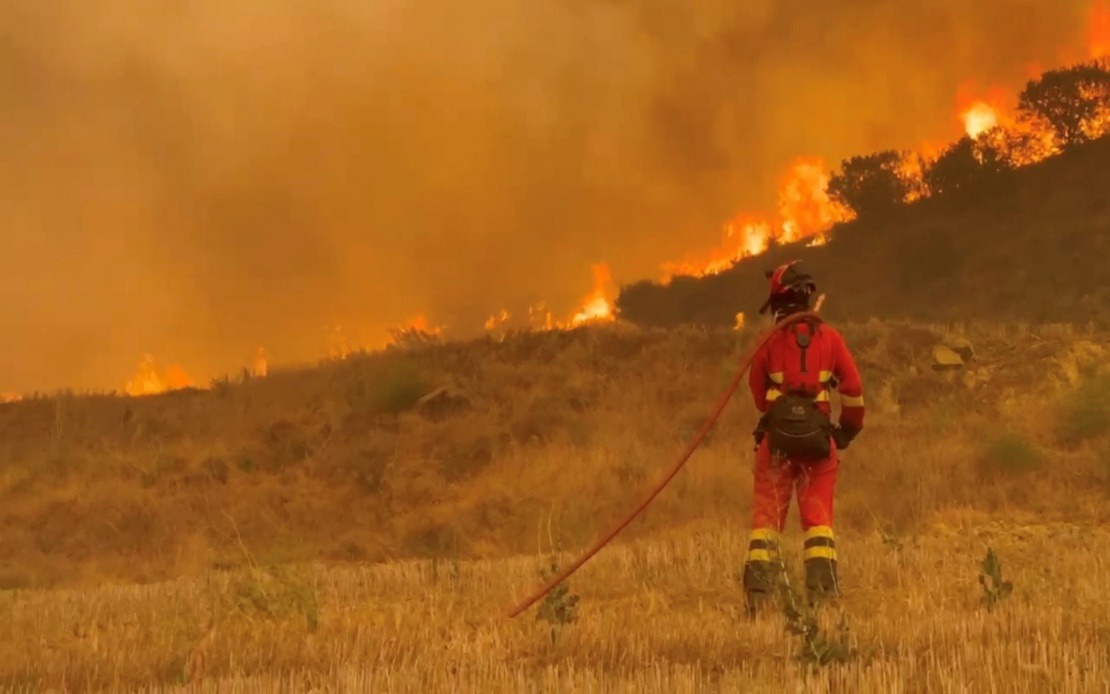
Forestry officials have been engaged in an intensive firefighting operation targeting a major wildfire in the New Forest, a landscape of significant environmental importance located in Hampshire. The scale and persistence of this fire exemplifies how higher temperatures and drier conditions create hazardous conditions for uncontrolled combustion across the countryside, straining emergency response capacity.
Meteorological data points to an alarming trajectory. The Met Office announced on Tuesday that current trends suggest the United Kingdom will record its hottest summer on record when measured by average temperature across the season. This projection, based on actual observations rather than speculation, represents a milestone in the nation's climate record and underscores the departure from historical temperature patterns that British infrastructure and institutions were designed to accommodate.
The public health dimension of this crisis became starkly apparent in recent mortality data. The UK Health Security Agency reported that Britain recorded 2,877 excess deaths during the May and June heat waves of the current year, a figure representing nearly double the 1,504 excess deaths documented during the summer of 2025. This comparison reveals that the current heat stress on the population substantially exceeds levels experienced in the recent past, suggesting that vulnerable populations are facing heightened morality risks from sustained high temperatures.
Green Party leadership has seized on the emergency as justification for more aggressive climate policy responses. Party leader Zack Polanski framed the situation as evidence that negotiation with scientific reality has become impossible, arguing instead for transformative action. His proposals encompassed taxing fossil fuel producers to fund firefighting assets, establishing community cooling facilities, implementing temperature limits for workplace operations, and halting future petroleum extraction projects in the North Sea. These suggestions represent a philosophical stance on how governments should respond to climate emergencies, positioning climate action as inseparable from addressing immediate disaster management.
For Malaysian observers and policymakers, the British experience offers cautionary insights into how developed nations are struggling to manage climate-related crises even with substantial resources and sophisticated infrastructure. The simultaneous occurrence of heat waves, wildfires, droughts and cascade health impacts demonstrates the interconnected nature of climate impacts—a lesson increasingly relevant across Southeast Asia as regional temperatures rise and weather patterns become more erratic. The British response, including emergency governmental coordination and pressure for accelerated climate policy, reflects growing recognition that incremental approaches may prove insufficient for managing future climate-related emergencies.
The situation in the United Kingdom also illustrates how climate impacts transcend sectoral boundaries, affecting agriculture, healthcare, emergency services and infrastructure simultaneously. This complexity demands integrated policy responses rather than siloed departmental approaches, a principle with direct applicability to Malaysia and other tropical nations already experiencing intensified heat stress, erratic monsoon patterns, and increased flooding severity. The UK's emergency meeting approach suggests that regional governments in Southeast Asia may need to establish similar coordination mechanisms to address escalating climate impacts before they reach crisis proportions.

