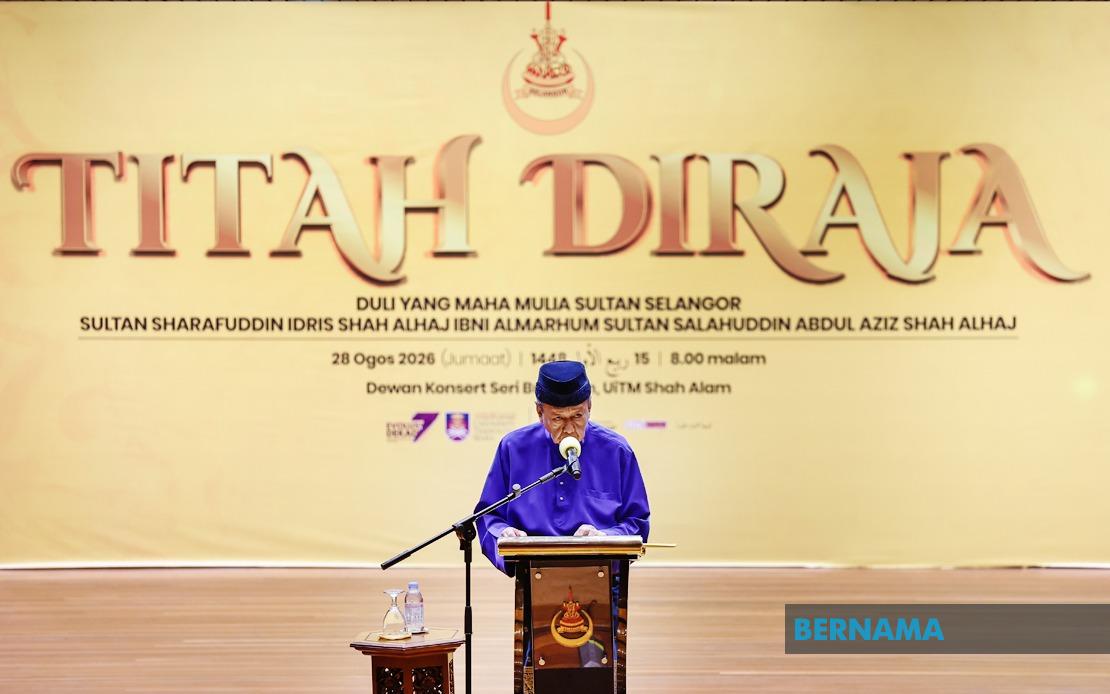
The Sultan of Selangor, Sultan Sharafuddin Idris Shah, has delivered a pointed reminder to Universiti Teknologi MARA that its fundamental purpose—serving as a ladder of opportunity for disadvantaged Malay and Bumiputera youth—must not be compromised as the institution expands and modernises. Speaking at the UiTM 2026 Royal Address in Shah Alam, His Royal Highness emphasised that despite the university's remarkable growth trajectory, the original vision of providing access to higher education for children from farming, fishing, and working-class families should remain central to institutional strategy.
UiTM's evolution over nearly six decades represents one of Malaysia's most significant educational success stories. When the institution was established in 1965, it operated with just 219 students and 11 lecturers, a modest foundation for what would become one of Southeast Asia's largest tertiary education providers. Within ten years, student numbers had climbed to approximately 7,000, accompanied by corresponding growth in academic staff and the curriculum, which expanded to around 60 programmes. This rapid expansion reflected both the institution's effectiveness and the tremendous demand for accessible higher education among the Bumiputera population.
Today's UiTM stands as a monument to this growth trajectory. The university now enrolls students across multiple campuses throughout Malaysia, produces over 40,000 graduates annually, and boasts an alumni network exceeding one million individuals. These figures underscore the institution's scale and influence within Malaysia's education ecosystem and labour market. However, the Sultan's intervention suggests that such numerical expansion alone does not guarantee fidelity to founding principles. His concern reflects broader anxieties in Malaysian society about whether institutions originally designed to uplift marginalised communities remain effectively oriented toward that objective as they professionalise and compete for prestige.
The Sultan's vision for UiTM extends beyond institutional preservation to encompass a practical mechanism for sustained support. He proposed establishing an alumni contribution scheme whereby each graduate commits to donating at least RM10 monthly or RM100 annually to their alma mater. While the sum appears modest, the Sultan characterised this not as a financial burden but as a symbolic sacrifice reflecting appreciation and institutional loyalty. Projected across the entire alumni base, such contributions could generate approximately RM100 million annually—a substantial sum that could meaningfully supplement government funding and directly support students experiencing financial hardship.
This proposal carries significant implications for Malaysian higher education policy. It represents a creative approach to sustainable funding that does not rely solely on government appropriations or commercial revenue diversification. In an era when many Southeast Asian universities face budgetary constraints and compete internationally for resources, the alumni model offers a pathway to institutional resilience. More importantly, it transforms alumni from passive recipients of a credential into active stakeholders in their institution's future, potentially strengthening affective bonds between graduates and their universities—a relationship often attenuated once academic studies conclude.
The Sultan's emphasis on the "UiTM Dihatiku" slogan—literally "UiTM in my heart"—underscores that meaningful institutional allegiance transcends nostalgia. Instead, it demands demonstrable commitment to the transformative mission that justified UiTM's original establishment. He highlighted the visible success of UiTM graduates across Malaysia's professional landscape: accountants, engineers, medical doctors, lawyers, architects, academics, entrepreneurs, civil servants, and corporate leaders. These individuals occupy positions of influence in both public and private sectors, contributing to national development and economic growth. Their professional ascent represents the mechanism through which higher education translates into broader social mobility.
This distribution of UiTM alumni across diverse occupational fields and hierarchical levels demonstrates how institutional access translates into lifetime economic opportunity. A student whose parents worked as farmers or factory workers can emerge from UiTM with qualifications enabling professional practice or business ownership, thereby transforming not only personal circumstances but often family trajectories across generations. The Sultan implicitly argued that this transformative capacity—rather than raw student numbers or prestige rankings—constitutes the true measure of UiTM's institutional success.
The Sultan's intervention arrives at a strategically important moment for Malaysian higher education. As universities increasingly emphasise research output, international rankings, and revenue generation, the tension between elite aspirations and foundational access missions intensifies. UiTM faces this tension acutely given its historical role as the primary gateway to degree-level education for students from economically disadvantaged backgrounds who might otherwise lack pathways to tertiary qualification. The institution's rapid expansion and growing sophistication could inadvertently create barriers—whether through rising living costs, competitive entrance requirements, or shifting institutional culture—that distance it from its original constituency.
The proposal for alumni-funded student assistance directly addresses this risk. By creating a dedicated revenue stream specifically designated for supporting financially vulnerable students, UiTM can maintain accessibility regardless of government appropriation fluctuations. This mechanism acknowledges an uncomfortable reality: institutional growth and excellence-focused institutional strategy, while individually positive, can combine to create environments where poorer students feel excluded or unsupported. Alumni contributions would serve as a counterbalance, ensuring that economic hardship does not prevent capable students from completing their studies.
Higher Education Minister Datuk Seri Dr Zambry Abd Kadir's presence at the event signalled government receptiveness to the Sultan's initiative. The proposal does not challenge government funding policies but rather supplements them through voluntary private contribution. This positioning makes the initiative politically viable while addressing a genuine gap in financial support. Malaysian university students from disadvantaged backgrounds frequently report choosing between essential living expenses and educational costs, sometimes dropping out despite academic capability. An effective alumni fund could materially ameliorate such constraints.
For Malaysian policymakers and university administrators, the Sultan's remarks underscore the importance of preserving inclusive access as institutions evolve. The UiTM case demonstrates that rapid growth and broader social mission are not mutually exclusive—but they require deliberate institutional choices and resource allocation. The alumni contribution scheme represents one practical mechanism for operationalising this balance. More broadly, the Sultan's intervention suggests that Malaysia's Rulers remain engaged with higher education policy and institutional governance, exercising their advisory role to emphasise values like equity and accessibility that might otherwise face pressure in contexts prioritising competitive ranking and research metrics.
The success of the proposed alumni fund would depend partly on implementation design: establishing transparent processes for contribution, clear communication about fund utilisation, and mechanisms ensuring that assistance reaches intended beneficiaries. International experience with alumni giving programmes demonstrates significant variation in participation rates based on institutional reputation, emotional connection among graduates, and perceived fund management effectiveness. UiTM's large and diverse alumni base provides favourable conditions for such a programme, particularly if participation is structured as a low-pressure, convenient process integrated into alumni engagement platforms.
Ultimately, the Sultan's address articulates a vision of UiTM that transcends institutional self-interest. Rather than defending the university against external criticism, he positions UiTM as a vehicle for advancing national development through expanding opportunity structures for citizens from disadvantaged backgrounds. This framing aligns institutional interests with broader national goals around equity, social mobility, and inclusive prosperity—priorities that should resonate across Malaysia's political spectrum and academic community. Whether through the specific alumni contribution mechanism or alternative approaches, preserving UiTM's accessibility will require sustained commitment and resources from multiple stakeholders.

