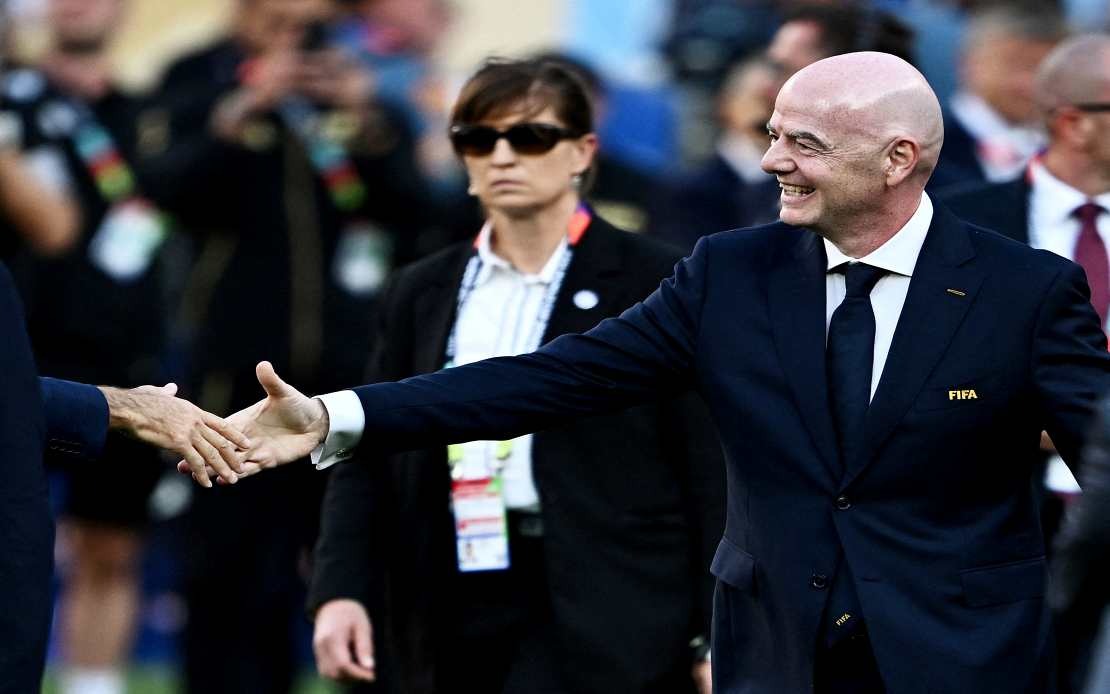
The Union of European Football Associations has escalated its dispute with FIFA to the legal arena, formally notifying President Gianni Infantino in writing that it is considering filing a lawsuit and demanding the preservation of all materials connected to a proposed sale of the organisation's commercial rights. The written notice marks a critical turning point in what has become one of football's most contentious governance battles, with Europe's football confederation signalling its determination to hold FIFA leadership accountable for what it views as a potentially damaging transaction.
The controversy centres on FIFA's announcement in early August of a scheme to raise US$4.2 billion by selling approximately 20 per cent of a newly created entity that would manage the global governing body's media and commercial rights, including lucrative World Cup broadcasting and sponsorship arrangements. The plan immediately triggered speculation that Joshua Kushner's investment foundation would be among the primary buyers, a revelation that added a political dimension to what FIFA framed purely as a financial initiative. The involvement of Kushner, brother of Trump son-in-law Jared Kushner, heightened international attention and concern among European football officials already wary of FIFA's governance structure.
Europe's football leaders responded with remarkable swiftness and unity. UEFA announced a comprehensive boycott of all FIFA competitions involving its member nations, a nuclear option in diplomatic terms that signalled the severity of European concerns about the proposal. This action represented not merely a complaint but a direct threat to FIFA's commercial operations and the integrity of its major tournaments. The boycott announcement placed immediate and immense pressure on FIFA President Infantino, who faced the prospect of competitions involving European nations—the sport's wealthiest and most prestigious confederation—being withdrawn from FIFA's portfolio.
Within days, faced with the existential threat posed by UEFA's boycott and coordinated European opposition, Infantino announced the abandonment of the commercial rights sale plan. The decision appeared to represent a significant victory for UEFA and reinforced the European confederation's ability to exercise leverage over FIFA's decisions. However, the backing down did not resolve underlying tensions. Reports indicated that the scheme would have substantially enriched Infantino himself, increasing his annual compensation from three million euros to thirty million euros, a detail that fuelled accusations that the plan represented a misuse of FIFA's resources for personal benefit rather than a genuine financial strategy.
Despite Infantino's reversal, UEFA has not accepted this as sufficient resolution. The confederation's legal notice, quoted in The Telegraph, states with formal precision: "UEFA hereby gives formal notice that it is actively considering legal action, arbitration, and/or regulatory complaints arising out of and in connection with the FFE plan proposed by FIFA and all related matters." This language signals that UEFA intends to pursue accountability through multiple channels simultaneously, keeping open all possible avenues for recourse and signalling that the matter is far from concluded.
The preservation notice itself carries significant legal weight. UEFA has demanded that Infantino and FIFA "take immediate steps to identify, locate, and preserve all documents and electronically stored information" related to the commercial rights sale proposal and all associated deliberations. This directive is standard legal practice in anticipation of litigation, as it prevents the destruction or alteration of evidence that might later be needed in court proceedings. The explicit demand suggests UEFA believes crucial evidence exists regarding how the decision was made, who benefited, and whether proper governance procedures were followed.
For Malaysian and Southeast Asian readers, this dispute carries implications beyond European football politics. FIFA's governance structure affects the entire global football community, including Southeast Asian nations competing in World Cup qualifications and seeking broadcast rights to major tournaments. If FIFA's leadership can be successfully challenged on governance grounds, it establishes a precedent for challenging other decisions that might affect non-European football nations. Moreover, the ability of wealthy European confederations to influence FIFA's direction raises questions about how less wealthy confederations from Asia, Africa, and the Americas can protect their interests within a system dominated by European financial and political power.
The legal action also reflects deeper concerns about FIFA's administrative culture. Infantino has been a controversial figure since his election in 2016, presiding over a period of significant financial and operational challenges. The attempt to sell commercial rights without transparent consultation with other major stakeholders suggests a governance approach that prioritises executive discretion over collaborative decision-making. UEFA's aggressive response indicates that even Infantino's supporters in the European confederation have reached a breaking point regarding his leadership style and decision-making processes.
The stakes for Infantino personally are substantial. If UEFA proceeds with litigation and succeeds in establishing that the commercial rights sale was pursued improperly or for personal enrichment, it could lead to his removal from office and potential legal consequences. The preservation notice indicates that UEFA has already begun building its evidentiary case, likely seeking internal FIFA communications, board minutes, financial analyses, and correspondence related to how the scheme was developed and approved. Such documents could prove crucial in establishing whether proper procedures were followed and whether Infantino disclosed potential conflicts of interest related to his proposed salary increase.
Europe's football leadership has also signalled that withdrawal of UEFA's support represents an existential threat to FIFA's authority and legitimacy. The World Cup, football's most prestigious tournament, derives substantial portions of its revenue from European broadcasting and sponsorship markets. If UEFA were to follow through on boycott threats—a scenario that remains possible should FIFA pursue similar schemes—the economic impact would be catastrophic. This dynamic gives UEFA tremendous leverage as litigation proceeds, potentially encouraging FIFA to settle disputes and adopt more transparent governance structures.
The dispute underscores broader governance challenges facing international sports organisations. Unlike national governments, which operate within constitutional frameworks and face domestic electoral accountability, organisations like FIFA operate with limited external oversight. When executive leadership pursues decisions that benefit themselves while affecting multiple stakeholder groups, the only recourse available to dissenting members is often confrontation and legal action. UEFA's aggressive stance suggests that other global sports confederations may become more willing to challenge FIFA's authority when their interests are threatened, fundamentally altering the power dynamics within international football governance.

