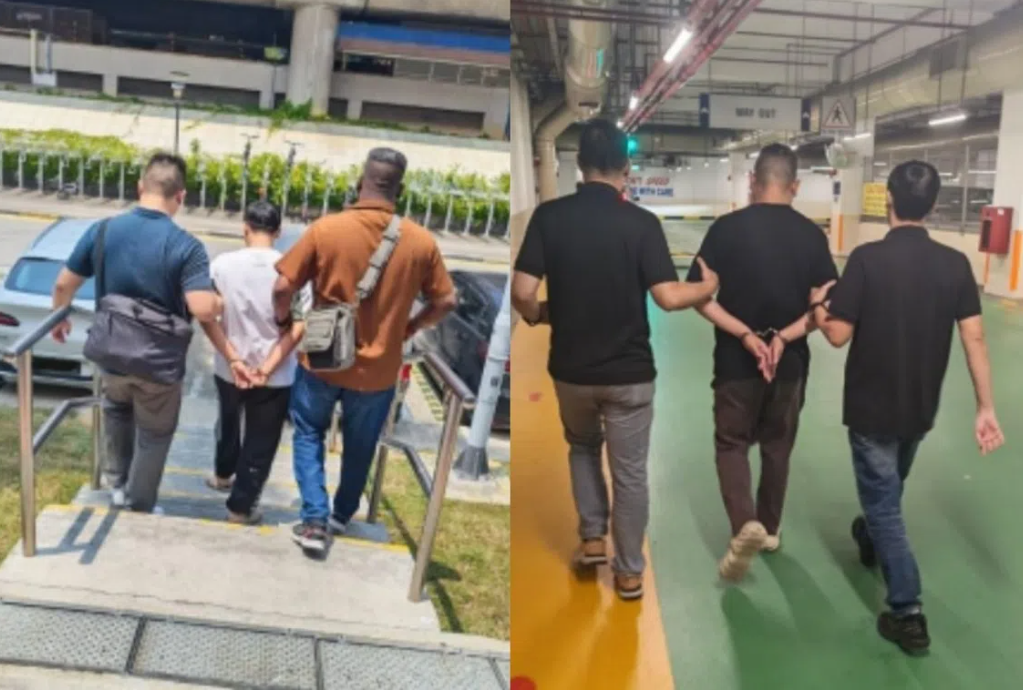
Singapore authorities have arrested two Malaysian employees of a mobile phone retail outlet as part of a coordinated crackdown on a sophisticated identity fraud operation targeting the city-state's Singpass authentication system. The two suspects, aged 25 and 47, were taken into custody on Tuesday, August 25, after an investigation by the police's Cyber Command uncovered their suspected involvement in a scheme designed to harvest compromised Singpass credentials from unsuspecting customers and convert them into fraudulent payment accounts.
The operational mechanics of the alleged scam reveal a troubling vulnerability in how personal data can be exploited at the point of customer service. Rather than relying on traditional phishing or malware techniques, the suspects allegedly leveraged their position working in a retail environment where customers naturally entrust them with sensitive information. In at least one documented instance, one of the accused offered to assist a customer updating their Singpass account details while purchasing a SIM card—a pretext that established just enough trust to gain access to login credentials, which were subsequently misused to establish a LiquidPay digital wallet account.
LiquidPay, operated by Singapore-based fintech company Liquid Group, is a widely used digital payment application that has become integrated into the island nation's expanding ecosystem of cashless transaction platforms. By creating accounts in the names of legitimate Singpass holders without their knowledge or consent, the suspects provided a critical infrastructure through which stolen scam proceeds could be channeled and temporarily held before being withdrawn or transferred onward. The accounts functioned as a crucial node in a larger criminal pipeline, separating the initial fraudsters from the final beneficiaries of stolen funds.
Investigations have revealed a troubling scope to the operation. Authorities identified more than 170 Singaporean citizens and foreign workers whose Singpass accounts had been compromised in connection with similar fraudulent activity. These unauthorized credentials were weaponized to register more than 160 additional LiquidPay accounts—meaning that multiple accounts could be created from a single compromised identity, exponentially multiplying the reach of the scheme. This systematic approach suggests not merely opportunistic fraud but rather a calculated operation designed to maximize the number of money laundering conduits available to the broader criminal network.
The financial implications became apparent when police examined the LiquidPay accounts that had received transfers flagged as originating from various scam operations. Since early March 2026, at least 20 Singapore citizens and work permit holders have been investigated for their involvement in registering these fraudulent LiquidPay accounts. The money that flowed through these accounts totaled at least S$110,063, representing verified scam proceeds that had successfully made it past initial detection and into the hands of the criminal network. The actual total amount victimized through this channel is likely considerably higher, as many scam recipients may not have been caught or identified.
The investigation represents a significant coordinated effort between multiple Singapore government agencies. The police's Cyber Command, specializing in digital crime investigations, led the operation with crucial support from the Singpass Trust & Safety team housed within the Government Technology Agency of Singapore. This inter-agency coordination underscores the growing sophistication required to combat identity theft operations that exploit both human vulnerabilities and digital infrastructure. The Singpass system, which serves as Singapore's primary national digital identity platform, had become the unexpected weak point through which criminals could penetrate regulated financial applications.
The legal consequences facing the two Malaysian suspects are severe. They are scheduled to be charged in court on August 27 with assisting another to retain benefits from criminal conduct—a charge that reflects their role as facilitators within a larger syndicate structure rather than as the architects of the overall fraud scheme. The offense carries a potential maximum prison sentence of ten years coupled with a fine reaching S$500,000, or both penalties simultaneously. This enhanced sentencing reflects Singapore's determination to treat identity fraud at the facilitator level as a serious organizational crime rather than a minor financial transgression.
The investigation into the Singpass compromise remains ongoing, with police now examining the broader issue of account holders who may have voluntarily surrendered their credentials to third parties. While the two Malaysian suspects actively deceived customers, separate offences are being pursued against Singpass users who either negligently or intentionally allowed their login details to be accessed by others. Those found guilty of relinquishing their Singpass credentials face maximum penalties of three years imprisonment and S$10,000 in fines, representing a distinct legal pathway designed to deter careless security practices among account holders themselves.
For Malaysian readers and businesses, this case carries several important implications. The two arrested individuals operated in the retail telecommunications sector, a field with significant cross-border employment and regular customer transactions. The exploitation occurred not through sophisticated hacking but through interpersonal deception at the point of service—a vulnerability that exists in similar retail environments across Southeast Asia. Malaysian citizens holding Singpass accounts or conducting business with Singapore should be alerted to the risks of sharing account credentials with service providers, even in apparently legitimate contexts. The incident also highlights how digital payment platforms like LiquidPay, while beneficial for financial inclusion, can become unwitting infrastructure for organized crime when identity verification controls prove inadequate.
The case demonstrates a troubling evolution in organized crime tactics within the region. Rather than attacking digital systems directly, sophisticated criminal networks are increasingly targeting the human elements within those systems—the employees and customers whose trust and access can be leveraged to bypass technological safeguards. Singapore's swift investigation and prosecution signal strong deterrence against such operations, yet the sheer scale of compromised accounts suggests that detection mechanisms may lag significantly behind the pace of fraud exploitation. As digital commerce expands throughout Southeast Asia, this incident serves as a cautionary reminder that security infrastructure must account not only for technical vulnerabilities but also for the manipulation of human trust and social engineering tactics that remain remarkably effective across jurisdictions.

