Two hundred alumni from the National Service Training Programme, known locally as PLKN 3.0, will take part in the National Day parade scheduled for August 31 in Putrajaya, bringing heightened visibility to the government's revitalised national service initiative. The appearance represents a significant milestone, as it marks the inaugural occasion that graduates of the restructured PLKN scheme will march before the King, Prime Minister, Cabinet members, and assembled crowds during Malaysia's premier national celebration.
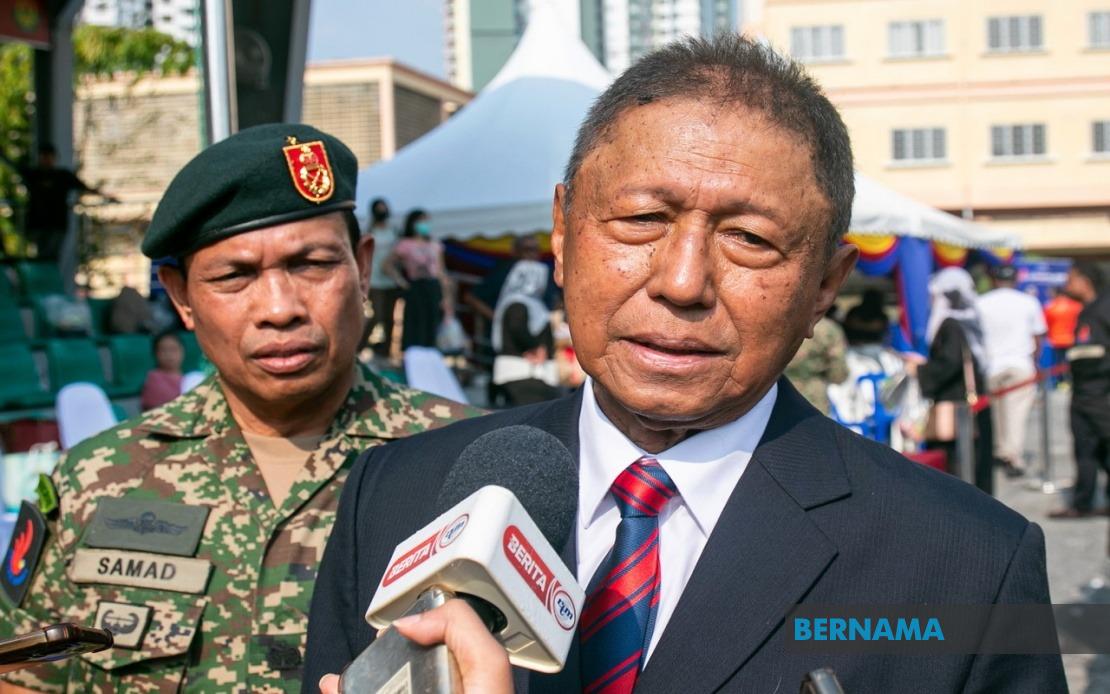
According to General (Retd) Tan Sri Dr Abdul Aziz Zainal, chairman of the National Service Training Council (MLKN), the selected contingent commenced intensive rehearsals in Putrajaya from August 25 onwards to prepare for the high-profile parade. This strategic deployment aims to demonstrate to the broader Malaysian community the quality and discipline instilled through the programme's training regimen, positioning the young participants as exemplars of national pride and military bearing.
The timing aligns with broader government efforts to rehabilitate public perception of the PLKN following its original suspension and subsequent overhaul. By featuring graduates prominently during National Day festivities, the administration seeks to underscore tangible outcomes from the programme, reinforcing messaging about youth development and patriotic commitment that underpins the restructured scheme.
In a parallel development announced on the same occasion, General Zainal revealed that 795 trainees successfully graduated from PLKN 3.0 Series 3/2026, which commenced on July 11 and concluded in late August. The cohort comprised 106 female recruits from Camp 504 AW in Bukit Keteri, Perlis; 442 male trainees from Camp 505 AW in Pekan, Pahang; and 247 female participants from Camp 515 AW in Kuala Lumpur. This distribution reflects the programme's efforts to balance gender representation across its training facilities and ensure equitable participation across Malaysian states.
Three standout performers emerged from the recently completed series, each selected as their respective camp's finest trainee. An'nur Najiha Muhammad, 18, from Ipoh earned distinction at the Perlis facility, whilst Muhammad Firdaus Muhammad Said, 18, from Kuantan distinguished himself at the Pahang camp. Cheyenne Alessandra Michael, 18, from Kuala Lumpur, claimed top honours at the capital's training centre. Their recognition signals the programme's capacity to identify and develop exceptional young talent, providing a mechanism for meritocratic advancement within the broader framework.
Expanding operational capacity emerges as a critical priority for programme administrators looking ahead. General Zainal announced intentions to substantially increase participant numbers in PLKN 3.0 Series 4/2026 through the establishment of additional training facilities and partnerships with existing military infrastructure. By integrating camps operated by the Malaysian Volunteer Corps Department (RELA) into the broader training network, the council projects capacity to accommodate more than 1,000 trainees simultaneously, nearly doubling previous throughput levels.
Five new dedicated camps will commence operations as part of this expansion initiative. These include Camp 503 in Hutan Melintang, Perak; Camp 506 in Sungai Durian, Kelantan; and Camp 513 in Bukit Pinang, Kedah, complemented by two additional facilities operated by Public Training Institutes in Sungai Petani, Kedah, and Tuaran, Sabah, functioning as auxiliary venues. This geographical diversification extends programme accessibility beyond the peninsula's core regions, bringing PLKN 3.0 opportunities to Sabah for the first time and strengthening representation across Malaysia's eastern and northern territories.
The enhancement strategy reflects administrative confidence in the revamped programme's trajectory and recognition that broader participation generates greater stakeholder investment in national service ideals. Augmenting trainer capacity alongside facility expansion represents an essential parallel consideration, as programme quality ultimately depends on instructor availability and expertise deployed across dispersed training locations.
Cheyenne Alessandra Michael's reflections on her training experience illuminate the subjective transformations the programme seeks to cultivate in participating youth. Having volunteered specifically to explore a potential military career trajectory, she characterised her 45-day immersion as a pivotal experience that elevated her patriotic consciousness and deepened appreciation for armed forces contributions to national sovereignty. Her daily proximity to territorial army personnel at the Kuala Lumpur camp created organic opportunities for mentorship and cultural osmosis, exposing her to military professionalism and dedication in immediate, tangible ways.
Beyond career aspirations, Alessandra articulated deeper ideological consolidation, describing heightened gratitude for historical sacrifices underlying national independence and crystallising understanding of younger generations' custodial responsibilities toward maintaining societal peace and stability. Such testimony, whilst anecdotal, suggests the programme functions effectively as a patriotic consciousness-raising mechanism, operationalising abstract national values through lived experience and peer solidarity forged during the intensive training cycle.
For Malaysian observers and policymakers, the PLKN 3.0 trajectory carries implications extending beyond immediate youth development concerns. The scheme's expansion and integration with existing paramilitary infrastructure signals the administration's commitment to large-scale civic mobilisation programmes and demonstrates evolving approaches toward binding diverse youth cohorts into institutionalised frameworks emphasising discipline, patriotism, and collective national purpose. Successful programme scaling would position Malaysia alongside regional counterparts implementing compulsory or quasi-mandatory service initiatives, contributing to regional debate regarding appropriate mechanisms for cultivating national consciousness among digitally-native, increasingly cosmopolitan younger populations.

