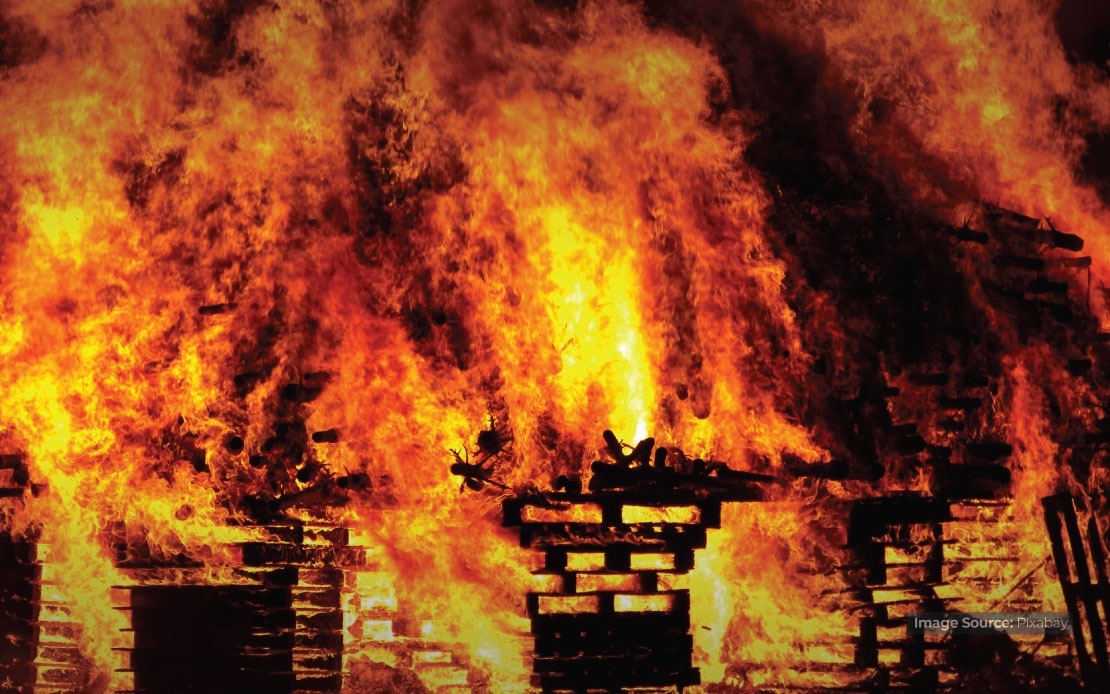
The death toll from a major fire incident near Bordeaux Airport in southwestern France has reached two, as confirmed by French Interior Minister Laurent Nuñez during a parliamentary session in Paris on Tuesday. Both firefighters perished while battling the blaze that engulfed structures adjacent to the airport, marking a tragic loss in the line of duty during what has been an exceptionally challenging fire season across the region.
According to local sources including the regional newspaper Sud Ouest, the fire initially ignited on land bordering the airport's long-term parking facility. The exact cause of the fire has not been disclosed, though investigators are likely examining the circumstances surrounding its outbreak. The location near the parking area suggests the flames may have spread rapidly through accessible terrain before being detected by airport authorities and emergency responders.
The Gironde region, which encompasses Bordeaux as its capital, faces extraordinary environmental pressures this summer. The entire area remains under France's most severe red-level wildfire alert, reflecting meteorological conditions that dramatically elevate the danger of forest fires breaking out and spreading uncontrollably. This alert status means that firefighting services across the region are already stretched thin, managing multiple incidents and maintaining heightened readiness for potential emergency situations that could develop with little warning.
Bordeaux Airport, one of France's significant regional aviation hubs, experienced considerable operational disruption as a direct consequence of the incident. Departure operations were suspended temporarily as emergency crews worked to contain the blaze and ensure passenger and staff safety. Incoming flights, however, were permitted to continue their landing procedures, allowing some degree of operational continuity. An evening departure scheduled to serve Munich was anticipated to proceed as originally planned once conditions improved, suggesting that the situation did not necessitate a complete airport closure.
The firefighting response mobilized multiple resources to combat the spreading fire. Beyond the local fire service's standard units, personnel from the airport's dedicated firefighting department joined the effort, bringing specialised equipment and familiarity with the airport's infrastructure. Additionally, aerial firefighting assets were deployed to assist ground crews in containing the flames and preventing further expansion. The combination of ground and aerial resources highlighted the severity of the situation and the determination to prevent the incident from escalating further.
The scale of the fire became visually apparent to residents across Bordeaux city itself, where massive plumes of smoke rose conspicuously into the sky as emergency crews persisted in their containment efforts. Such visible smoke columns, often stretching high into the atmosphere, serve as stark reminders of the intensity involved in major fire incidents and the substantial resources required to bring them under control. For residents in the surrounding area, the sight would have prompted immediate awareness that a significant emergency was underway.
The tragedy occurring amid France's elevated wildfire season underscores the mounting risks that emergency personnel face across the country. Firefighters operating during periods of extreme fire danger contend with unpredictable conditions, rapid fire spread, and challenging terrain that can develop dangerous situations within moments. The deaths near Bordeaux Airport represent not isolated incidents but rather reflect systemic pressures on emergency services across southern France as climate conditions continue driving seasonal fire risks to historically elevated levels.
For the aviation industry in the region, the incident serves as a reminder of the complex emergency management protocols required at major airports. The balance between maintaining flight operations and ensuring absolute safety during unexpected crises demands careful coordination between airport management, air traffic control, and emergency services. The successful prevention of complete airport closure while containing a serious fire demonstrates effective interagency coordination, though at considerable human cost.
The incident also carries broader implications for emergency preparedness and resource allocation across France's transportation infrastructure. As extreme weather events become more frequent and intense, investments in firefighting capabilities, early warning systems, and personnel training take on heightened urgency. Regional airports, particularly those situated near high-risk wildfire zones, must continually reassess their emergency protocols and ensure adequate coordination with local fire services.

