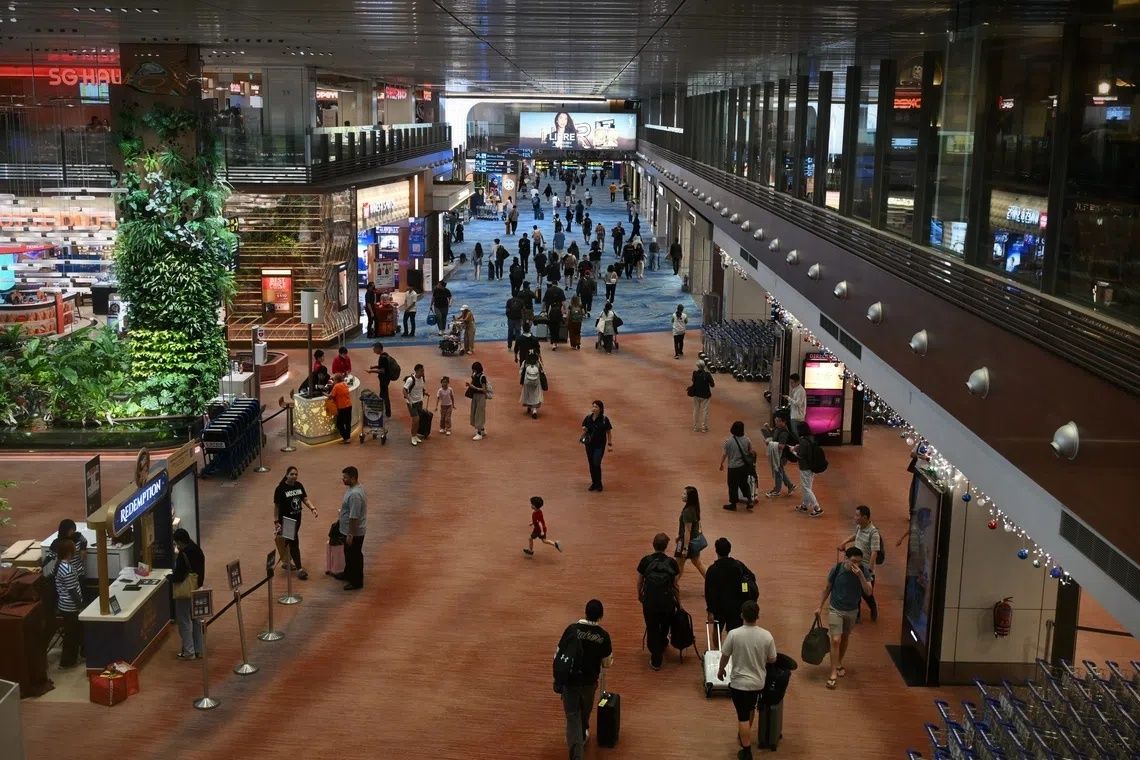
Singapore authorities have detained two foreign nationals in connection with perfume thefts at Changi Airport, highlighting the sophisticated surveillance measures now deployed across one of Asia's busiest aviation hubs. The 37-year-old Australian man and a 50-year-old American suspect each face theft charges, with both men scheduled to appear in court on August 17. The cases underscore how airport retail security has evolved, with closed-circuit television systems proving instrumental in tracking down offenders even months after they have left the country.
The incident involving the Australian traveller occurred on November 19, 2025, when a retail assistant at a perfume outlet in the transit area of Changi Airport Terminal 2 discovered that two boxes of fragrances valued at approximately $430 had vanished from a display shelf. Upon reviewing security recordings, authorities determined that the man had removed the items at 4:50 pm and departed the store without completing a purchase. However, the suspect managed to leave Singapore before police could intervene, seemingly escaping accountability for the theft. This changed dramatically when he transited through the airport again on August 4—more than eight months later—at which point officers finally apprehended him.
The second case unfolded with markedly different circumstances, as authorities achieved an immediate intervention before the American suspect could board his departing flight. Police received an alert at approximately 1:25 am on August 5 when staff at a perfume retailer in the transit zone of Terminal 1 noticed a missing box of fragrance valued at over $310. Video evidence revealed that the American man had taken the item around 12:40 am without paying. Before he could proceed to his gate, airport security detained him, preventing his escape.
Subsequent examination of CCTV footage from multiple locations in the transit area revealed that the American suspect had engaged in a more extensive pattern of theft. Besides the initial perfume box seized from the Terminal 1 outlet, investigators discovered that he had stolen an additional box of fragrance valued at approximately $170 from a second store, as well as a perfume tester bottle priced at more than $230 from a third retailer. The cumulative value of items recovered from his possession exceeded $717. This progression from single incidents to discovered patterns illustrates how modern airport policing connects disparate thefts through forensic video analysis.
The offence of theft in a dwelling—defined legally as theft committed within any building or residence, a category that encompasses airport retail spaces—carries substantial penalties under Singapore law. Conviction exposes offenders to imprisonment of up to seven years, monetary fines, or a combination of both. These sentences reflect the seriousness with which Singapore treats commercial theft, particularly in high-traffic facilities where such crimes undermine retail operations and passenger confidence.
Associate Commissioner of Police M. Malathi commented on the arrests in a statement released on August 16, emphasising the police force's resolute approach toward addressing shop theft across the island nation. He characterised the incidents as evidence of how technological advancement has fundamentally altered law enforcement's capacity to detect and prosecute retail crime. Malathi noted that surveillance infrastructure, now ubiquitously deployed by merchants and airport authorities, has substantially enhanced detection capabilities.
The officer further highlighted a crucial deterrent element: even when offenders initially evade immediate detection and cross borders, ongoing investigations typically result in eventual identification and arrest. This message carries particular significance for travellers passing through Southeast Asian airports, where security systems have become increasingly interconnected. The eight-month gap between the Australian man's theft and his apprehension demonstrates that airports maintain records and cooperative protocols that extend far beyond a single transit.
Changi Airport's police operations unit has reaffirmed its commitment to collaborating with retail tenants and airport management to prevent future theft incidents. These partnerships involve regular security briefings, enhanced monitoring in high-value merchandise areas, and rapid response protocols when suspicious activity is detected. The transit zones of Changi, which cater to millions of passengers annually, present particular challenges for loss prevention, as transiting passengers may believe that theft in airport retail spaces carries lower consequences than shoplifting in terrestrial stores.
For Malaysian travellers and airport operators across the region, these cases offer instructive insights into contemporary retail security. Changi Airport's operational efficiency in apprehending the American suspect before departure illustrates how integrated communication between retail staff, security personnel, and law enforcement can prevent crime in real time. Conversely, the extended investigation into the Australian man's case demonstrates that airports maintain sophisticated mechanisms for tracking offenders across international borders and months-long intervals.
The incidents also reflect broader patterns in airport retail crime, where premium products like designer perfumes attract theft due to their high value-to-weight ratio and relative ease of concealment. Retail outlets within airport terminals represent particularly attractive targets for opportunistic thieves, as the transient nature of the passenger population and compressed timeframes can create perception of reduced enforcement risk. However, as both cases demonstrate, this perception increasingly contradicts reality in major hubs like Changi.
The prosecution of these two men contributes to a documented deterrent effect in airport retail security. When high-profile cases result in court appearances and potential jail sentences, information circulates within traveller communities and serves to discourage similar offences. Singapore's consistent approach to retail crime prosecution, combined with technological sophistication in detection, has established the island nation as comparatively strict in addressing such matters relative to other major regional airports.

