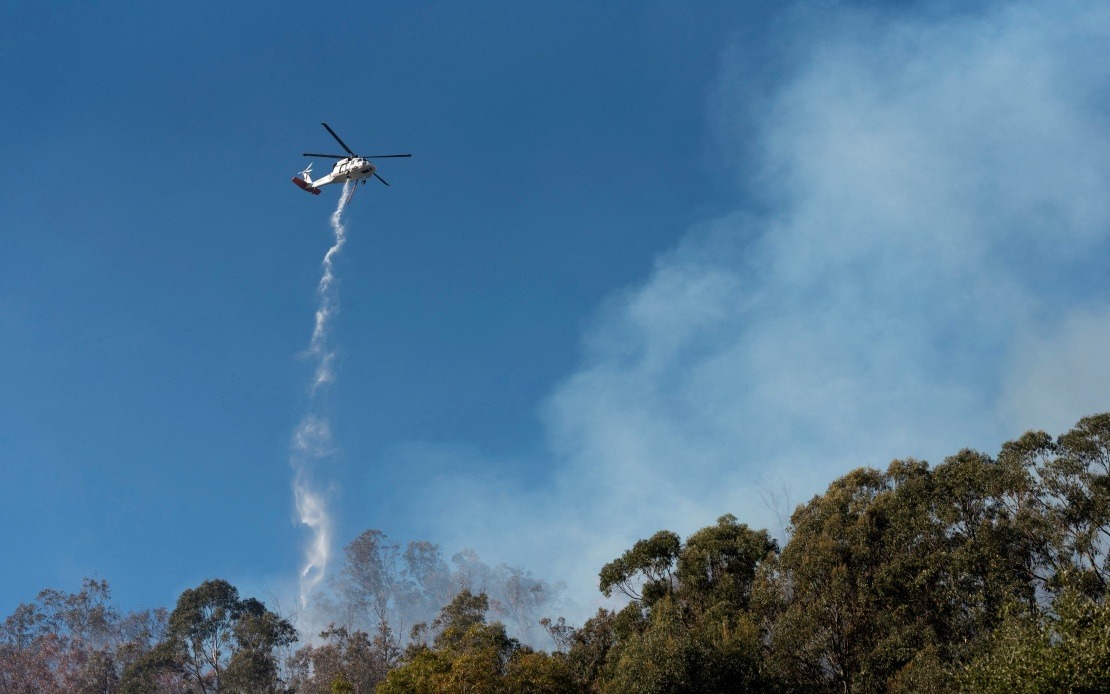
A helicopter supporting wildfire suppression efforts in central Utah has claimed two lives, authorities confirmed Saturday, marking another tragedy in the hazardous profession of aerial firefighting. The Sikorsky S-64 aircraft went down near Richfield on Friday morning while engaged in operations against the Widemouth 2 Fire, one of Utah's most significant wildfires this season. Both the pilot and a crew member perished in the accident, though officials have not yet released their identities. The Federal Aviation Administration logged the crash at approximately 10 am local time, prompting an immediate investigation by the National Transportation Safety Board into the circumstances surrounding the loss.
The helicopter had been operating under contract with the U.S. Forest Service when the accident occurred. The National Interagency Fire Centre confirmed the connection between the aircraft and suppression activities targeting the sprawling Widemouth 2 Fire. Initial reports suggest the aircraft descended into remote, mountainous terrain under conditions that remain unclear, though preliminary information indicates it happened during active firefighting operations. The exact cause of the crash is still under investigation, but the challenging geography of central Utah's landscape has complicated efforts to access the wreckage and gather evidence from the remote site.
Several factors have impeded the response and recovery operation following the crash. The very wildfire the helicopter was fighting created treacherous conditions around the crash site, with active flames and dangerous smoke preventing immediate access by ground crews and emergency responders. The impact itself sparked additional fires in the surrounding area, further expanding the danger zone and limiting the ability of rescuers to approach safely. Officials have prioritized the safety of personnel working in the region, meaning that reaching and assessing the wreckage has necessarily proceeded at a measured pace despite the urgency of the situation.
Governor Spencer Cox of Utah used the tragedy to underline the extraordinary risks assumed by those engaged in wildland firefighting. In a statement released Saturday, the governor characterised wildland firefighting as one of the most perilous professions globally, emphasising that the two fatalities represented a stark reminder of the courage required to protect communities and natural resources. He called on the public to afford investigators and emergency personnel the space and patience necessary to conduct a thorough and safe response. The governor's remarks resonated with the broader recognition that wildfire suppression—whether conducted from the ground or from the air—represents work that consistently places individuals in life-threatening situations.
The Widemouth 2 Fire itself emerged as a significant threat to the region during the final week of July. Lightning strikes ignited dry vegetation across timber, brush, and grassland on the Fishlake National Forest near the small community of Kanosh in central Utah on July 27. Unfavourable weather conditions—including sustained heat, low humidity, and erratic wind patterns—allowed the blaze to expand with remarkable speed across the landscape. The rapid growth forced residents to evacuate their homes and destroyed at least six structures in surrounding areas, compounding the disaster beyond the loss of wild landscape.
As of the latest reporting, the Widemouth 2 Fire had consumed more than 114,000 acres, equivalent to approximately 461 square kilometres of terrain. Containment efforts had progressed to 24 percent by the time of the helicopter crash, indicating that the majority of the fire remained beyond the ability of crews to control its spread. The sheer scale of the burned area underscores why aircraft support—including water and retardant drops from helicopters—remains essential to battling such massive incidents across Utah and the broader western United States. The loss of the Sikorsky S-64 removes critical capability from the ongoing suppression effort precisely when resources are stretched thin across the region.
For Malaysia and Southeast Asian readers, the Utah tragedy offers important context about the escalating wildfire challenges facing North America's western regions. Climate patterns that produce extended drought and elevated temperatures create conditions reminiscent of those experienced periodically across Southeast Asia, where transboundary haze and landscape fires periodically disrupt air quality and daily life. The willingness of trained personnel to undertake such dangerous work—and the toll it sometimes exacts—mirrors the commitment of firefighting services across the region, from Indonesia's efforts to combat peatland fires to Malaysia's responses to transboundary smoke events.
The incident also reflects broader infrastructure challenges inherent in responding to environmental disasters in remote areas. The Fishlake National Forest's rugged terrain mirrors conditions found across vast stretches of Southeast Asia, where difficult geography impedes response efforts and recovery operations. The complications encountered in reaching the Utah crash site—active fire, hazardous smoke, unstable ground—represent common obstacles facing rescue and recovery teams throughout the region when environmental disasters strike remote communities and natural areas.
Wildfire management and aerial support operations have become increasingly sophisticated globally, yet the fundamental risk to personnel remains substantial. The two deaths near Richfield serve as a sobering reminder that despite advances in equipment, training, and coordination, wildfire suppression remains extraordinarily hazardous work. As climate change patterns intensify fire seasons across multiple continents, the demands on aerial firefighting resources continue to mount, placing greater pressure on personnel who undertake this critical but dangerous work.

