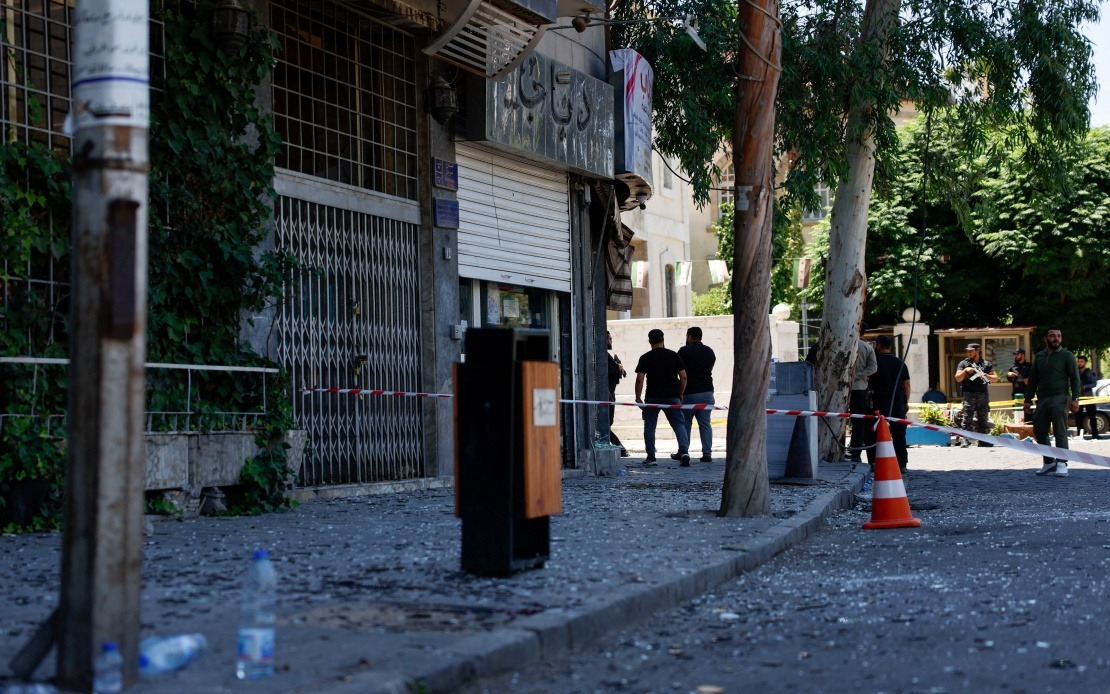
A pair of explosive devices detonated in Damascus on Tuesday, leaving at least 18 people injured including four members of the Syrian police force, according to statements released by the country's Interior Ministry. The incidents occurred in the Syrian capital during a high-profile visit by French President Emmanuel Macron, though official sources confirmed the visiting leader sustained no harm in the blasts.
According to monitoring by the Syrian Observatory for Human Rights, a London-based organization that tracks conflict-related incidents across Syria, the sequence of explosions unfolded rapidly. A first blast was followed in quick succession by a second, considerably more powerful detonation, both occurring in the vicinity of the accommodation where Macron was reported to be staying during his time in the country. The rapid-fire nature of the incidents, coupled with their proximity to the presidential visitor's lodgings, sparked immediate concern about the security situation in the capital.
The Élysée Palace, the official residence and workplace of the French head of state, moved swiftly to dispel concerns about Macron's safety. A formal confirmation emerged that the president had not been affected by either explosion. This statement provided reassurance both to French officials and to the international community observing the unfolding events. The incident nonetheless underscored the ongoing security risks present in Damascus, even as diplomatic engagement proceeds at high levels.
Macron's arrival in Syria on Monday evening represented a significant diplomatic development, as he became the first leader from any European Union nation to set foot in the country since 2010. The visit carried considerable symbolic weight, signifying a potential shift in international relations with Damascus and reflecting France's independent diplomatic positioning in Middle Eastern affairs. The scheduling of extensive bilateral discussions between French and Syrian delegations highlighted the substantive agenda underlying the visit.
Following the explosions, emergency response personnel mobilized quickly to attend to the wounded. Ambulances and medical staff descended on the affected area to provide immediate care to those injured in the blasts. The rapid deployment of these resources reflected the readiness of Damascus emergency services to respond to such incidents, though the exact nature and severity of injuries sustained by the 18 people involved remained subject to further medical assessment.
Security personnel established perimeters around the blast sites, controlling access to the affected zones and conducting investigations into the nature and origin of the explosive devices. The establishment of cordons reflected standard security protocols implemented in response to such incidents, aimed at preserving evidence and preventing further casualties. The heightened security presence in central Damascus during the immediate aftermath added to the atmosphere of alarm that rippled through the capital's population.
Despite the security incidents, Macron maintained his diplomatic schedule. Rather than being confined to his hotel following the explosions, the French president transferred to the Syrian presidential palace, where he continued to engage in substantive negotiations with his Syrian counterpart and accompanying delegations. This decision to proceed with planned discussions, rather than curtailing the visit, signalled both France's commitment to the diplomatic engagement and confidence in Syrian authorities' ability to maintain security for the visiting dignitary.
The bombing incidents inevitably raised questions about security conditions in Damascus and the broader stability situation in Syria. While the country has seen dramatic improvements in security since the height of its civil conflict, sporadic incidents continue to punctuate the capital's daily life. The occurrence of explosions during a high-level diplomatic visit highlighted the persistent challenges facing Syrian authorities in fully stabilizing the environment, even as certain areas have achieved relative normalcy.
For Malaysia and other Southeast Asian nations, the incident underscores the complex security environment that exists in parts of the Middle East and the risks associated with diplomatic engagement in regions still experiencing residual conflict-related challenges. Malaysian officials and citizens conducting business or diplomatic activities in the wider region must remain cognisant of such security considerations when planning travel or engagements in volatile areas. The incident also illustrates how international diplomatic initiatives can proceed even amid security incidents, provided appropriate precautions and contingency planning are implemented.

