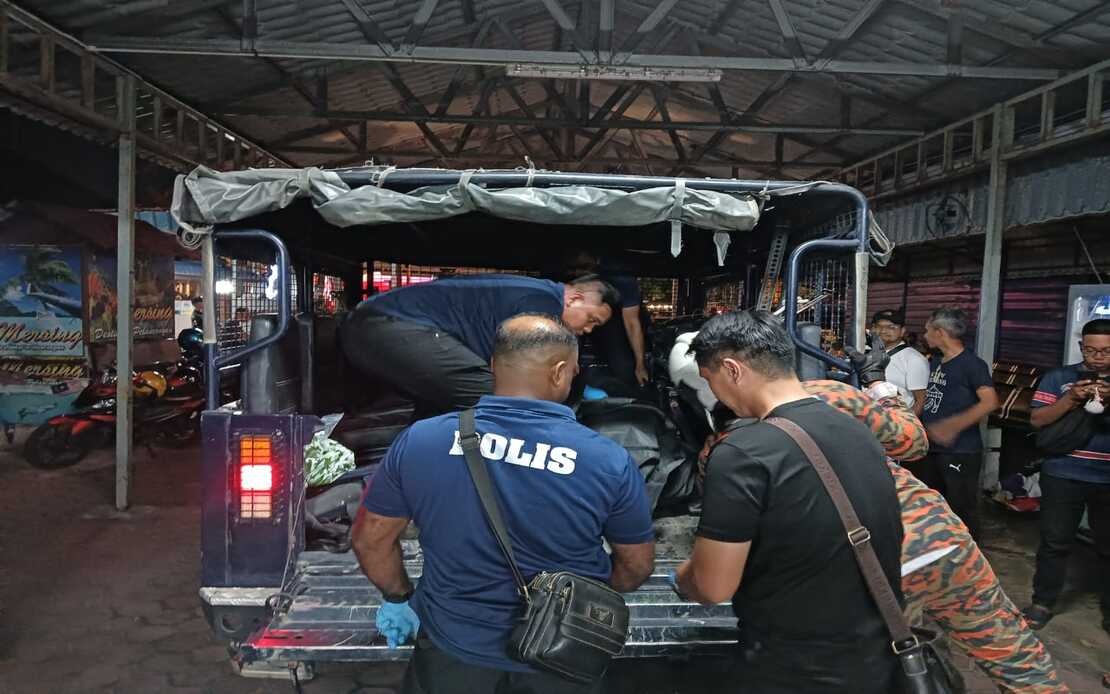
A devastating maritime collision near the Sungai Mersing estuary in Mersing, Johor, has claimed two lives and hospitalized four others. The incident unfolded late on Saturday evening when emergency responders were alerted to the accident involving two boats at approximately 9:04 pm. The tragedy underscores ongoing safety concerns around busy waterways in Malaysia's eastern coastal regions, where maritime traffic remains substantial but regulatory oversight remains inconsistent.
The Fire and Rescue Department (JBPM) Operations Control Centre immediately mobilized resources upon receiving the distress call. A rapid-response team comprising nine personnel, including a Fire Rescue Tender and a Fire Response Vehicle (FRV), was dispatched from the nearby Mersing Fire and Rescue Station. The swift deployment demonstrated the efficiency of emergency protocols in Johor's coastal areas, though questions about preventative measures and vessel compliance standards may emerge as investigations proceed.
Upon arriving at Mersing Jetty, the operations team confirmed that the two vessels had indeed collided. Medical personnel on scene made the grim determination that two victims had succumbed to their injuries at the point of impact or shortly thereafter. These casualties were subsequently transferred to police custody for formal identification and documentation, initiating the wider investigative process that typically follows fatal water-based incidents in Malaysia.
The four remaining survivors sustained varying degrees of injury from the collision's impact. All four were transported to medical facilities where they continued receiving active treatment as emergency crews worked to stabilize their conditions. The nature and severity of these injuries have not been disclosed publicly at this stage, leaving uncertainty about their prognosis and long-term recovery prospects.
Mersing District Police Chief Supt Abdul Razak Abdullah Sani confirmed the incident's occurrence and acknowledged that formal investigations remain underway. The police force is responsible for determining the circumstances leading to the collision, establishing any possible violations of maritime regulations, and potentially identifying criminal negligence or procedural breaches. Authorities indicated that a comprehensive media statement would follow once preliminary findings had been compiled and verified.
This collision represents a significant maritime safety incident for the Sungai Mersing area, a region where commercial fishing operations, tourist transport services, and local ferry traffic converge. The estuary environment presents distinct navigational challenges including tidal variations, restricted visibility during evening hours, and congested waterway conditions that can amplify accident risks if vessels operate without adequate safety protocols or crew training.
Malaysia's maritime accident statistics have drawn increasing scrutiny from regional safety organizations and insurance bodies, particularly concerning incidents in busy coastal zones. The Sungai Mersing accident will likely prompt discussions about strengthening enforcement of existing maritime regulations, improving vessel maintenance standards, and enhancing navigational safety awareness among boat operators throughout Johor's extensive waterway network.
The implications extend beyond this single tragedy to encompass broader questions about maritime governance in Southeast Asia. Tourist industries relying on boat operations in Malaysian waters, commercial fishing enterprises, and ferry services connecting island communities all depend on robust safety frameworks. This incident serves as a stark reminder that regulatory gaps or inadequate crew training can transform routine maritime operations into catastrophic events within moments.
For the bereaved families and injured survivors, this collision represents an abrupt and devastating disruption to their lives. The investigation process will necessarily be thorough, examining vessel maintenance records, crew qualifications, weather conditions, navigation equipment functionality, and adherence to maritime traffic separation schemes. Such detailed analysis typically reveals multiple contributing factors rather than single causative events, offering opportunities for systemic improvements across Malaysia's maritime sector.
As rescue and investigative operations continue, attention will increasingly focus on whether existing maritime safety protocols were adequate, whether they were properly implemented, and what additional measures might prevent similar tragedies. The incident underscores the persistent vulnerability of coastal communities to water-based accidents and the continuing need for investment in maritime safety infrastructure, training programs, and regulatory enforcement mechanisms throughout Malaysia's extensive archipelago and waterway systems.

