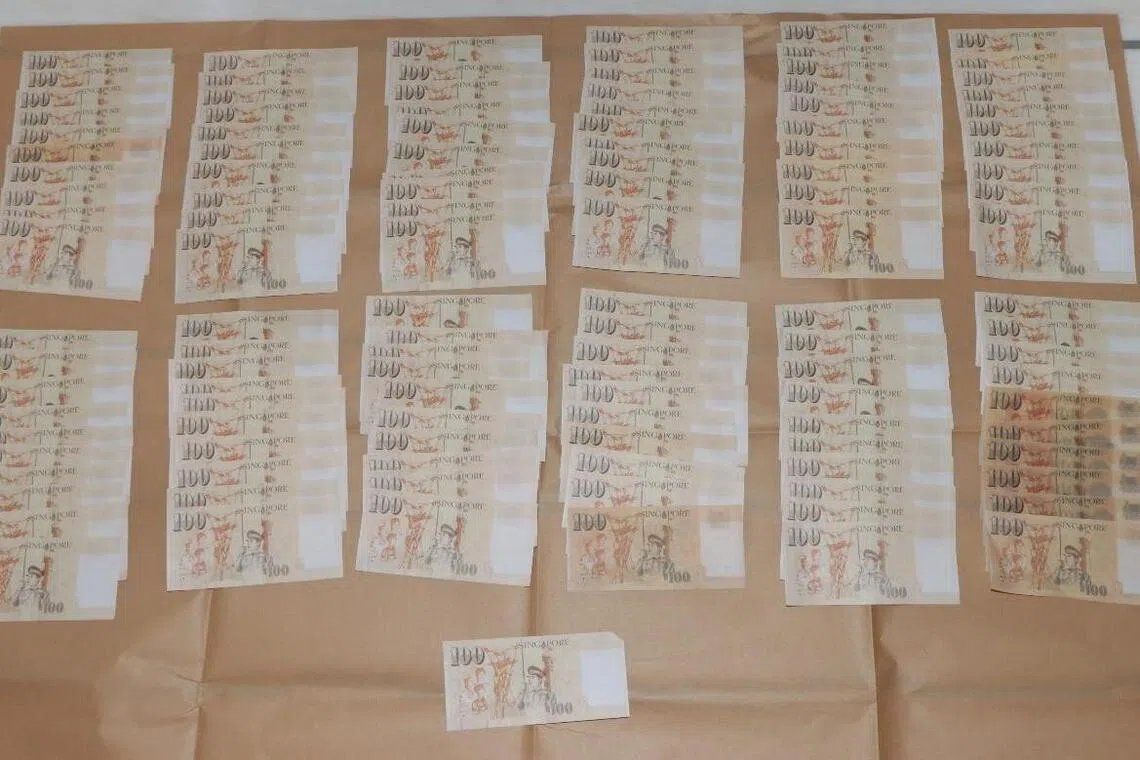
Singapore's police force has moved to prosecute two Chinese nationals suspected of orchestrating a currency counterfeiting operation that came to light when an attempt was made to exchange fake notes at one of the island's most prominent casinos. The case highlights the ongoing challenge authorities across Southeast Asia face in combating sophisticated document fraud schemes targeting regional financial systems. The male suspect, aged 33, and his female counterpart, 25, are scheduled to appear in court on August 26 to face charges relating to their alleged conspiracy to produce counterfeit Singapore currency notes.
The operation unravelled on the morning of August 24 when casino staff at Marina Bay Sands detected irregularities during a routine transaction. A man approached the cage cashier seeking to deposit approximately S$150,000 into his gaming account, submitting a bundle of notes that immediately aroused suspicion. Upon closer inspection, one of the S$100 notes bore the unmistakable mark "COPY" printed across its surface—an elementary error that exposed the entire scheme to detection. The vigilance of casino personnel proved crucial; rather than processing the deposit, staff immediately alerted law enforcement authorities to the suspicious activity.
Investigators responding to the report swiftly tracked the suspect to his accommodation, where they discovered additional evidence of criminal intent. As officers escorted the man back to his hotel room, they observed a woman hastily departing the premises while carrying a printer—a circumstance that immediately linked her to the production of the counterfeit notes. This observation would prove instrumental in establishing the conspiracy between the two individuals, suggesting a division of labour in which both parties played active roles in the counterfeiting operation.
The subsequent search of the hotel room yielded substantial quantities of fraudulent currency and manufacturing equipment that painted a picture of a dedicated counterfeiting enterprise. Police recovered 121 counterfeit S$100 notes, representing a total face value of approximately S$12,100, though the actual worth of these notes was, of course, negligible. Beyond the fake currency itself, authorities seized the complete infrastructure used in the counterfeiting process: printing equipment, bottles of specialised ink, sheets of paper stock, and cutting implements designed to trim the notes to authentic dimensions. The sophistication of the operation, while ultimately undone by a simple printing error, suggests these individuals possessed technical knowledge of currency production.
The charges the two suspects will face carry substantial penalties reflecting the seriousness with which Singapore treats attacks on the integrity of its financial systems. Under Singapore law, engaging in a conspiracy to counterfeit currency constitutes a grave offence, with convicted individuals facing imprisonment for up to two decades and financial penalties. These maximum sentences serve as a powerful deterrent, signalling to potential counterfeiters that the consequences of such activities are severe and unforgiving. For the region more broadly, Singapore's swift enforcement sends a message that currency crimes will be prosecuted vigorously.
The incident raises important questions about how counterfeit notes enter circulation in Southeast Asia and the vulnerability of cash-based transactions in high-volume commercial settings. While casinos implement detection protocols, the sheer volume of cash handled daily means that some fake notes inevitably escape initial scrutiny. The Marina Bay Sands case demonstrates that vigilance at the point of deposit remains crucial; the casino's systems worked as intended, but vigilance cannot be guaranteed everywhere counterfeit notes might be presented—from market stalls to petrol stations to street vendors operating across the region.
For Malaysian readers and businesses, this case carries instructive lessons. While the counterfeiting appeared relatively amateur in execution—the "COPY" marking was a glaring flaw—it underscores that such schemes do exist and operate across the region. Malaysian banks, retailers, and individuals handling significant cash volumes should familiarise themselves with the security features embedded in both Malaysian ringgit and Singapore currency notes, given the proximity and volume of cross-border commerce. The two-nation connection in this case reflects the reality of integrated Southeast Asian economies where criminal enterprises may span multiple jurisdictions.
Singapore's police have issued public warnings emphasising that possession, use, or manufacture of counterfeit currency invokes the full weight of the criminal justice system. Citizens encountering suspected fake notes are advised to contact authorities immediately rather than attempting to circulate them further—a course of action that would constitute a separate criminal offence. The police specifically recommend that individuals note the physical appearance of anyone attempting to pass fake notes, evidence that may assist investigations into broader counterfeiting networks. Handling of suspected counterfeits should be minimised to preserve potential forensic evidence.
Beyond the immediate case, this incident reflects broader trends in currency crime across developed Asian economies. As nations implement increasingly sophisticated anti-counterfeiting measures in banknote design, including security threads, holograms, and colour-shifting inks, counterfeiters must invest in more advanced equipment and technical expertise. The fact that two individuals operating from a hotel room could acquire printing equipment capable of producing notes detailed enough to nearly pass casual inspection suggests that such machinery remains accessible—a concern shared by central banks and law enforcement agencies throughout Asia. The evolution of counterfeiting capabilities, matched against evolving security features, represents an ongoing technological arms race.
The case also illuminates the importance of international cooperation in currency crime investigations. The involvement of Chinese nationals in a counterfeiting operation targeting Singapore suggests potential networks spanning multiple countries, requiring information-sharing between agencies. The Asean region's growing economic integration means that currency crimes committed in one jurisdiction frequently involve actors from others, necessitating coordinated law enforcement responses. Singapore's rapid identification and prosecution of these suspects sends a signal to regional partners about the importance of swift action against such schemes.
Looking forward, this prosecution may prompt financial institutions across Southeast Asia to review their procedures for detecting counterfeit currency. Training staff to identify security features, establishing clear protocols for suspicious transactions, and maintaining awareness of current counterfeiting threats all represent essential components of an institution's defence against fraud. For ordinary citizens and businesses, the broader lesson is that vigilance in handling physical currency remains important even in an increasingly digital age—fake notes continue to pose real threats to economic security and personal liability.

