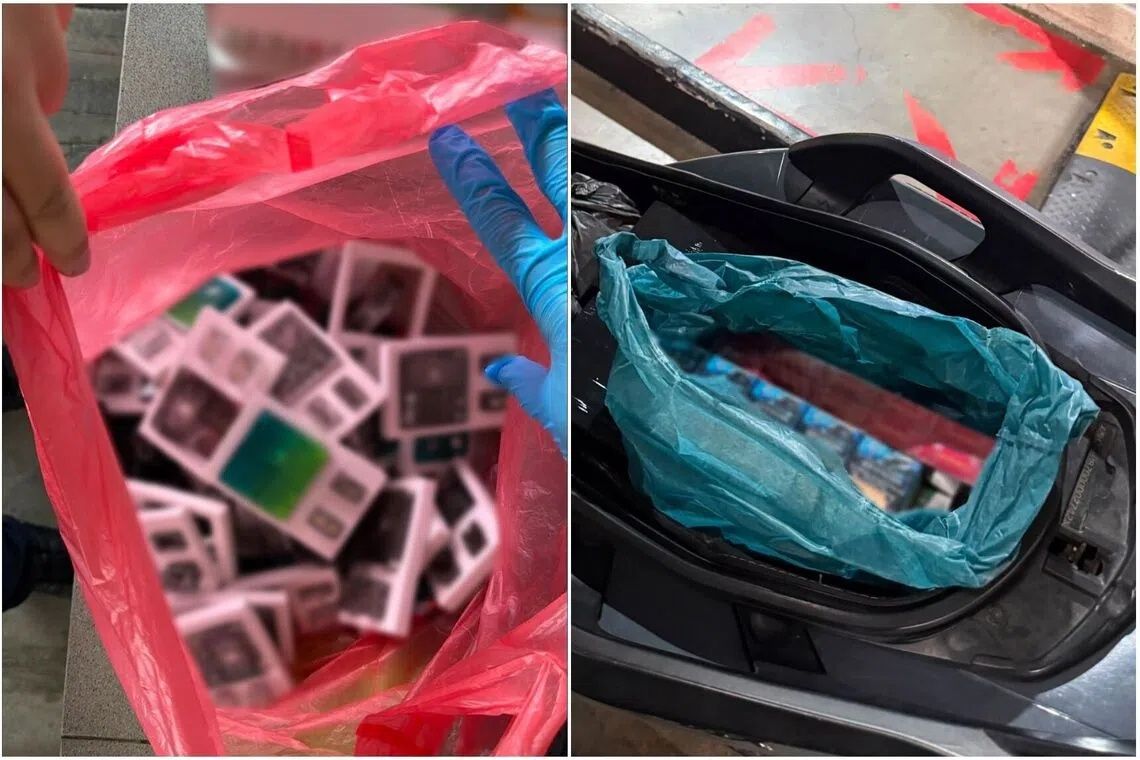
Enforcement efforts at Singapore's Woodlands Checkpoint have resulted in the arrest of two motorcyclists engaged in separate smuggling operations involving duty-unpaid cigarettes and vaping devices, according to the Immigration and Checkpoints Authority (ICA). The incidents, which occurred on August 3 and 4, underscore the persistent challenge of illicit goods crossing the heavily trafficked Malaysia-Singapore border, where motorcycle use provides smugglers with perceived agility and easier concealment opportunities compared to larger vehicles.
During the first interception on August 3, ICA officers conducting routine enhanced checks on a Malaysia-registered motorcycle discovered contraband hidden within the vehicle's storage compartment. Officers recovered more than 30 packets of cigarettes that had not been subject to Singapore's excise duties, along with over 60 vaping devices and associated components. The concealment strategy—utilising the storage box as a hiding place—reflects common smuggling tactics employed at the checkpoint, where riders attempt to exploit limited inspection capacity during peak crossing periods.
The following day, another seizure occurred involving a Singapore-registered motorcycle, indicating that smuggling operations are not confined to foreign riders alone. This second search uncovered 25 cartons and 30 additional packets of duty-unpaid cigarettes, supplemented by more than 60 vapes tucked beneath the motorcycle's seat and within its storage box. The similar quantities and methodology across both cases suggest possible coordination or knowledge-sharing among smuggling networks operating in the region, a concern that extends beyond Singapore to neighbouring Malaysia and other Southeast Asian jurisdictions grappling with organised illicit tobacco and vape trafficking.
Authorities identified the suspects as a 46-year-old Malaysian man apprehended in the first incident and a 51-year-old Singaporean man detained in the second operation. The age profile of the arrestees indicates that smuggling networks recruit participants across varying demographics, though their motivation—whether economic desperation or organised crime involvement—remains unclear pending further investigation. Both individuals and the seized goods have been transferred to Singapore Customs and the Health Sciences Authority for comprehensive investigation and legal proceedings.
Singapore's regulatory framework imposes severe penalties designed to deter smuggling activity across its borders. Individuals convicted of purchasing, selling, transporting, storing, or possessing duty-unpaid cigarettes face fines reaching up to 40 times the evaded duty and tax amount, potentially amounting to substantial sums, alongside imprisonment for up to six years or both sanctions applied concurrently. Such penalty structures reflect Singapore's zero-tolerance approach to tax evasion through contraband trafficking, distinguishing it from more lenient jurisdictions in the region.
The vaping component of these smuggling cases reflects Singapore's particularly strict stance on nicotine delivery devices, which remain completely prohibited for civilian use within the city-state. Individuals apprehended using vapes encounter fines up to SGD 10,000, while retailers and distributors face escalating penalties including fines reaching SGD 200,000 and imprisonment for up to six years. Smugglers specifically importing vapes for commercial purposes confront even harsher treatment, with maximum fines of SGD 300,000 and nine-year jail sentences, creating a significant deterrent against organised vaping contraband operations.
Foreign nationals repeat offenders face immigration consequences that extend beyond criminal penalties. Those caught with vaping devices on more than one occasion risk revocation of their work passes and permanent re-entry bans, effectively severing their ability to reside, work, or conduct business within Singapore. This additional leverage provides authorities with a complementary enforcement tool beyond criminal prosecution, particularly effective for regional workers from Malaysia and other neighbouring countries who depend on Singapore employment for income.
The seizure of vehicles constitutes another critical enforcement mechanism in Singapore's anti-smuggling strategy. Motorcycles and automobiles used to commit duty-evasion offences become subject to forfeiture, creating an economic disincentive for smuggling operations. Asset confiscation policies effectively target not only the contraband itself but the operational infrastructure of smuggling networks, imposing costs that accumulate across multiple enforcement actions and potentially destabilising criminal supply chains operating across the Johor Strait.
The Woodlands Checkpoint represents one of Southeast Asia's busiest land border crossing points, processing hundreds of thousands of travellers and vehicles monthly between Malaysia and Singapore. The checkpoint's strategic importance to regional commerce and mobility makes it simultaneously a critical security frontier and a persistent target for smuggling operations. These August arrests reflect routine enforcement successes, yet the continued discovery of contraband suggests that smuggling attempts remain frequent enough to sustain ongoing detection rates despite the severe consequences imposed by Singapore authorities.
For Malaysian readers and regional observers, these cases underscore the interconnected nature of cross-border illicit trade networks. Duty-unpaid cigarettes frequently originate from suppliers within Malaysia exploiting differential tax structures between the two nations, creating profit margins that incentivise trafficking despite enforcement risks. The involvement of a Singaporean resident in the second incident indicates that demand-side factors within Singapore also sustain smuggling activity, as local consumers seek cheaper vaping products unavailable through legal channels.
The broader implications extend to regional law enforcement cooperation and intelligence-sharing frameworks essential for disrupting organised smuggling networks. While Singapore authorities demonstrate consistent enforcement capacity at their borders, smuggling networks often operate across multiple jurisdictions, requiring coordinated efforts between Malaysian customs agencies, Singapore authorities, and other regional partners. The persistence of such incidents despite known penalties suggests that organised crime groups operating these networks manage logistics sufficiently well to absorb periodic losses while maintaining overall profitability.

