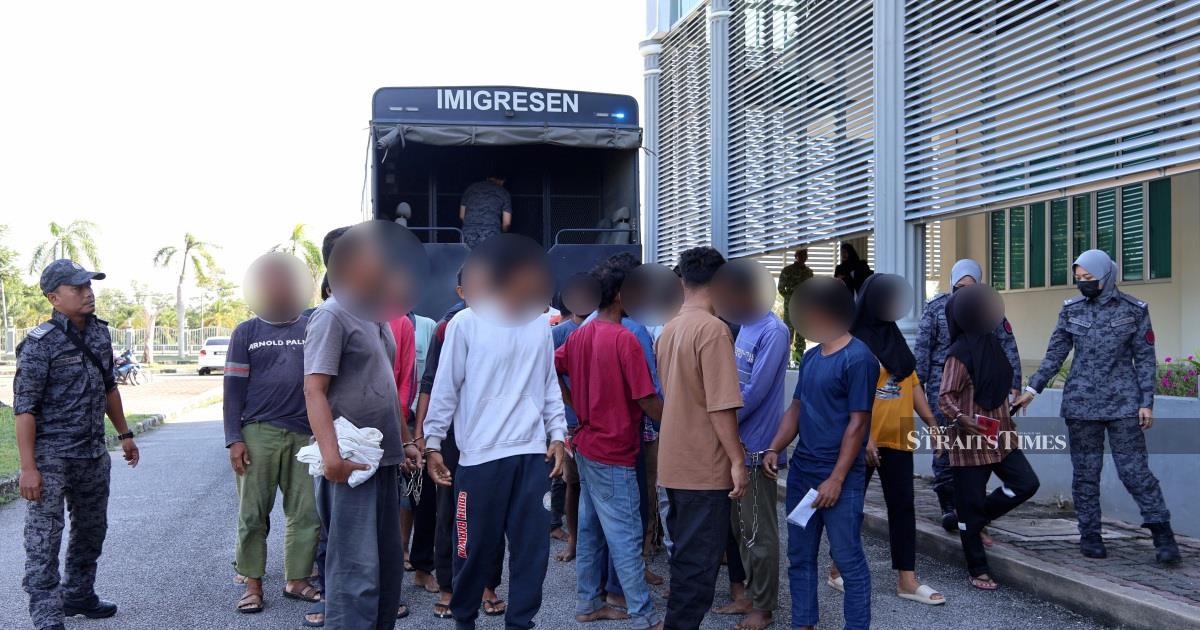
Immigration authorities in Pasir Mas secured convictions against twenty-nine undocumented migrants in the Sessions Court today, with each defendant receiving fines ranging from RM1,000 to RM10,000. The individuals entered guilty pleas to multiple charges stemming from their unlawful presence within Malaysia's borders, including illegal entry into the country, exceeding the limits of their stay permits, and fraudulent use of travel or identity documents.
The proceedings reflect the ongoing judicial response to immigration violations across the northern states, where enforcement has intensified following coordination between immigration departments and court systems. Kelantan, where Pasir Mas is located, has experienced significant cross-border movement owing to its proximity to Thailand, making it a focal point for both documented and undocumented migration patterns. The court's handling of these cases demonstrates the multi-tiered approach authorities employ, combining border controls, apprehension operations, and prosecution through the formal justice system.
Each conviction addresses a distinct category of violation. Illegal entry represents the most serious infraction, typically involving individuals who bypass official checkpoints entirely or arrive with forged documentation. Overstaying occurs when migrants exceed their visa validity period, whether through administrative oversight or deliberate evasion. The misuse of passes—the third charge category—encompasses a broader spectrum of document-related offences, from using another person's permit to altering travel papers or employment authorisation documents.
The financial penalties imposed by the court serve multiple enforcement objectives. Beyond recouping administrative costs associated with apprehension and processing, fines create a deterrent effect intended to dissuade future violations. However, analysts note that for migrants from economically disadvantaged backgrounds, such penalties often represent a month's or more of wages, raising questions about enforcement equity and whether financial hardship adequately deters repeat offences or merely perpetuates cycles of debt and illegal employment.
Undocumented migration remains a persistent challenge across Southeast Asia, with Malaysia consistently absorbing significant migrant populations. While official estimates suggest roughly two million documented foreign workers in Malaysia, unregistered migrants likely number in the hundreds of thousands. The Pasir Mas case reflects both systemic vulnerabilities—individuals successfully entering and remaining illegally—and the capacity of authorities to identify, apprehend, and prosecute offenders once detected.
The circumstances surrounding these twenty-nine individuals remain undisclosed by court statements, but patterns typical in such cases suggest varied profiles. Some may be first-time border crossers seeking employment opportunities. Others might be individuals whose documentation expired while employed in manufacturing, construction, agriculture, or domestic service sectors historically dependent on migrant labour. Still others could be individuals displaced by economic circumstances in neighbouring countries, viewing entry into Malaysia as a survival strategy despite legal prohibitions.
Kelantan's position as a border state creates distinct enforcement and judicial pressures. The State's economy relies partly on legitimate cross-border trade and tourism, yet the same porous boundaries facilitate illegal movement. Pasir Mas district, situated near Thailand, experiences higher volumes of migration enforcement activity than inland areas. This geographic reality shapes both the volume of cases reaching courts and the sophistication required from immigration enforcement mechanisms.
The formal prosecution of these twenty-nine migrants represents one endpoint of a longer enforcement chain. Earlier stages involve detection—through workplace raids, roadside checks, or intelligence operations—followed by detention while immigration officers compile evidence and prepare legal proceedings. The guilty pleas recorded today suggest either clear-cut violations with minimal evidentiary dispute or, alternatively, migrants with limited means to mount legal defences and mounting pressure to resolve cases quickly.
Beyond individual punishment, these convictions serve administrative functions within Malaysia's immigration system. Convicted individuals face deportation following sentence completion, with re-entry bans likely imposed. Documentation of convictions feeds into databases used by immigration authorities across borders, potentially affecting future visa applications or entry attempts to Malaysia or neighbouring countries. The cumulative effect of such enforcement actions shapes regional migration patterns, though enforcement gaps and demand for migrant labour ensure that undocumented migration persists despite penalties.
The Pasir Mas court's enforcement activity reflects broader Southeast Asian trends. Thailand, Indonesia, and other regional economies grapple with similar challenges of regulating migration flows while managing labour demands. Malaysia's approach—combining legal pathways for documented workers alongside enforcement against illegal migration—mirrors strategies employed across the region, though effectiveness varies widely depending on capacity, corruption levels, and political will.
Future implications of today's convictions extend beyond the immediate fines and deportations. Each case contributes to statistical records used by policymakers assessing enforcement effectiveness and immigration pressure. If patterns suggest consistent violations concentrated in specific sectors or nationalities, authorities may adjust deployment strategies or revise documentation requirements. Conversely, lenient penalties might signal enforcement weaknesses, potentially encouraging further illegal migration attempts.

