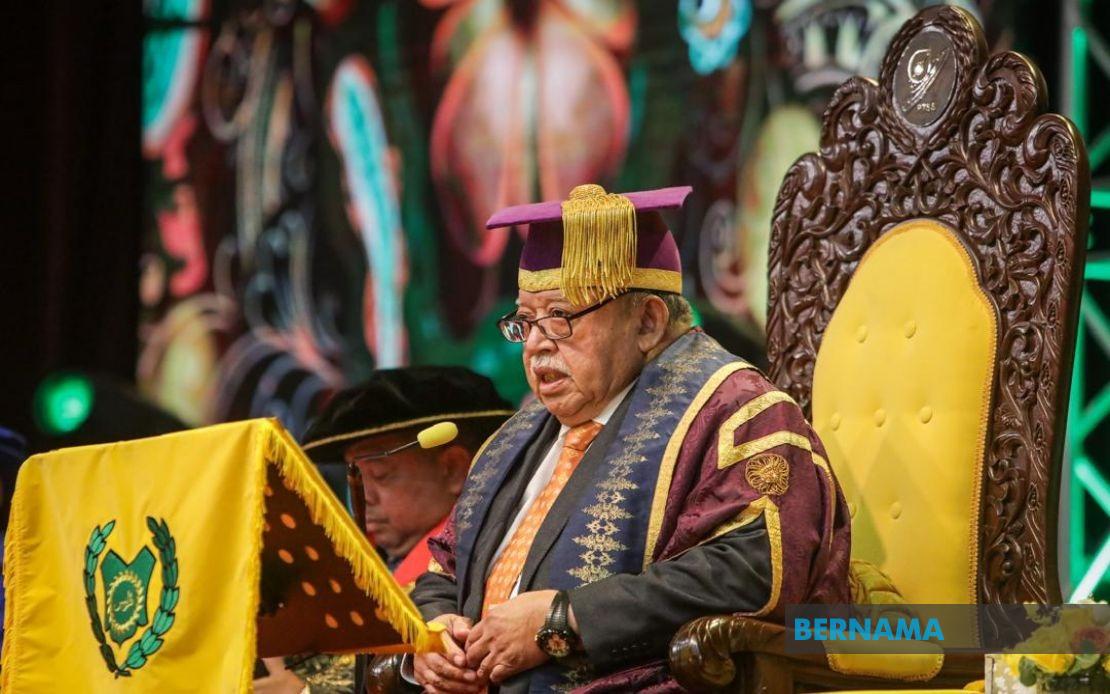
The Raja of Perlis, Tuanku Syed Sirajuddin Jamalullail, has underscored the strategic importance of technical and vocational training in developing a workforce equipped to navigate Malaysia's evolving economic landscape. Speaking at the 2026 Northern Zone Polytechnic and Community College Convocation Ceremony held at Politeknik Tuanku Syed Sirajuddin in Arau, the Ruler highlighted how TVET programmes serve as essential pipelines for cultivating talent that combines practical expertise with creative problem-solving capabilities. This message carries particular significance given Malaysia's push to position itself as a digital economy hub and innovation-driven nation within Southeast Asia.
Tuanku Syed Sirajuddin characterised innovation as no longer merely desirable but fundamentally necessary for national progress and competitive advantage. Rather than treating technological advancement as a peripheral concern, he positioned it squarely at the centre of Malaysia's development agenda. The Ruler's remarks acknowledge a global reality where artificial intelligence, automation, robotics, and digitalisation are fundamentally reshaping labour markets and industrial structures. For Malaysia specifically, this transformation carries implications for how industries from manufacturing to services must adapt and how educational institutions must prepare graduates for careers that may not yet exist in their current forms.
The technological forces the Raja identified are already reshaping Southeast Asia's economic trajectory. Countries across the region are grappling with how automation affects traditional employment while simultaneously recognising that those who can harness these tools will capture significant competitive advantage. Malaysia's polytechnic system, with its emphasis on practical, hands-on training, is positioned differently from traditional universities and thus offers distinctive pathways for students to bridge theory and application. The convocation ceremony itself, encompassing 6,104 graduates from polytechnics and community colleges across Perlis, Kedah, and Penang, demonstrates the scale of this educational sector's output across Malaysia's northern region.
Crucially, Tuanku Syed Sirajuddin warned against viewing technical competence in isolation from moral and ethical foundations. His insistence that graduates maintain strong principles, integrity, and patriotic commitment reflects a broader concern within Malaysian governance about ensuring that economic development remains tethered to social responsibility. This perspective distinguishes his vision from purely technical or economic framings of TVET. The Ruler articulated that excellence encompasses not just mastery of skills but also character and trustworthiness, suggesting that Malaysia's competitive advantage ultimately depends on the calibre of citizens produced by the system, not merely their technical credentials.
The emphasis on nurturing innovation culture specifically among polytechnic staff and graduates addresses a systemic challenge facing vocational education sectors globally. Polytechnics often face perceptions as institutions of last resort rather than centres of innovation, yet the Raja's comments suggest repositioning these institutions as incubators for practical innovation. This framing matters for Malaysia because it elevates vocational training from a remedial pathway to a strategic national asset. By encouraging innovation among polytechnic educators and students, the system potentially generates solutions tailored to local industrial needs rather than copying models developed elsewhere.
Tuanku Syed Sirajuddin's distinction between generating ideas and translating them into solutions with societal benefit adds another layer to understanding TVET's role. Many innovation frameworks emphasise ideation and concept development, but the Ruler highlighted that genuine innovation requires implementation capability—the ability to operationalise concepts in real-world contexts. Polytechnic graduates, trained in practical applications and industrial standards, possess precisely this implementation competency. For Malaysian industries seeking to solve specific operational challenges or improve productivity, graduates equipped with both technical knowledge and innovation mindset offer tangible value.
The convocation ceremony itself recognised individual excellence through awards including the Director-General of Polytechnic and Community College Education Award, which went to Teerti Ganapathi Rao, a 22-year-old graduate holding a Diploma in Digital Technology from Politeknik Tuanku Syed Sirajuddin's Department of Information and Communication Technology. Such recognition systems serve dual purposes: acknowledging individual achievement while signalling to other students the competencies and qualities the system values. The award recipient's specialisation in digital technology reflects the sector's alignment with contemporary employment demand, particularly as Malaysia pursues digital transformation across both public and private sectors.
From a regional perspective, Malaysia's TVET expansion carries implications for workforce mobility and competition across Southeast Asia. As countries including Thailand, Vietnam, and the Philippines similarly invest in vocational education, graduates increasingly compete for positions across borders. Malaysia's polytechnic system must therefore maintain quality and relevance to ensure its graduates remain attractive to regional employers. The Raja's emphasis on combining technical skills with innovation and strong character suggests one competitive differentiation strategy—producing workers who not only possess required skills but also demonstrate reliability, adaptability, and ethical conduct.
The timing of this convocation, bringing together graduates from multiple states across Malaysia's northern region, also highlights how regional polytechnic hubs serve broader national interests. Politeknik Tuanku Syed Sirajuddin's role as a major educational institution extends beyond Perlis to serve Kedah and Penang, creating employment and economic ripple effects across the region. These institutions anchor local economies while producing workers distributed throughout Malaysia, demonstrating how educational infrastructure intersects with regional development policy.
Looking forward, the Raja's address suggests Malaysia's polytechnic system should be understood not as providing training for jobs already defined, but as producing adaptive, innovative workers capable of creating and shaping their own employment opportunities. This reframing transforms TVET from workforce filling to workforce development—preparing graduates not merely to fit existing positions but to identify emerging opportunities and build solutions. For Malaysian policymakers and educators, this vision implies continuous investment in keeping curricula relevant to emerging technologies while ensuring pedagogical approaches encourage critical thinking and problem-solving alongside technical mastery.

