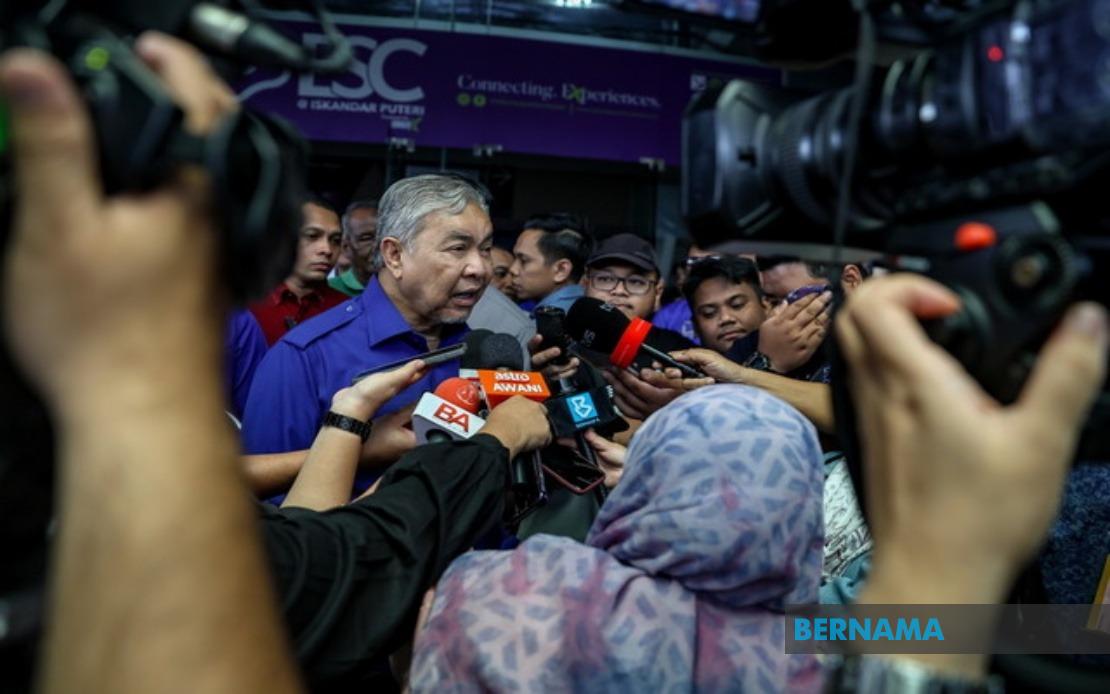
Malaysia's vocational education infrastructure is set for a significant overhaul, with Deputy Prime Minister Datuk Seri Dr Ahmad Zahid Hamidi confirming that the new Technical and Vocational Education and Training (TVET) Commission should be operational by the end of 2024. Speaking at an event in Iskandar Puteri, Ahmad Zahid outlined the government's timeline for establishing this institutional framework, which represents a substantial shift in how the nation approaches skills development and workforce preparation.
The creation of the TVET Commission will mark a transition away from the existing National TVET Council, a structural change designed to strengthen Malaysia's overall approach to technical and vocational education. This shift comes amid growing recognition that the country's economic competitiveness depends increasingly on a skilled workforce capable of adapting to changing industrial demands. By consolidating governance under a dedicated commission, policymakers aim to streamline decision-making and accelerate implementation of vocational training initiatives across the country.
The pathway to finalisation involves multiple layers of governmental review and approval. Ahmad Zahid explained that extensive consultations with various stakeholders are currently underway, a necessary step before the government can proceed to formal Cabinet approval. Although the policy framework has already received endorsement, officials are still navigating the legal and procedural requirements needed to bring the matter before Parliament in both the Dewan Rakyat and Dewan Negara. This careful sequencing suggests that government planners are mindful of constitutional and legislative nuances that could affect the commission's legal standing and operational authority once established.
What distinguishes this institutional innovation is its departure from traditional policy councils that often focus primarily on strategy and planning. The TVET Commission, according to Ahmad Zahid, will take on a comprehensive mandate extending beyond mere policy development. The new body will actively oversee implementation and enforcement of the standards and guidelines it establishes, effectively bridging a gap that has historically existed in Malaysia's TVET ecosystem. This integrated approach mirrors governance models adopted by developed nations with successful vocational education systems, suggesting that Malaysian planners have drawn lessons from international best practices.
The timing of this reform reflects broader economic pressures facing Southeast Asia. As manufacturing and services sectors increasingly demand technical expertise, countries across the region are competing to build workforces with practical skills and industry-relevant knowledge. Malaysia's restructuring of its TVET governance comes at a moment when neighbouring economies are similarly investing in vocational education infrastructure. For Malaysian employers seeking skilled workers and international investors evaluating the nation's human capital, the establishment of a dedicated commission signals seriousness about closing skills gaps and improving training programme quality and consistency.
The engagement sessions currently underway represent a critical phase in consensus-building. By consulting stakeholders from educational institutions, industry bodies, union representatives, and regional authorities, the government is attempting to build a broad coalition behind the commission's eventual operational framework. These consultations are particularly important given that TVET in Malaysia involves multiple actors—from MARA to community colleges, polytechnics, and private training providers—whose interests and operational philosophies do not always align. Securing buy-in from this diverse ecosystem will be essential for the commission's credibility and effectiveness once launched.
Ahmad Zahid's comments at the Johor Darul Ta'zim TVET MARA Roadshow underscored the government's commitment to positioning vocational training as a pathway to dignified employment and social mobility. The event itself, which featured Deputy Rural and Regional Development Minister Datuk Rubiah Wang and MARA chairman Datuk Dr Asyraf Wajdi Dusuki, demonstrated the multi-agency coordination required to promote technical education across Malaysia's regions. For rural and semi-urban communities where access to university education may be limited or economically unfeasible, robust TVET provision offers a practical alternative route to productive careers in sectors ranging from agriculture to manufacturing, hospitality, and services.
Beyond the institutional reform, Ahmad Zahid touched on broader demographic shifts reshaping Malaysian politics and society. The expansion of voting rights to eighteen-year-olds through Undi18 has fundamentally altered the electorate's composition, with voters aged forty and younger now comprising approximately 52 percent of Johor's registered voters. This demographic reality carries implications for TVET policy, as younger voters increasingly prioritise employment prospects and economic opportunity. Policymakers recognizing this trend understand that failure to deliver quality vocational pathways risks alienating a crucial voting bloc that will dominate electoral calculations for decades to come.
In Johor specifically, Ahmad Zahid sought to frame the TVET initiative and broader development agenda as aligned with the leadership of Menteri Besar Datuk Onn Hafiz Ghazi. By positioning a young leader at the forefront of state development efforts, the Barisan Nasional appears to be attempting to appeal to the expanded youth electorate while maintaining institutional continuity. The connection between TVET policy and electoral strategy may seem tangential, but in Malaysian politics the two frequently intertwine, with vocational education serving both as substantive policy and as symbolic commitment to generational change and economic inclusion.
The parliamentary tabling process, expected to unfold in coming months, will provide a platform for legislative debate around the commission's powers, funding mechanisms, and accountability structures. Opposition parties will likely scrutinise the proposed legislation to ensure the commission remains responsive to public interest rather than becoming a vehicle for patronage or narrow sectoral interests. These parliamentary proceedings will also offer the public a window into how seriously different political actors regard vocational education as a national priority. The government's willingness to dedicate legislative time and resources to this institutional reform suggests genuine commitment, though critics may argue that structural changes mean little without corresponding investments in training facility upgrades, instructor development, and employer engagement initiatives.
For Malaysia's broader economic transformation agenda, the TVET Commission represents a step toward more coherent policy and implementation. The manufacturing sector's evolution toward higher-value production, the expansion of digital and green industries, and regional competition for skilled workers all create urgency around vocational education quality and responsiveness. By consolidating institutional authority and extending the commission's remit to encompass enforcement and implementation, the government is betting that better-coordinated governance will yield better workforce outcomes. Whether this optimism proves justified will depend heavily on execution, funding, and the extent to which the commission can navigate competing interests among its various stakeholders while remaining focused on students and employers who depend on quality training provision.

