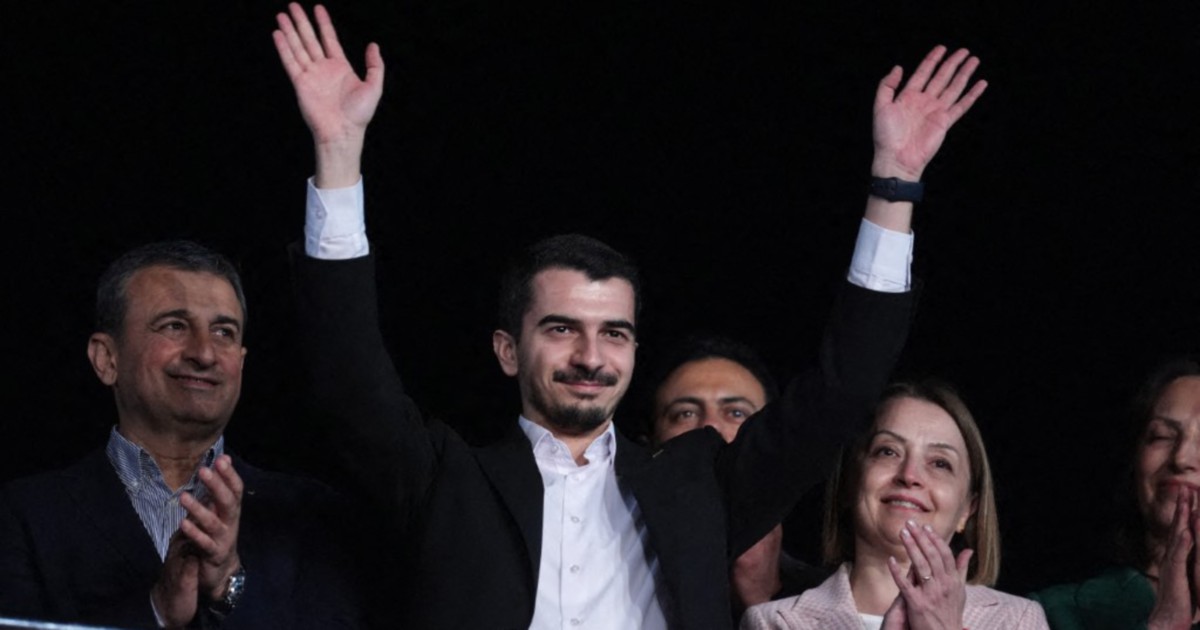
Turkish prosecutors have mounted a significant anti-corruption operation targeting 36 individuals, among them the mayor of a district in Ankara governed by the country's largest opposition party. The Ankara chief prosecutor's office issued the detention orders as part of a widening investigation into suspected bribery schemes and irregularities in public procurement processes. The scale of the operation signals escalating tensions between Ankara's ruling authorities and opposition-controlled municipalities, a recurring flashpoint in Turkish politics where competing power centres clash over governance and financial accountability.
The inclusion of the mayor in the detention list underscores how corruption investigations in Turkey frequently intersect with party politics. Opposition-run local administrations have faced repeated scrutiny from central authorities in recent years, though such investigations span across party lines. The specific allegations involve tender-rigging—a form of procurement fraud where bids are manipulated to benefit predetermined contractors—alongside outright bribery. Such schemes typically involve collusion between municipal officials, construction companies, and intermediaries seeking to circumvent competitive bidding processes and secure lucrative public contracts.
Turkey's prosecution of alleged tender fraud represents an ongoing concern across Southeast Asia and emerging markets, where local government contracts frequently become vehicles for corruption. The mechanics are consistent: officials suppress competition, inflate budgets, or award contracts to connected firms in exchange for kickbacks. For Malaysian observers, the case illustrates how even relatively developed democracies struggle to contain corruption at municipal levels, where oversight mechanisms prove weaker than at national government.
The Ankara district in question falls under opposition control through Turkey's Republican People's Party (CHP), which governs many major municipalities including metropolitan Ankara. Tensions between the CHP-led local governments and the national administration under President Recep Tayyip Erdoğan's ruling party have intensified around fiscal management and resource allocation. These detention orders may reflect both genuine anti-corruption efforts and political positioning, a distinction often difficult to discern in polarized political environments.
Tender-rigging schemes typically emerge from longstanding relationships between officials and construction contractors. In many cases, a core group of companies receives preferential treatment across multiple projects, creating systematic patterns of fraud rather than isolated incidents. Investigators tracking procurement irregularities often discover interconnected networks of beneficiaries—sometimes family members, sometimes business associates—whose involvement deepens the complexity of prosecution. The involvement of 36 suspects suggests prosecutors have identified a substantial conspiracy rather than limited wrongdoing.
Turkey's approach to investigating municipal corruption has evolved considerably, with specialized prosecutor units examining public procurement. Digital records, banking transactions, and communications between officials and contractors provide concrete evidence. However, prosecutorial effectiveness depends on political will and judicial independence—factors that international observers view with concern in Turkey's current environment. The detention of an opposition mayor will inevitably generate political controversy regardless of evidence strength, potentially affecting public perception of prosecutorial neutrality.
For regional observers in Malaysia and Southeast Asia, the Turkish case offers instructive parallels. Local government corruption remains endemic across the region, often involving similar tender-rigging mechanisms and bureaucratic collusion. Malaysia's own experience with municipal-level graft demonstrates how corruption flourishes where procurement transparency remains limited and political oversight weak. The contrast between different enforcement approaches—from specialized prosecution units to forensic accounting teams—shapes investigative effectiveness and deterrence capacity.
The investigation's progression will test Turkey's institutional capacity to pursue high-profile cases while maintaining public confidence. Conviction rates for complex fraud conspiracies remain relatively low internationally, partly because prosecutors must establish criminal intent beyond financial irregularities. Connecting individual officials to specific bribes requires more than procurement anomalies; it demands documentation of actual payments, communications discussing arrangements, or witness testimony from those directly involved. The larger the alleged conspiracy, the more difficult achieving conviction becomes.
Turkey's treatment of this case carries implications for investor confidence in municipal governance. Foreign investors weighing participation in Turkish infrastructure and construction projects monitor how authorities address procurement integrity. Systematic corruption or perception of politically motivated investigations both undermine confidence. The prosecution's success in securing convictions—rather than merely securing detentions—will ultimately signal whether Turkish institutions can effectively combat embedded municipal corruption or whether investigations serve primarily as political tools.
The detention orders represent a threshold moment in the investigation rather than its conclusion. How Turkish courts subsequently treat evidence, whether defence testimony raises questions about prosecutorial conduct, and ultimately whether convictions result will determine the case's broader significance. For Malaysia and neighbouring countries confronting similar corruption patterns at municipal levels, the Turkish experience demonstrates both the possibility of large-scale investigation and the considerable challenge of converting investigations into sustainable reform.

