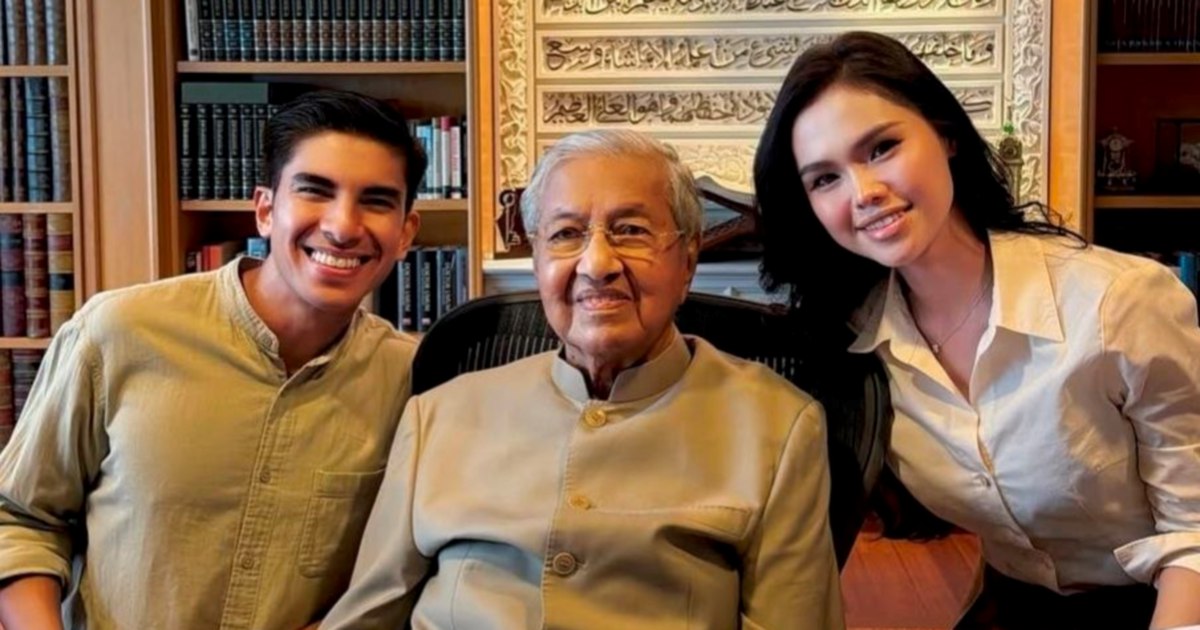
Actress and singer Bella Astillah has publicly shared that she and her fiancé, Muar Member of Parliament Syed Saddiq Syed Abdul Rahman, were recipients of matrimonial guidance during an encounter with former prime minister Tun Dr Mahathir Mohamad. The candid revelation offers a glimpse into the personal sphere of two prominent Malaysian figures whose relationship has drawn considerable public interest since their engagement announcement.
The meeting between the couple and the veteran statesman represents an intriguing intersection of entertainment, politics, and personal milestones. Tun Dr Mahathir, who has long been a public figure with deep connections across Malaysian society, appears to have extended his counsel based on his considerable life experience and decades navigating public life alongside his late wife, Tun Siti Hasmah Mohamad Ali. The informal gathering underscores how figures from different walks of Malaysian public life continue to maintain relationships and offer mentorship across generational and professional divides.
Bella Astillah's willingness to publicly discuss the encounter speaks to evolving attitudes among younger Malaysian celebrities regarding transparency about their personal relationships and the influences shaping their life decisions. Rather than maintaining a purely private stance, the entertainer has chosen to acknowledge the role of respected elder statesmen in her journey toward marriage, a decision that resonates with traditional Malaysian values emphasizing respect for experience and wisdom.
Syed Saddiq, who represents Muar in Parliament and has emerged as one of Malaysia's younger political voices, brings a different dimension to this narrative. His simultaneous roles as an elected representative and public personality seeking guidance from a former head of government highlights the continued reverence accorded to Tun Dr Mahathir within Malaysian political circles, despite the polarized landscape surrounding his tenure and recent political moves. The politician's participation in this meeting suggests a deliberate effort to bridge generational gaps and draw upon institutional memory within Malaysia's political establishment.
The substance of the marriage advice itself remains largely undisclosed, preserving the intimacy of the occasion while allowing observers to speculate about what wisdom a figure of Tun Dr Mahathir's stature might impart to a young couple. His lengthy marriage, which endured until Tun Siti Hasmah's passing in 2024, provided a model of partnership spanning political upheaval, national transformation, and personal challenges. Any counsel emerging from such experience would naturally carry weight for those seeking to navigate marriage within Malaysia's public sphere.
For younger Malaysians following the relationship between Bella Astillah and Syed Saddiq, this revelation offers insight into support systems that extend beyond immediate family and close friends. The involvement of respected public figures in personal milestones reflects how Malaysian society, despite modernization, maintains certain traditions around community engagement and the transmission of values across generations. Such gestures, whether formal or informal, continue to carry cultural significance.
The timing of this meeting also merits consideration, as marriage preparation represents a significant life transition. That the couple chose to seek counsel from a figure as seasoned as Tun Dr Mahathir suggests they view the impending union as sufficiently important to warrant input from those with extensive lived experience. This approach contrasts with purely individualistic decision-making frameworks and aligns with Malaysian communal values.
Public knowledge of this encounter inevitably shapes how observers perceive both the couple's relationship and their positioning within Malaysian society. For entertainment enthusiasts, it adds another layer to Bella Astillah's public narrative, while for political observers, it reinforces Syed Saddiq's demonstrated ability to navigate between entertainment industry circles and political establishment networks. The convergence illustrates how Malaysia's public figures, despite occupying distinct professional domains, frequently intersect in ways that reflect deeper social interconnectedness.
Looking forward, this episode may set a precedent for how young Malaysian public figures discuss personal relationships and the influences guiding their life choices. Rather than treating marriage preparation as exclusively private, Bella Astillah and Syed Saddiq have normalized the idea of drawing upon institutional wisdom and elder guidance, potentially encouraging other emerging personalities to similarly acknowledge mentorship and support networks shaping their trajectories.
The marriage advice encounter ultimately represents more than a casual anecdote from the entertainment and political spheres. It encapsulates broader themes regarding generational transmission of values, the persistence of respect for experience within Malaysian society, and how figures from disparate professional backgrounds maintain meaningful relationships. As the couple moves toward their wedding, this moment with Tun Dr Mahathir may represent one of several guideposts marking their journey, though the full significance will likely only become apparent as their partnership develops.
For Malaysian observers, particularly younger citizens navigating their own relationships and life decisions, the willingness of prominent figures to acknowledge seeking guidance from respected elders sends an important cultural message. In an era sometimes characterized by rapid social change and generational disconnect, this quiet moment underscores the enduring value attributed to wisdom accumulated through lived experience, a principle deeply embedded within Malaysian heritage and identity.

