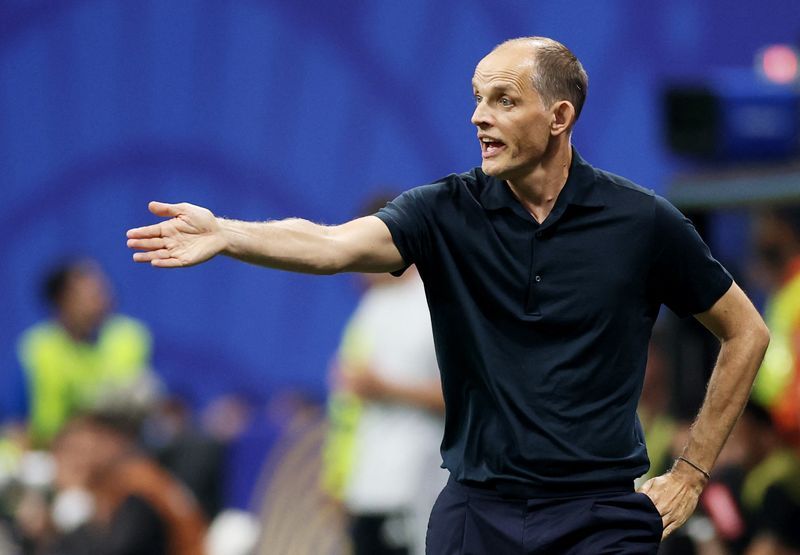
Thomas Tuchel's appointment as England manager was presented as the nation's best opportunity to finally capture a second World Cup title, yet another tournament exit has unleashed fierce criticism of the German tactician. Following England's semi-final loss to Argentina, observers have dissected his in-game decisions, particularly the defensive adjustment made after Anthony Gordon's opening goal. However, a closer examination of the match reveals that Tuchel's strategic choices were merely one component of a more complex picture. England faced not only a well-drilled opponent but also the world's greatest player at the peak of his powers, making simple tactical explanations insufficient for understanding the scale of the defeat.
When the FA announced Tuchel's arrival last October as Gareth Southgate's successor, FA Chief Executive Mark Bullingham positioned the move as a transformative moment for English football. Bullingham declared that the organisation believed Tuchel represented England's "best possible chance" to win the next men's World Cup, framing his appointment as a departure from a cycle of near-misses that had defined recent campaigns. Tuchel, a proven winner at club level with Chelsea and Bayern Munich, brought Champions League pedigree and an impressive European track record. Upon taking office in January, he articulated an ambitious vision, speaking of adding "a second star" to England's shirt by returning to the glories of 1966. That aspirational narrative collapsed in Argentina's final minutes, when late goals from Enzo Fernández and Lautaro Martínez ended England's tournament hopes.
The tactical post-mortems have been particularly harsh, with former West Ham and Crystal Palace manager Alan Pardew characterising the defensive switch as emblematic of broader organisational collapse. Pardew suggested on talkSPORT that Tuchel's adjustments had introduced fear and negativity into the team's mindset, causing the side to lose structural coherence precisely when stability was most needed. Critics have seized upon footage showing England attempted only two passes in Argentina's half during the final twenty minutes, a stark contrast to Argentina's 111 passes in the same period, suggesting an approach that abandoned ambition. Yet Tuchel himself has offered a more philosophical interpretation of events, attributing the defeat not to individual tactical blunders but to fundamental differences in how different football cultures approach possession and control.
Tuchel's post-match analysis pointed to what he perceives as an ingrained cultural limitation within English football. He suggested that possession-based football sits uncomfortably within the English game's DNA, unlike in Spain, Argentina, or Brazil, where ball retention and game control form the tactical bedrock. This observation, whether accurate or merely defensive, highlights the philosophical gulf between Tuchel's European experience and the immediate expectations placed upon him. The manager's vast club experience, including navigating high-pressure environments at Stamford Bridge and the Allianz Arena, did not necessarily prepare him for the unique demands of international tournament football. His first appearance at a major tournament represented uncharted territory, despite his stellar record at domestic and European level. In reaching the semi-finals, he at least matched Southgate's 2018 achievement, though such equivalence provided little comfort to England supporters.
Context is essential for understanding both Tuchel's predicament and the broader narrative of international football management. Didier Deschamps required six years at the helm before leading France to the 2018 World Cup victory, subsequently finishing as runners-up in 2022. His predecessor, Aimé Jacquet, invested five years in building the 1998 title-winning team, suggesting that tournament success demands extended periods of development and experimentation. Tuchel, despite his February contract extension securing his position through 2026, has encountered premature judgment based on a single tournament appearance. The evolution required to transform a national team into consistent winners typically demands patience that modern football culture rarely affords. England's cycle of tournament near-misses suggests structural challenges that extend beyond any individual manager's tactical decisions.
Argentina, by contrast, arrived in the semi-finals as defending champions with genuine ambitions of becoming only the second nation since Brazil in 1962 to retain the World Cup title. Lionel Scaloni's side negotiated the group stage smoothly but encountered sustained pressure throughout the knockout rounds, circumstances that paradoxically strengthened rather than weakened them. Cape Verde pushed Argentina to the limit, Egypt demanded extra time and three late goals for Argentina's progression, and Switzerland required additional periods despite playing with reduced numbers. These narrow escapes revealed an Argentine side capable of finding solutions under duress, a quality that separates truly competitive teams from those whose confidence crumbles. The semi-final against England tested this resilience once more, and Argentina's commitment to attacking football, despite England's retreating defence, proved decisive.
Messi's performance transcended tactical analysis. At thirty-nine years old, the Argentine magician delivered a masterclass in how experience, technical brilliance, and competitive hunger can overcome any defensive system. Facing England's conservative second-half approach, Messi drifted rightward to escape a congested midfield, positioning himself precisely where he could influence the game's trajectory. His assists for Argentina's late goals emerged from moments of individual genius rather than systematic team play, reminding observers why he remains football's most decorated player. Thierry Henry, who witnessed Messi's artistry across three seasons at Barcelona, articulated the challenge succinctly: there exists a particular danger in rousing Messi's competitive instincts once complacency sets in. Henry suggested that opponents must exercise caution in applying pressure that triggers Messi's switch from measured brilliance to relentless aggression, a state in which he becomes functionally unstoppable.
Messi's willingness to play one hundred and twenty minutes, retrieve possession aggressively, and repeatedly dribble past England defenders illustrated a mentality that transcends age and fatigue. Such performances rewrite historical narratives, cementing legacies that outlast tactical innovations or managerial decisions. England, like Cape Verde and Egypt before them, discovered that provoking Argentina's talismanic figure carries consequences. The strategic question was never whether England possessed the tactical sophistication to contain Messi—no system contains him completely—but whether the team could maintain shape while absorbing the inevitable moments of individual magic. They could not, and in failing to do so, England encountered an opponent motivated not merely by tournament progression but by the prospect of cementing immortality through consecutive World Cup victories.
Tuchel will undoubtedly extract valuable lessons from his tournament debut, despite the painful nature of the exit. International football presents challenges distinct from the club environment, where immediate tactical adjustments occur within a established framework of personnel and training methodologies. Tournaments impose constraints born from limited squad time, accumulated fatigue, and the heightened intensity of knockout football. Whether Tuchel's two-year contract extension proves sufficient for England to challenge at the next World Cup depends not solely on his tactical acumen but on broader questions concerning player development, squad construction, and the cultural factors he identified regarding possession-based football. Argentina's path to consecutive World Cup crowns, powered by Messi's excellence and Scaloni's steady management, offers a template suggesting that tournament success emerges from sustained excellence rather than brilliant individual adjustments. England's journey toward that level of consistency continues, and Tuchel's role in charting that course remains incompletely written despite the semi-final disappointment.

