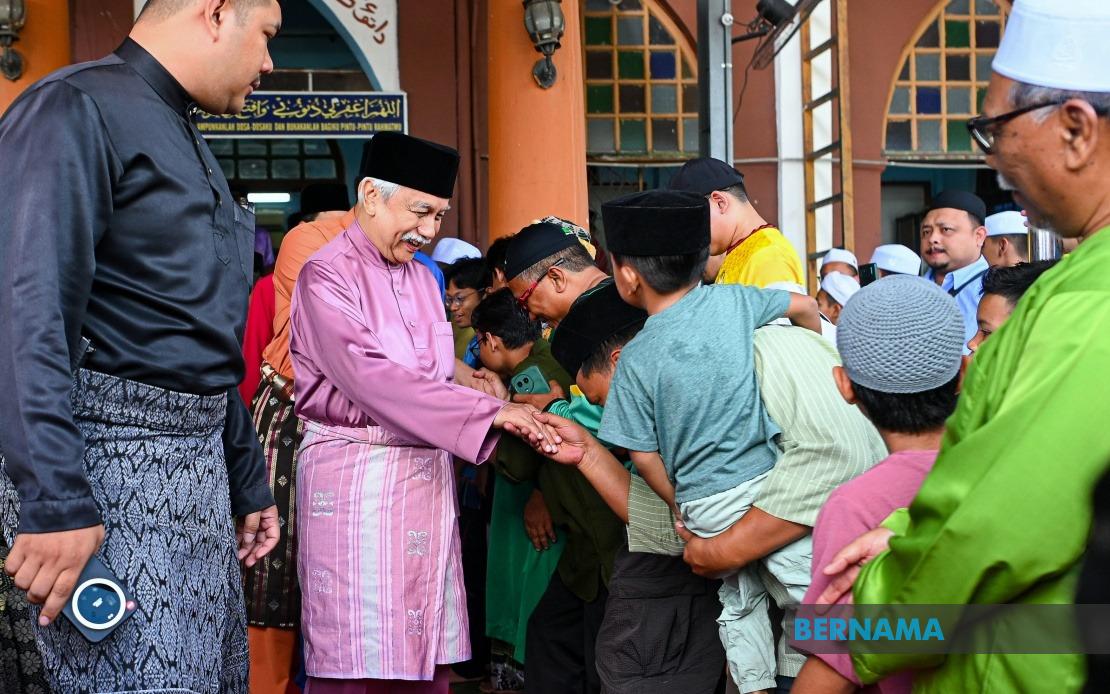
The Yang Dipertuan Besar Negeri Sembilan, Tuanku Muhriz Tuanku Munawir, participated in Friday prayers at Masjid Kariah Pantai in Seremban on July 17, joining an assembly of more than 500 Muslim worshippers. The occasion reflected the continued engagement of the state's paramount ruler in community religious observances, underscoring the ceremonial and spiritual significance of such events in the Malaysian constitutional monarchy.
Tuanku Muhriz was accompanied throughout the prayers by his two sons, Tunku Besar Seri Menanti Tunku Ali Redhauddin and Tunku Zain Al-'Abidin, both of whom stand in the line of succession to the Negeri Sembilan throne. Their presence at the congregation highlighted the multi-generational participation of the royal family in religious and communal activities, a pattern consistent with the role of Malaysia's hereditary rulers as custodians of Islamic affairs within their respective states.
The gathering also included prominent state dignitaries. The Undang of Luak Sungei Ujong, Datuk Klana Petra Muhammad Faris Johari, and Menteri Besar Datuk Seri Aminuddin Harun were both in attendance, demonstrating the collaborative nature of religious observances that bring together the state's executive and ceremonial leadership. In the Malaysian political structure, such coordinated participation by rulers and chief ministers signals unity and shared commitment to religious and social values at the state level.
The imam leading the congregation, Amru Zubair Abu Hanifah, delivered the Friday sermon with a focus on contemporary challenges to Islamic faith. This thematic choice reflects broader concerns within Malaysian Muslim communities about preserving religious identity and values amid rapid social change, urbanisation, and exposure to diverse influences. The sermon's emphasis on threats to faith resonates with ongoing discussions in mosques and religious circles across Malaysia about strengthening spiritual resilience among believers.
Following the completion of prayers, Tuanku Muhriz and his sons engaged directly with the assembled congregants in a gesture of accessibility and community connection. This post-prayer interaction is a customary practice among Malaysia's royal families, serving to reinforce the personal bonds between rulers and their subjects across religious and social contexts. Such moments, though brief, carry symbolic weight in reinforcing the institution of the monarchy within everyday Malaysian life.
A particularly noteworthy aspect of the occasion was the royal family's presentation of contributions to children who had attended the Friday prayers. This act of charity and encouragement aligns with Islamic principles of supporting young believers and fostering their spiritual development from an early age. The gesture also demonstrates the state's investment in nurturing the next generation of Muslim citizens, a priority that Malaysian rulers consistently emphasise in their public engagements.
Negeri Sembilan, as one of Malaysia's constituent states, maintains distinct protocols and practices within the broader Islamic administrative framework of the federation. The state's Yang Dipertuan Besar holds both ceremonial significance and substantial authority over Islamic affairs, religious institutions, and properties within state boundaries. Tuanku Muhriz's active participation in congregational prayers reflects the hands-on stewardship that characterises his approach to these responsibilities.
Masjid Kariah Pantai, the venue for the prayers, serves as a neighbourhood mosque reflecting the distributed network of Islamic religious infrastructure across urban Malaysia. Such community mosques function as centres for spiritual practice, social cohesion, and cultural transmission within residential areas. The attendance of the Yang Dipertuan Besar at a neighbourhood mosque, rather than exclusively at grander state-level institutions, highlights the importance placed on grassroots religious observance and the inclusive nature of Islamic practice across socioeconomic and geographic divisions.
The assembly of over 500 worshippers at a Friday prayer session reflects consistent Muslim participation in congregational worship in Malaysia, where Islam remains the faith of the constitutional monarchy and the majority population. Friday prayers, known as Jumu'ah, hold special significance in Islamic practice and typically draw larger congregations than daily prayers, making such occasions important moments for community gathering and spiritual renewal.
For Malaysian readers, such occasions underscore the institutional integration of Islam within the nation's constitutional and social fabric. The participation of rulers, chief ministers, and state officials in religious observances demonstrates the seamless interweaving of governance, tradition, and faith in Malaysia's unique political system. Unlike secular democracies that maintain strict separation between religious and state institutions, Malaysia's model places the ruler as the head of Islam within the state, a role actively performed through public worship and engagement with Muslim communities.
The event also illustrates the continuity of royal participation in Islamic observance across different states and at various levels of religious ceremony. Whether at major Islamic festivals, Friday prayers in neighbourhood mosques, or state-level religious occasions, Malaysia's rulers maintain visible engagement with Muslim spiritual life. This consistent involvement reinforces the legitimacy of the monarchy within an Islamic context and demonstrates respect for the constitutional position of Islam in national life.
Looking forward, such routine yet symbolically significant events will likely continue to characterise the public engagement of Malaysia's state rulers. As the nation navigates contemporary challenges to social cohesion and religious identity, the visible participation of institutional leaders in congregational worship carries messages about unity, shared values, and the enduring importance of faith in Malaysian public life. For Negeri Sembilan residents and the broader Malaysian Muslim community, the occasion represented a tangible affirmation of leadership commitment to Islamic practice and community wellbeing.

