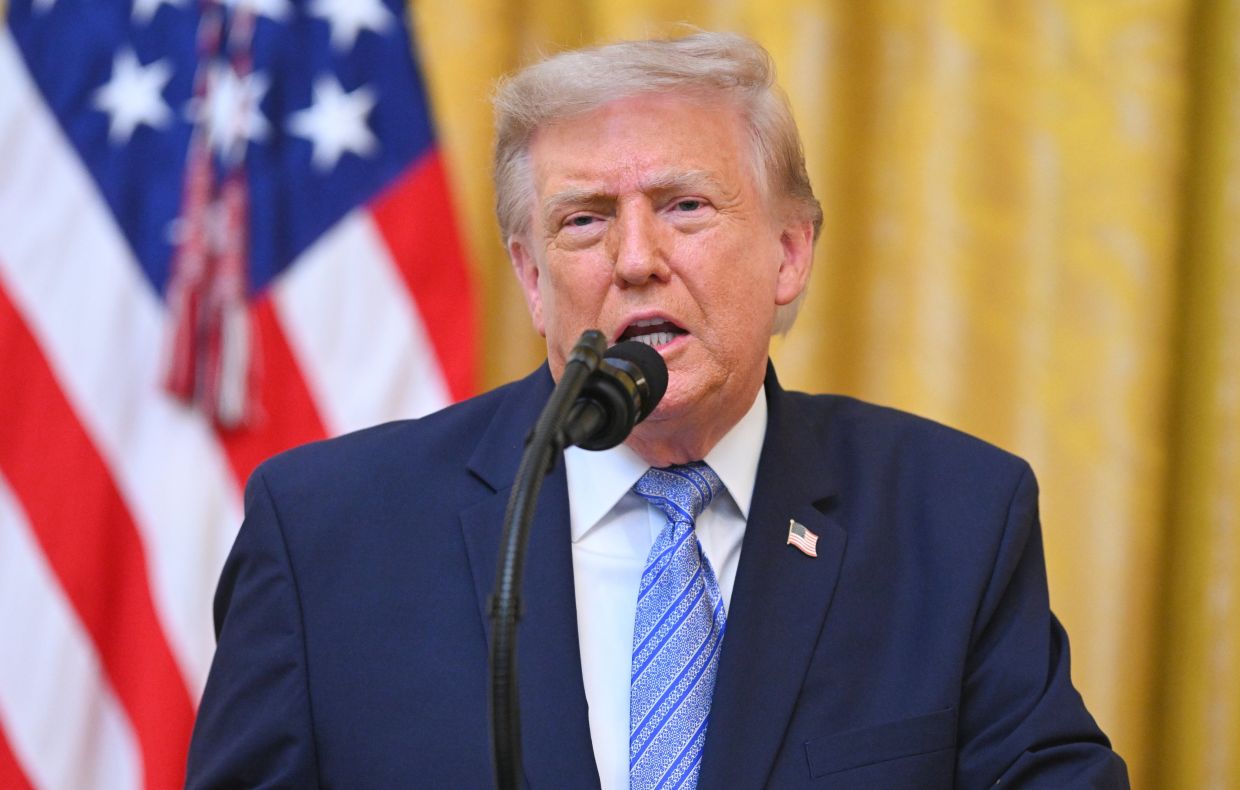
President Trump's White House address stands out as one of the most aggressive oratorical moments of his second term, weaving together foreign policy confrontation with domestic political messaging to construct a sweeping narrative about threats to American institutions. The speech channels growing US-China tensions into a domestic political framework centred on election integrity ahead of this year's midterm races, while simultaneously launching a direct assault on media organisations he views as adversarial. For observers in Southeast Asia, the address signals an increasingly hardline stance on Beijing that will likely reshape regional geopolitics and trade relationships across the coming months.
At the heart of Trump's remarks lies an extraordinary accusation against China: that the country orchestrated what he characterised as the "largest compromise of election data in history". By framing this alleged breach as a critical national security threat requiring immediate governmental response, Trump positions Beijing not merely as a trade competitor or geopolitical rival, but as an existential danger to American democratic processes. The claim carries significant weight in his rhetorical arsenal, transforming what might otherwise be a technical cybersecurity matter into a foundational justification for confrontational policy measures. The specificity of this allegation—that the data theft reached unprecedented scale—underscores the administration's intent to mobilise public and congressional support for a tougher China strategy.
Trump's critique extends beyond mere espionage to encompass what he described as China's broader influence operations targeting American society at multiple levels. According to his account, Beijing has worked systematically to persuade US business leaders and media figures to adopt anti-Trump positions, suggesting a coordinated campaign to undermine his political standing through cultural and informational channels. This characterisation positions China as actively engaged in soft power warfare designed to reshape American elite opinion and public discourse. Whether viewed as genuine threat assessment or political framing, the narrative reflects administration concerns about Chinese influence networks operating within American institutions—a concern that resonates in Southeast Asian capitals where many countries grapple with their own questions about Beijing's regional influence.
Particularly striking is Trump's assertion that China's election interference activities were not random or opportunistic but specifically calibrated to threaten his political survival during his first presidential term. By personalising the accusation in this manner, Trump transforms the issue from a systemic challenge facing American democracy broadly into a direct attack on his own political legitimacy and viability. This framing carries implications for how the administration will pursue its China policy going forward, potentially linking geopolitical decisions to domestic political calculations in ways that may complicate traditional foreign policy reasoning.
The domestic dimension of Trump's address focused heavily on election security measures ahead of the midterm elections, with the president repeatedly emphasising the need for "free and fair elections" and expressing alarm about perceived vulnerabilities in the American electoral system. His rhetoric drew connections between external foreign interference and what he portrayed as internal weaknesses in voting procedures that could be exploited by bad actors. This dual emphasis—external threat from China paired with internal systemic vulnerabilities—creates a comprehensive argument for substantial electoral reform.
Specific policy proposals featured prominently in Trump's remarks, particularly his advocacy for voter identification requirements and proof of citizenship documentation. These proposals, framed as part of the SAVE America Act, represent conventional Republican election security priorities that have long formed part of GOP platform positions. However, by anchoring them within the larger China threat narrative, Trump seeks to reframe these measures not as partisan efforts to restrict voting access—as critics contend—but as essential national security safeguards against foreign interference. The rhetorical move attempts to shift the debate's terms from voting access to national defence.
Beyond the immediate election security focus, Trump signalled a broader recalibration of US policy toward Beijing, explicitly warning against what he termed American "complacency" in managing the relationship. His positioning of the address as consequential for long-term American global strategy suggests the administration views China policy as foundational to its entire second-term agenda. For Southeast Asian nations carefully calibrating their own relationships with both Washington and Beijing, such rhetoric signals that Trump's approach will likely remain confrontational, potentially limiting middle-ground diplomatic options and forcing regional countries into more binary strategic choices.
The address also marked a striking moment of media confrontation when Trump warned of considering licence revocation for television networks ABC and NBC. This threat represents an extraordinary invocation of executive power against news organisations, framing them as adversaries requiring regulatory punishment. The specific targeting of broadcast networks—rather than cable or online outlets—reflects their particular reach and influence in shaping public opinion, suggesting Trump views them as particularly consequential opponents in the battle for narrative control around elections and China policy. Such threats, whether intended literally or rhetorical, mark a significant escalation in tensions between the executive and media institutions.
For Malaysia and the broader Southeast Asian region, Trump's address carries multiple implications. The intensified focus on China as an election interference threat signals a White House committed to sustained strategic competition with Beijing, which will likely manifest in continued pressure on supply chains, technology restrictions, and diplomatic isolation efforts. Regional countries that have sought to maintain balanced relationships with both superpowers may find the space for such balancing increasingly constrained as the US pushes for alignment on its China strategy.
Additionally, the domestic election security focus reveals how thoroughly Trump associates election integrity with security threats, a framework that may influence American foreign assistance and democracy promotion efforts globally. Southeast Asian democracies, some of which have faced their own questions about electoral integrity, may find themselves subject to heightened American scrutiny or pressure from a Washington that views elections through an increasingly security-centric lens.
The address ultimately reveals a White House attempting to construct an integrated narrative linking foreign threat from China, domestic electoral vulnerability, and media opposition into a coherent whole. Whether this narrative proves persuasive to American voters and international audiences will significantly shape the trajectory of US global strategy in the months ahead. For regional observers in Southeast Asia, the speech underscores that American policy toward China will remain aggressive, that election security concerns will drive substantial policy measures, and that Trump views institutional opposition—whether from media or other quarters—as requiring forceful executive response.

