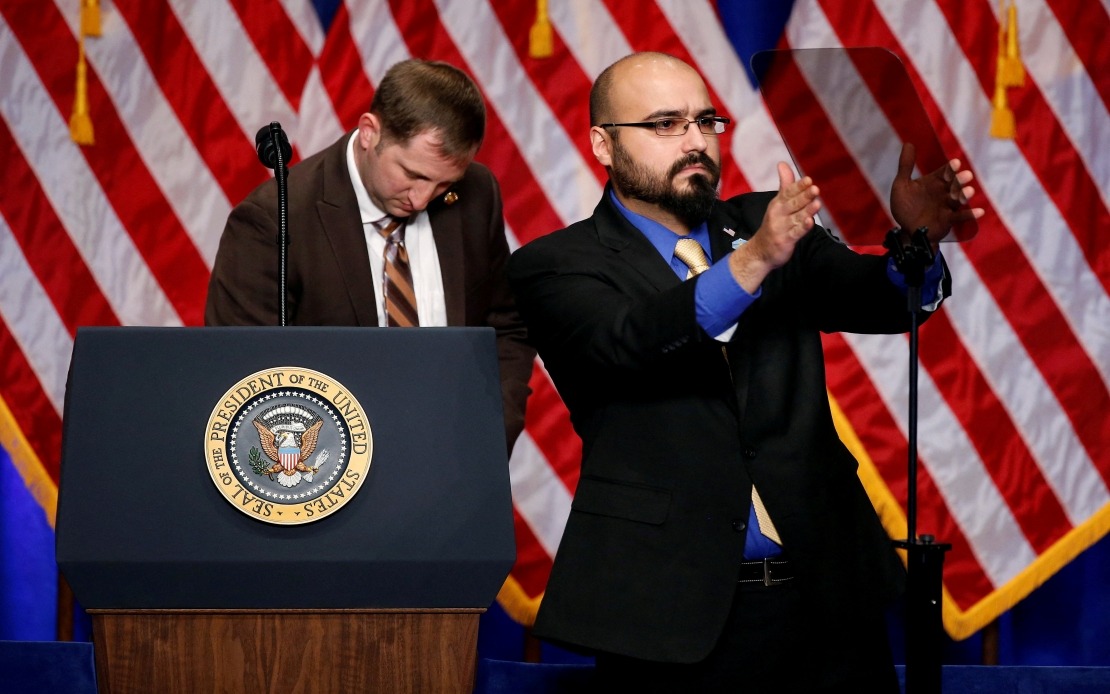
The White House has suspended one of President Donald Trump's longest-serving staff members, a teleprompter operator who has worked with the president since 2016, following serious allegations of insider trading involving bets placed on the content and timing of presidential speeches. White House Press Secretary Karoline Leavitt confirmed the personnel action on Thursday, characterizing the situation as troubling and reflecting poorly on the administration's internal protocols.
According to reporting from broadcaster ABC, the operator allegedly leveraged confidential knowledge of speech content to place wagers on Kalshi, a growing prediction markets platform that allows users to bet on the outcomes of real-world events. The scheme reportedly generated winnings exceeding $100,000, raising questions about how such activity could occur within the highly secured environment of the presidential office. Leavitt stressed that Trump himself had been briefed on the matter and shared the administration's apparent dismay at the conduct.
The use of prediction markets by individuals with access to non-public information represents a novel form of insider trading that regulatory authorities are still developing frameworks to address. Kalshi operates in a relatively young and expanding sector of financial markets, where technological sophistication has outpaced traditional oversight mechanisms. The platform's positioning as a forecasting tool has attracted significant investment and user participation, yet incidents like this highlight vulnerabilities in monitoring and verification systems within the digital trading ecosystem.
Robert DeNault, a lawyer and head of enforcement at Kalshi, disclosed that the company had identified irregularities in the trading patterns and moved swiftly to investigate and report the matter to relevant authorities. In a statement posted on social media platform X, DeNault confirmed that Kalshi had flagged the suspicious activity, conducted an internal examination, and voluntarily referred findings to the Commodity Futures Trading Commission, the federal agency responsible for overseeing derivatives and prediction markets in the United States. The company emphasized its cooperation with regulators and commitment to providing comprehensive documentation of the investigation.
The Commodity Futures Trading Commission now faces the task of determining whether laws were violated and what enforcement actions, if any, are warranted. The agency has been gradually expanding its authority and expertise in monitoring prediction markets as these platforms have grown in popularity and trading volume. However, applying existing securities and commodities law to novel scenarios involving governmental speech represents untested legal territory that could establish important precedents for regulating emerging financial instruments.
For Malaysian observers, this incident offers instructive lessons about the challenges facing democratic governments as technological innovation creates new opportunities for misconduct. The tension between operational transparency and security within government, as well as the difficulty of monitoring insider trading in digital markets, extends beyond Washington to governments throughout Southeast Asia that are similarly grappling with technological change and institutional accountability.
The operator's suspension without pay pending investigation signals the administration's apparent commitment to accountability, yet the episode underscores broader questions about vetting, ethics training, and oversight mechanisms within the executive branch. Long-serving staff members who have cultivated relationships and familiarity with institutional processes may believe they can exploit their position without detection, a vulnerability that strengthens the case for robust internal controls and regular audits of unusual financial activities among government employees.
The prediction markets sector has attracted considerable attention from regulators and policymakers as platforms like Kalshi seek legitimacy and mainstream acceptance. Incidents such as this threatened to damage the sector's credibility precisely when companies are arguing for expanded regulatory recognition and integration into broader financial markets. The industry's proactive cooperation with authorities in this case may help preserve regulatory goodwill, though it also highlighted existing detection and reporting gaps that competitors will need to address.
For the broader implications, governments must develop clearer policies governing the financial activities of employees with access to sensitive information, particularly those whose knowledge of upcoming statements or decisions could create trading opportunities. The digitalization of prediction markets means that such insider information can be monetized more easily and at greater scale than through traditional channels, requiring corresponding upgrades to compliance infrastructure and enforcement capacity.
The investigation into this matter will likely influence how federal agencies approach oversight of prediction markets and how the executive branch structures internal controls around non-public information. As Southeast Asian governments develop their own financial technology sectors and regulatory frameworks, case studies like this from the world's largest economy provide valuable guidance on anticipating and preventing similar abuses before they occur at scale.

