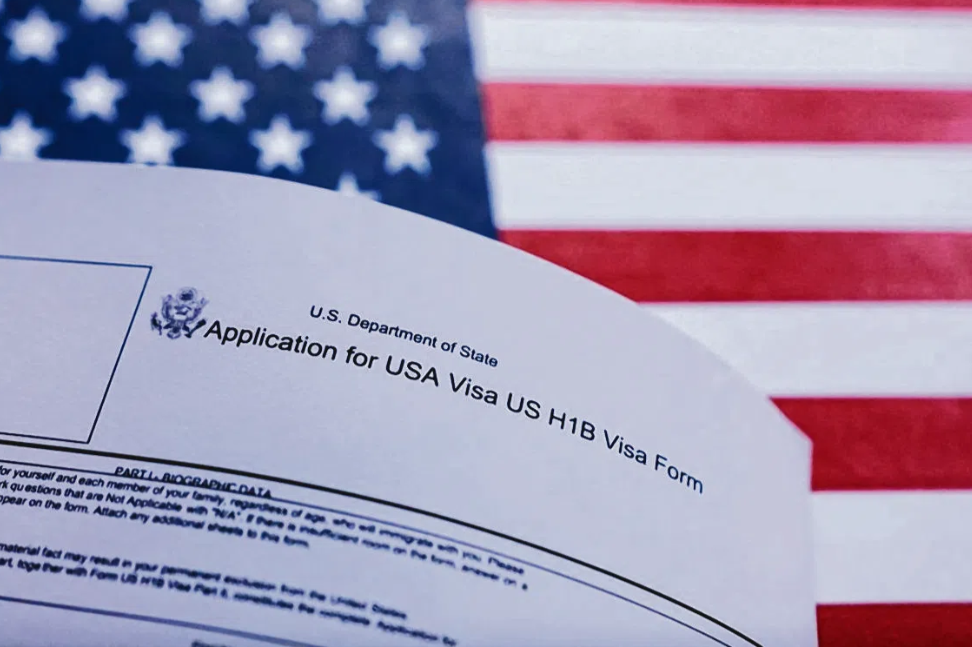
The exodus is becoming unmistakable. When Deepak packed his family into a flight bound for Kerala in May, he was surrendering fifteen years of accumulated professional achievement in the United States—a sacrifice that would have been unthinkable just two years earlier. The decision crystallised a broader unravelling of American technological dominance: the immigration regime under President Donald Trump is dismantling the very visa system that attracted global talent to Silicon Valley and beyond, forcing skilled workers to recalculate whether the American Dream still justifies the stress.
Deepak's calculus reflected a growing rationality among foreign professionals. Securing another position after his October layoff proved manageable enough, yet the psychological toll of H-1B uncertainty proved decisive. Unlike citizens enjoying unconditional employment rights, visa holders face a guillotine: lose your job, and you have precisely sixty days to find another employer willing to sponsor your visa or face deportation. In India, by contrast, he could rebuild without that existential dread. The Trump administration's proposed US$100,000 application fee for new H-1B visas—a staggering twenty-five fold increase from the standard cost—initially generated panic across the tech sector about whether the charge would extend to renewals and transfers. Although a federal judge struck down that particular policy in June, the administration persisted, introducing a US$4,000 surcharge for extensions and renewals from September onwards. The cumulative effect transformed H-1B sponsorship from an administrative obligation into a serious financial commitment that many companies suddenly questioned.
The data now substantiates what anecdotal evidence has long suggested. According to Xpheno, a Bengaluru-based talent consulting firm, approximately 15,100 Indian technology professionals returned to India during 2025, compared with 9,800 in 2024. By 2026, that figure had already reached 7,300 returnees within just the first months of the year. While comparable statistics for Chinese returnees remain elusive, China's Ministry of Education documented that 536,000 students came home after completing their studies abroad in 2025—an increase of 8.3 per cent year-over-year that signals declining confidence in America's future as a magnet for talent. The corresponding plunge in H-1B petition approvals among the world's largest technology employers adds statistical heft to these migration trends. For fiscal year 2026, the top 100 H-1B sponsors including Amazon, Infosys, TCS, Apple, and Microsoft are on track to receive approvals declining more than 10 per cent below 2025 levels, representing a fracture in the machinery that has supplied Silicon Valley with decades of external expertise.
The American technology sector simultaneously confronts structural headwinds beyond immigration policy. Meta, Visa, Amazon, and numerous other technology giants have conducted massive workforce reductions over recent years, eliminating thousands of positions including many held by American citizens. Artificial intelligence implementation has prompted extensive restructuring that eliminated roles faster than new ones materialised. This compression of opportunity coincided precisely with Trump's immigration restrictions, creating a vicious squeeze for foreign workers. Where once H-1B holders occupied niches that attracted fewer domestic candidates, they now competed directly with laid-off American professionals desperate to maintain their own livelihoods. The playing field tilted decisively against foreign applicants, particularly those without exceptional credentials in high-demand specialisations like artificial intelligence or advanced data analytics.
Carrie's experience encapsulates this deterioration. A data analyst from China in her third year of H-1B sponsorship, she was notified of termination by her Midwestern employer and departed in June. At her most desperate, she submitted thirty job applications daily; by the time her situation became acute, she had reduced this to five applications per day. Despite blanket outreach to every corporation still offering H-1B sponsorship, she received rejection after rejection. Without securing new employment before August's deadline, she faced mandatory departure from the United States. Her story represents one of thousands of similar narratives across the technology industry: qualified professionals systematically excluded from the labour market despite willingness to work and institutional capacity to employ them.
Indian and Chinese nationals dominate the H-1B visa pool, comprising approximately 70 and 12 per cent respectively of all holders, with the overwhelming majority concentrated in technology sectors. These cohorts represent America's most educated immigrant populations and enjoy among the highest income levels of any foreign-born group. Yet paradoxically, this prominence has invited intensified social hostility. The AAPI Equity Alliance has documented accelerating racist attacks targeting Indian and Chinese Americans, a phenomenon that compounds the practical employment barriers with social alienation. The cumulative effect—policy restriction, labour market saturation, economic uncertainty, and social animus—has dissolved the psychological commitment that previously anchored foreign professionals to American careers despite visa complications.
Nupur Dave, a Bengaluru-based consultant who has assisted thousands of Indian technology professionals navigating repatriation, observes a qualitative shift in client motivation. Previously, many returnees viewed their American experience as temporary, intending to endure visa complexities for another few years before consolidating wealth and returning home. Now the flow has reversed; layoffs have convinced even those prepared to persevere that departure represents the rational choice. This transformation extends beyond merely reactive responses to Trump's policies; it reflects a recalibration of what constitutes professional security and quality of life. The luxury of stability in one's home country increasingly outweighs the material accumulation possible in an uncertain foreign environment.
India's domestic technology ecosystem has simultaneously matured sufficiently to absorb returning professionals. Global Capability Centres—subsidiaries and centres of excellence maintained by multinational corporations within India—have proliferated to approximately 2,000 entities collectively recruiting roughly 100,000 employees annually since 2023. Within this cohort, Xpheno's research indicates that the top 125 Global Capability Centres absorbed approximately 7,000 mid and senior-level technology professionals with more than a decade of experience during the preceding twelve months, including 2,800 who returned directly from the United States. These positions provide meaningful employment without necessitating immigration sponsorship or visa anxiety. Yet Kamal Karanth, Xpheno's co-founder, cautions that returnees lack automatic premium valuation in India's labour market unless they possess specialised expertise in data science or artificial intelligence. Compensation packages frequently trail what these professionals commanded in America, requiring psychological adjustment beyond merely geographic relocation.
Yet some returnees have discovered unexpected benefit in the transition. Ram, a thirty-eight-year-old product manager who abandoned Connecticut after nine years of American residence, returned to Bengaluru in early 2025 with his wife and young daughter. He has deliberately avoided immediate job hunting, instead drawing on accumulated savings to contemplate his professional future with a freedom he had never previously experienced. The H-1B visa system, despite its material generosity, had foreclosed such contemplation; survival required continuous employment transitions calibrated to visa renewal cycles. Now Ram entertains previously forbidden questions: should he persist in product management, attempt entrepreneurship, or explore entirely different vocational directions? The return to India paradoxically provides what American prosperity had denied—genuine temporal freedom to reconsider life's fundamental direction without the imperative of maintaining visa status.
For Southeast Asian observers, these developments carry significant implications beyond mere geopolitical schadenfreude. Malaysia, Singapore, and other regional economies increasingly compete for technology talent against both established American centres and emerging Asian competitors. The repatriation of experienced Indian and Chinese professionals, combined with diminished American immigration openness, redistributes global talent flows away from traditional Western hubs. This transition creates both opportunities and challenges: Malaysian and Singaporean employers may find recruitment of returning foreign talent more feasible, yet simultaneously face competition from India and China for intermediate-tier technology professionals who previously viewed the United States as the inevitable career culmination. The Trump administration's policies, whatever their domestic political motivations, are recalibrating global human capital allocation in ways that will reshape technology sector competition throughout Asia for the remainder of this decade.

