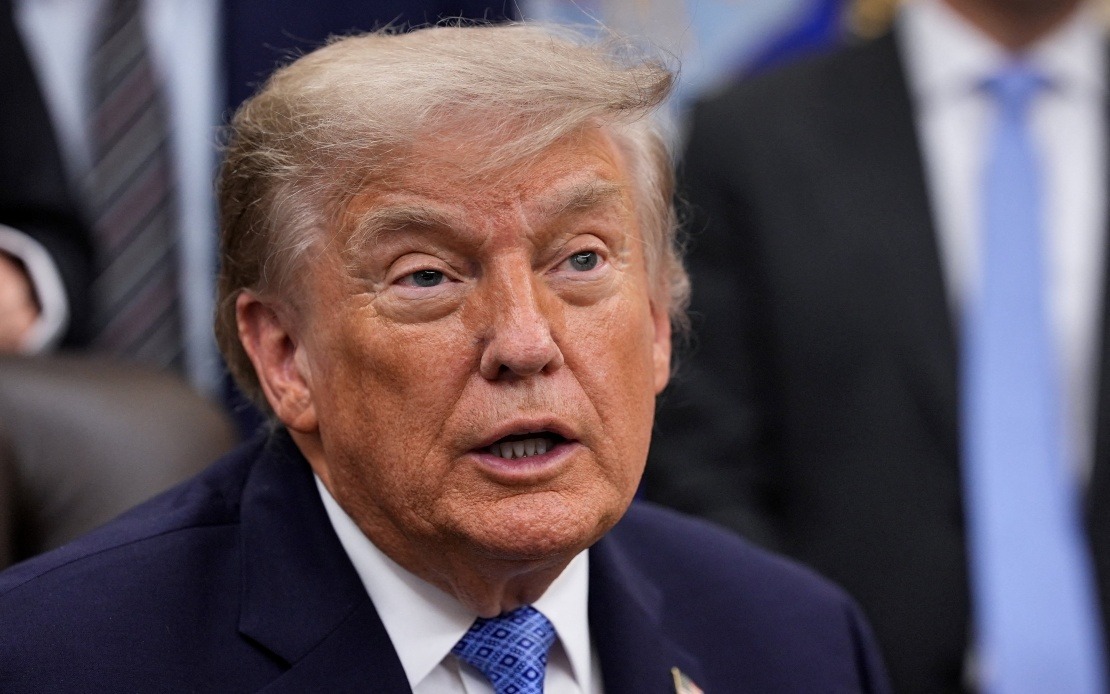
United States President Donald Trump is scheduled to deliver a televised address to the nation on Thursday evening, marking another significant moment in his second term presidency. The speech, set for 9 pm Eastern Time (0100 GMT Friday), will occupy one of the most coveted and high-visibility time slots available on American television, underscoring the importance of whatever announcement or message the administration intends to convey.
The announcement came via Trump's Truth Social account, his preferred platform for direct communication with supporters and the broader public. Such prime-time slots are traditionally reserved for matters of substantial national consequence, whether they involve policy declarations, responses to international crises, or addresses on matters touching the everyday lives of American citizens. The White House has provided no details regarding the specific subject matter, leaving observers and media analysts to speculate about the address's focus.
The timing raises particular questions given the volatile international environment facing the United States. For months, escalating tensions between America and Iran have dominated American news cycles, generating considerable domestic political attention and public concern. The conflict has recently intensified again, adding urgency to the question of whether Trump will use his address to discuss these developments or announce new diplomatic or military positions regarding the Middle Eastern situation.
Energy prices remain a contentious domestic issue, with Americans experiencing elevated petrol costs that have become intertwined with the geopolitical tensions. Fuel prices at the pump remain politically sensitive, directly affecting household budgets and consumer sentiment ahead of critical elections. The administration's handling of both international relations and economic pressures facing working Americans will likely feature prominently in electoral calculations over coming months.
This televised address represents Trump's continued use of direct-to-public communication strategies, reinforcing his established pattern of bypassing traditional media filters to deliver messages directly to American viewers. Since beginning his second presidential term in January 2025, Trump has utilized such high-profile moments strategically. Previously, in December, he delivered a major address defending his economic record amid mounting domestic pressure from critics questioning his fiscal policies and their effects on ordinary Americans.
For Southeast Asian observers and Malaysian policymakers, developments in American foreign policy carry significant implications. The region's security architecture, trade relationships, and strategic partnerships all depend substantially on United States engagement and policy direction. Decisions regarding Middle Eastern conflicts influence global energy markets that affect regional economies, including Malaysia's import-dependent energy sector and international trade competitiveness.
The political context surrounding this address deserves particular attention. Trump's Republican Party faces challenging electoral forecasts, with midterm elections arriving approximately four months after this speech. These congressional contests will determine whether Republicans maintain legislative momentum or face significant setbacks that would reshape the political balance in Washington. Strategically timed addresses can serve multiple functions: announcing policy while simultaneously energizing a political base ahead of crucial electoral contests.
The uncertainty surrounding the address's topic reflects broader questions about Trump's current priorities and strategic focus. Will he emphasize international assertiveness, domestic economic management, or some combination of both? The choice carries consequences extending far beyond American borders, affecting everything from trade negotiations to security alliances to investment decisions by multinational corporations with significant operations in Southeast Asia.
Trump's track record with televised addresses demonstrates his willingness to use such occasions for major announcements with substantive policy implications. The selection of prime-time television reflects an assessment that what he intends to convey warrants maximum viewership and public attention. Whether the subject involves military considerations, economic policy, diplomatic initiatives, or domestic priorities, the choice to monopolize prime-time broadcasting signals genuine significance.
For Malaysian and Southeast Asian audiences, monitoring American presidential addresses remains essential. The region's geopolitical positioning increasingly depends on understanding American strategic intentions, particularly regarding Asia-Pacific security and economic arrangements. Regional leaders and business communities will likely scrutinize Trump's remarks carefully for signals about future American engagement levels in the region.
The lack of advance disclosure about the address's content means markets, governments, and observers across the globe maintain heightened attention to upcoming developments. Financial markets may respond to unexpected announcements regarding trade, military posture, or international relations. Energy markets particularly await any clarification regarding American policy toward Iran or broader Middle Eastern stability, given direct linkages to global oil pricing.
As Thursday evening approaches, the anticipation surrounding Trump's address will intensify. Whether he addresses Iran, economic matters, or some combination of pressing national concerns, the speech will undoubtedly shape subsequent political discourse both domestically and internationally. For observers beyond American borders, the address represents another data point for assessing American priorities under Trump's renewed leadership and calculating how those priorities will affect their own national interests and regional dynamics.

