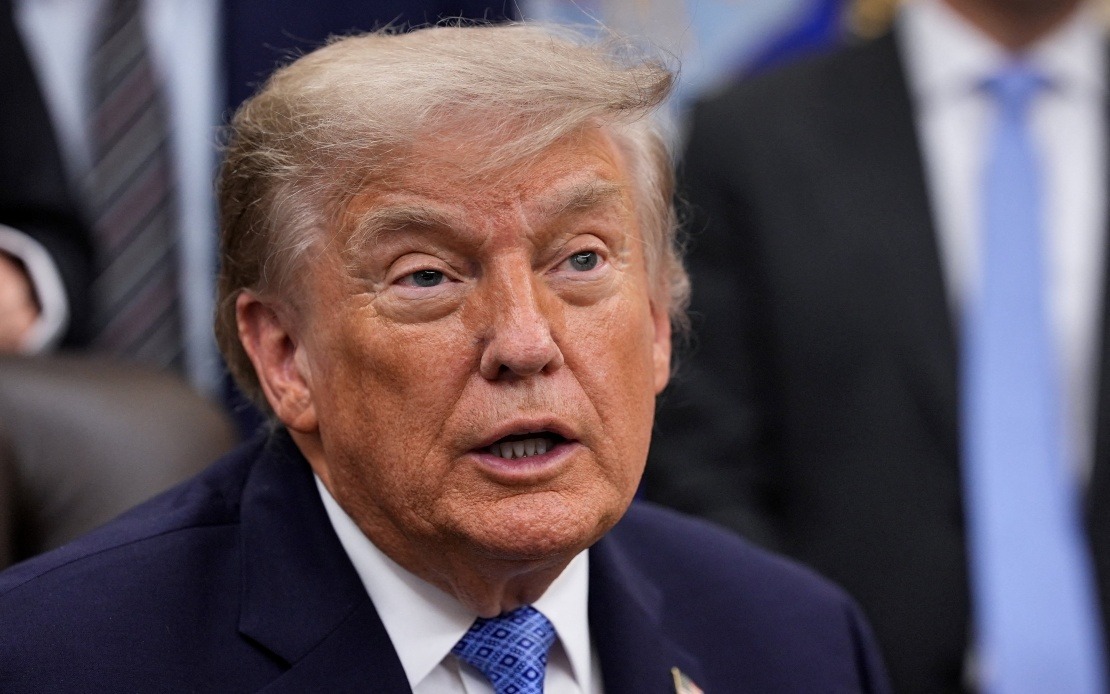
US President Donald Trump has escalated trade tensions with Canada by linking cross-border wildfire smoke to tariff policy, marking an unusual intersection of environmental and commercial disputes between the two nations. Writing on his Truth Social platform on Friday, Trump declared that the "cost of the pollution" from smoke drifting across the border must be reflected in increased tariffs Canada currently faces, signalling his intention to weaponise the environmental issue in trade negotiations. The rhetoric underscores how climate-related challenges are becoming entangled with protectionist economic policies at the highest levels of government.
The source of the smoke is dozens of wildfires burning across Ontario and the northern Minnesota region, creating severe air quality degradation across a vast swath of North America. Cities including Toronto, Chicago, Detroit, and Washington have all experienced noticeable deterioration in air quality, with New York facing particularly acute visibility reduction and persistent smoke odours. The phenomenon is not isolated to specific urban centres but rather represents a regional crisis affecting millions of people across both sides of the international border, demonstrating how environmental hazards transcend political boundaries.
Trump's accusation focused on what he characterised as Canada's failure to maintain forests adequately and clear debris that he claimed created conditions for fires to spread unchecked. He asserted that the United States was experiencing an "unnecessary invasion by filthy, polluted, and unhealthy air" that posed unacceptable health risks to Americans. The language employed was particularly inflammatory, portraying the environmental phenomenon as a deliberate or negligent infringement rather than a complex natural and meteorological occurrence beyond simple governmental control.
However, Trump's explanation conflicts sharply with established scientific consensus. Research overwhelmingly links North American wildfires to climate change rather than forest management practices alone. Rising temperatures, prolonged droughts, and shifting precipitation patterns have created conditions where fires ignite more easily and spread with greater intensity across the continent. This scientific reality complicates Trump's framing considerably, as it suggests that addressing the root cause would require engagement with climate policy rather than tariff retaliation.
The political response from Canadian leadership provided a stark counterpoint to Trump's demands. Ontario Premier Doug Ford rejected the complaint-focused approach, arguing instead that politicians should offer mutual assistance as Canada has historically done for American communities facing similar disasters. Ford's statement highlighted the reciprocal nature of natural disasters and the long-standing practice of cross-border support during environmental crises. His response implicitly suggested that Trump's tariff threat contradicted humanitarian norms and practical cooperation frameworks established over decades of continental relations.
Trump indicated he would contact Prime Minister Mark Carney to determine Canada's intended response to the smoke situation, framing the conversation as though it would address what he presented as a deliberate policy failure. This approach presupposes that Canadian leadership either caused the wildfires intentionally or possesses simple solutions to contain them entirely, neither of which reflects the complexity of wildfire management in boreal forest regions. The diplomatic framing also ignored that Ontario has been actively fighting the fires while grappling with the same climate-driven conditions affecting firefighting efforts across the continent.
The episode illustrates how environmental crises increasingly become weaponised within broader trade and political disputes, particularly when leaders reject scientific explanations in favour of narratives that serve immediate political objectives. By attributing the smoke to Canadian negligence rather than acknowledging climate change, Trump advanced a position that simplifies a complex environmental phenomenon into one of national responsibility and blame. This rhetorical strategy, however, risks undermining the credibility of American climate policy engagement internationally and complicates bilateral cooperation on shared environmental challenges.
For Southeast Asian observers, the Trump-Canada dispute offers cautionary lessons about how climate impacts will increasingly intersect with trade relationships and nationalist rhetoric. As climate change intensifies environmental pressures across Asia—from transboundary haze during forest fire seasons to shared water resources and shared atmospheric pollution—regional governments may face similar pressures to blame neighbours or demand compensation through trade mechanisms. The Canadian example demonstrates how such approaches can deteriorate relationships and distract from scientific solutions.
The broader context of US-Canada relations adds another dimension to Trump's tariff threat. Trade tensions between the two countries have already escalated over other issues, and linking environmental matters to tariff policy creates precedent for using natural disasters as justification for further economic measures. This precedent could have implications for how other bilateral relationships are managed when environmental transboundary issues arise, potentially encouraging states to seek economic leverage rather than cooperative solutions during climate-related crises.
Canada's forest management record, while imperfect like all jurisdictions managing vast boreal territories, does not explain the current wildfire crisis adequately. Climate research consistently shows that warmer temperatures create longer fire seasons and allow fires to burn with greater intensity regardless of management practices. Addressing Trump's concerns would require engaging with climate science and developing comprehensive adaptation strategies rather than pursuing tariff escalation that diverts attention from solutions.
The situation also reflects how polarisation over climate science in American politics influences international relations. Countries that accept climate science as foundational to policy face negotiating partners that reject or downplay it, creating fundamental disagreements about causation and appropriate responses. Canada's emphasis on climate change as a root cause of wildfires contradicts Trump's focus on forest management, making the two jurisdictions operate from incompatible diagnostic frameworks.
Going forward, the Canada-US dispute will likely serve as a test case for how developed nations navigate environmental crises during periods of trade tension and political polarisation. Whether the countries can reorient toward scientific consensus and cooperative management remains uncertain, but Trump's approach suggests that environmental issues will continue to be subordinated to trade and nationalist political messaging rather than treated as shared challenges requiring coordinated action.

