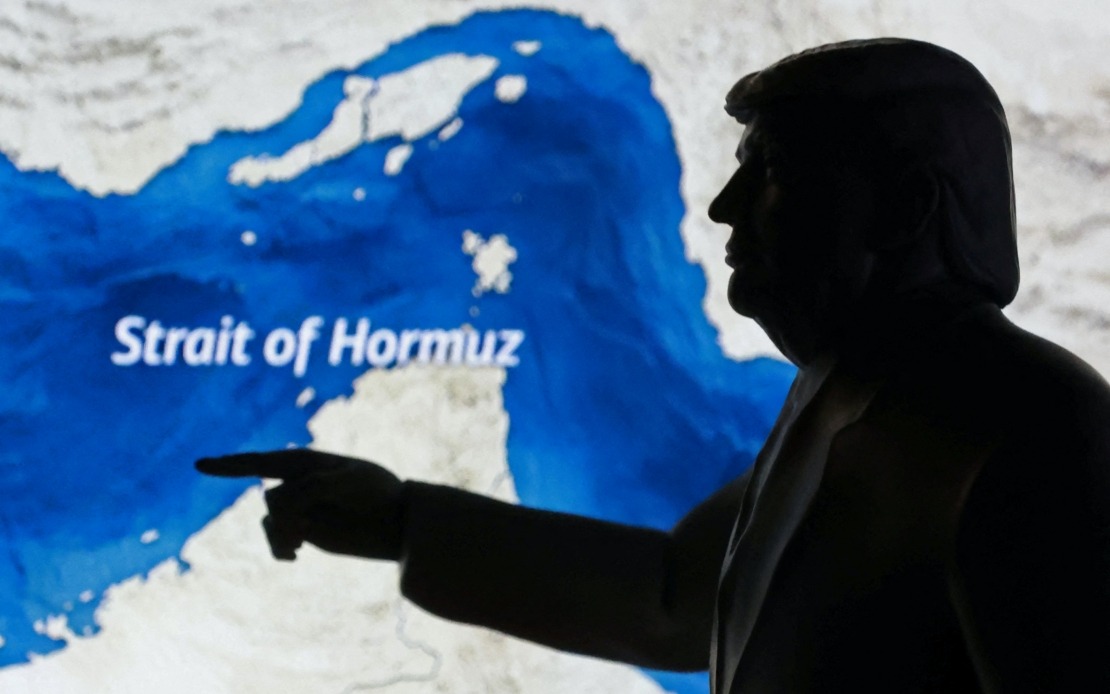
The United States has raised the stakes in its confrontation with Iran dramatically, with President Donald Trump issuing an explicit threat to destroy Iranian infrastructure in response to any attacks on commercial shipping through one of the world's most critical maritime chokepoints. Speaking on his Truth Social platform, Trump declared that Washington would systematically target either a bridge or power plant inside Iran—potentially including facilities near the capital Tehran—for each incident involving Iranian missiles, rockets, drones, or other weapons directed at vessels transiting the Strait of Hormuz.
This uncompromising stance marks a significant hardening of US policy toward Tehran and represents a departure from traditional diplomatic language governing international disputes. The specificity of Trump's threat, naming particular categories of infrastructure and explicitly mentioning Tehran, signals an intention to inflict cumulative economic and strategic damage on Iran's critical systems. Such an approach fundamentally alters the calculus of risk for Iranian decision-makers, as each hostile action would carry a guaranteed, proportionate response targeting civilian infrastructure essential to the functioning of the Iranian state.
The declaration arrives amid an already volatile security environment in the Persian Gulf region. The United States has conducted multiple military operations against Iranian targets over the preceding week, while Iran has responded with its own strikes against what Tehran claims are American military installations distributed across several countries in the Middle East. This tit-for-tat cycle demonstrates how quickly escalation can occur in the region, where military forces operate in close proximity and political tensions run exceptionally high.
The timing proves particularly significant because these threats emerge despite the existence of a tentative framework agreement brokered by Pakistan. That accord, signed in June by both Washington and Tehran, was specifically designed to halt the conflict that erupted in February and establish conditions for a comprehensive peace settlement. The fact that military exchanges have intensified after this diplomatic agreement underscores how fragile any arrangement remains and how quickly circumstances can deteriorate when neither side perceives the other as committed to restraint.
For Malaysian policymakers and regional observers, this escalatory rhetoric carries substantial implications. The Strait of Hormuz represents a chokepoint through which approximately one-third of globally traded seaborne petroleum transits daily. Malaysia, as a major petrochemical producer and energy-dependent nation, faces direct exposure to any disruption in this critical waterway. Rising tensions and explicit threats to Iranian infrastructure could easily trigger further attacks on shipping, insurance cost increases, or even temporary closure of the strait—developments that would immediately ripple through Malaysia's economy and energy security calculations.
The broader context of this confrontation reveals how regional conflict dynamics have fundamentally shifted from earlier patterns of proxy warfare toward more direct military exchanges between principal actors. Iran's willingness to strike back openly, rather than working solely through non-state proxies, suggests a significant change in Tehran's risk tolerance or assessment of consequences. Similarly, the Trump administration's public commitment to destroying named categories of infrastructure removes diplomatic ambiguity and establishes clear thresholds for retaliation, which paradoxically could either deter Iranian action or provoke it through nationalist sentiment within Iran.
Southeast Asian nations must weigh these developments carefully given their economic dependence on Gulf energy supplies and their commitment to freedom of navigation principles. Any major disruption to Hormuz shipping would affect regional trade flows, investment climates, and the stability that underpins ASEAN's economic integration. The threat to civilian infrastructure—bridges and power plants—also raises humanitarian concerns and establishes precedents that extend well beyond the immediate US-Iran dispute into broader questions about proportionality and targeting doctrine in regional conflicts.
The historical record suggests that explicit threats of this nature can sometimes function as deterrents when backed by demonstrated capability and credible will. However, they equally risk creating face-saving imperatives for the threatened party, particularly when issued through public forums rather than private diplomatic channels. Iran's leadership faces intense domestic pressure from hardline constituencies that demand resistance to what they characterize as American imperialism, making public threats potentially counterproductive by forcing Tehran's hand into responses that might not otherwise occur.
Longer-term implications deserve consideration as well. Should this cycle of attack and threatened retaliation continue without producing either clear victory or diplomatic breakthrough, the risk of miscalculation grows exponentially. A single strike that causes significant casualties among American personnel, for instance, could trigger a response far exceeding the stated policy of infrastructure destruction. Conversely, successful destruction of major Iranian infrastructure could provoke escalations beyond conventional military means.
The international community's response to these threats remains notably muted, with traditional mediators apparently lacking leverage to influence either party's calculations. China and Russia, who possess substantial diplomatic influence with Iran, have not visibly stepped forward with proposals to de-escalate. European nations, focused on their own security challenges, have similarly maintained distance from direct engagement in the Gulf confrontation. This absence of third-party pressure creates space for bilateral dynamics to escalate unchecked by international concern or mediation efforts.
For Malaysia specifically, the situation underscores the vulnerability of Southeast Asian economies to developments in distant regions where local nations exercise minimal influence. While ASEAN has historically maintained studied neutrality on Middle Eastern matters, the economic realities of energy dependence and maritime trade make genuine indifference impossible. Regional governments must therefore develop contingency planning for potential disruptions while simultaneously engaging discreetly with both American and Iranian counterparts to emphasize the global costs of further escalation.

