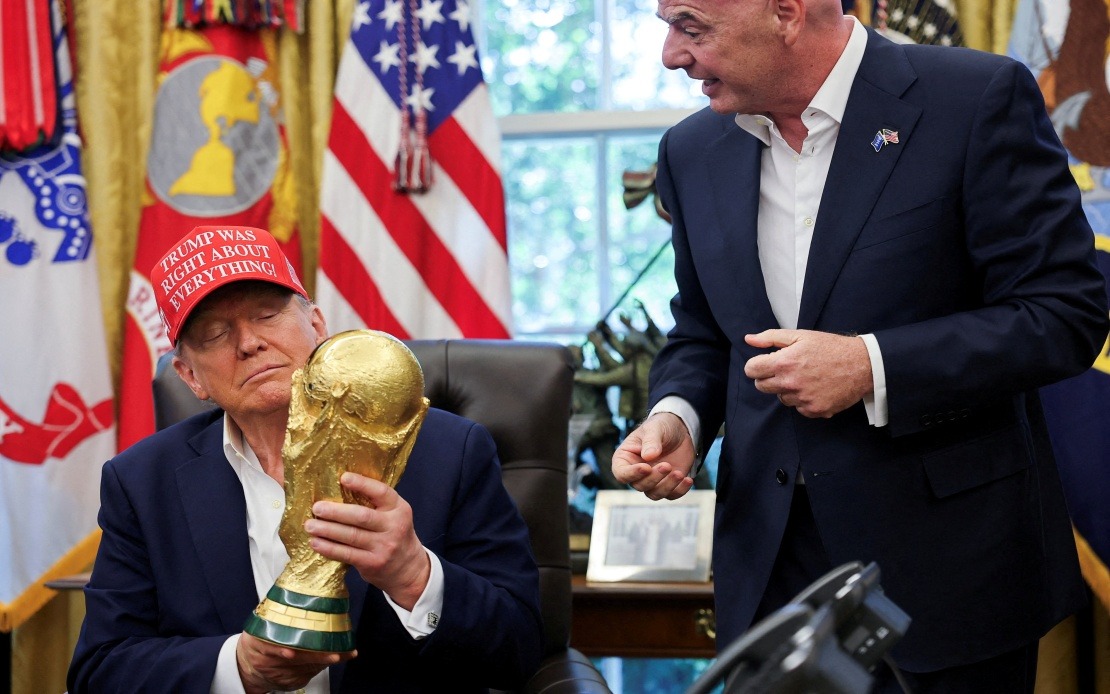
United States President Donald Trump offered unexpectedly warm words for Spain's government and football team on Sunday, striking a markedly different chord from his inflammatory rhetoric of just weeks earlier. Speaking to reporters in Istanbul immediately after Spain's 1-0 World Cup final triumph over Argentina, Trump indicated he bore no animosity toward Spanish Prime Minister Pedro Sanchez, despite having previously ordered a sweeping ban on American trade with the European nation.
The timing of Trump's diplomatic pivot raises intriguing questions about the stability of international relationships and how ceremonial sporting occasions can reshape political narratives. His praise for Spain's performance—describing the match as "exciting" and "great"—and his public acknowledgement that the Spanish team simply "played better" suggests a calculated effort to reset fractured relations. This transformation occurred with striking speed, occurring within days of some of his harshest condemnations of any European ally.
Just weeks prior at a NATO summit in Ankara, Türkiye, Trump had subjected Spain to withering criticism that went well beyond typical diplomatic disagreement. He branded the nation a "wasted cause" and castigated Madrid as a "terrible partner in NATO," drawing particular ire over Spanish reluctance to grant American military forces unrestricted access to Spanish bases during potential conflicts with Iran. The president's frustration extended to what he perceived as Spain's inadequate commitment to defence expenditure, specifically their resistance to meeting NATO's five per cent spending target.
Trump's language at that NATO conference betrayed genuine anger rather than mere negotiating posture. He declared he wanted nothing whatsoever to do with Spain, explicitly instructing aides to "cut off all trade with Spain, please, including visits." His contemptuous dismissal that Spanish officials were "hopeless, bad people" represented the kind of categorical denunciation rarely heard between allied nations, signalling a complete breakdown in bilateral relations from the American side.
The abrupt reversal illustrates how Trump's foreign policy approach, characterised by transactional calculations and mood-dependent decision-making, can produce jarring inconsistencies within remarkably short timeframes. The shift also reflects broader dynamics within Western alliance-building, where economic leverage and military positioning remain contentious even among ostensible partners. Spain's resistance to defence spending increases and its cautious approach to military basing agreements reflect broader European concerns about American military overreach and the sustainability of current defence budgets amid domestic pressures.
For Malaysia and other Southeast Asian nations observing great power dynamics, Trump's temperamental diplomacy presents both instructive lessons and cautionary tales. The sudden pivot demonstrates that American policy pronouncements, even those made at formal international gatherings, should not necessarily be treated as permanent commitments. Malaysian policymakers, particularly those engaged in defence and trade negotiations with Washington, must account for potential reversals driven by symbolic gestures or personal interactions rather than underlying strategic calculations.
Trump's treatment of Spain also illuminates ongoing tensions within the NATO alliance regarding burden-sharing and military basing rights. Spain's resistance to higher defence commitments reflects economic realities and domestic political considerations affecting numerous European nations. These tensions carry implications for the broader Western alliance structure and could influence how Washington approaches similar negotiations with other regional partners in the Indo-Pacific, where American military presence and base access remain strategically vital.
The World Cup context itself merits consideration as more than mere coincidence. Sporting victories carry profound symbolic weight in international relations, and Trump's evident pleasure at watching the match appears to have triggered a reframing of his relationship with Spain's government. This suggests that diplomatic relationships, even when severely strained, retain flexibility when key constituencies experience positive outcomes. The president's willingness to extend public praise following Spain's victory indicates his concern with appearing magnanimous and avoiding the appearance of petty grievances.
The substantive disagreements underlying Trump's earlier criticism remain unresolved. Spain's position on military basing, defence spending commitments, and policy toward Iran has not demonstrably changed between the NATO summit and the World Cup final. The Spanish government did not announce any sudden reversal on these matters in response to American demands. Instead, Trump's rhetorical moderation suggests he may have calculated that his previous threats, while satisfying in the moment, generated sufficient political costs to warrant recalibration. Whether this represents genuine strategic reconsideration or merely tactical adjustment remains unclear.
For Malaysian observers, the episode underscores the importance of distinguishing between rhetorical bluster and actual policy implementation in international relations. Trump's trade ban proclamation, while dramatic, requires legislative action and implementation mechanisms that take time to execute. His reversal before such mechanisms fully activate suggests opportunities exist for affected nations to negotiate through formal channels while public attention shifts. The lesson applies directly to Southeast Asian nations managing their own relationships with unpredictable American administrations.
Looking forward, the question becomes whether Trump's softer tone on Spain presages a genuine warming or merely represents tactical repositioning before inevitable future conflicts. Sanchez and Spanish officials must navigate this uncertainty while protecting their nation's interests, particularly regarding military independence and fiscal prudence. The broader implications extend throughout the Western alliance, where other nations watch carefully to determine whether Trump's policies genuinely change based on substantive developments or fluctuate based on immediate circumstances and personal mood.

