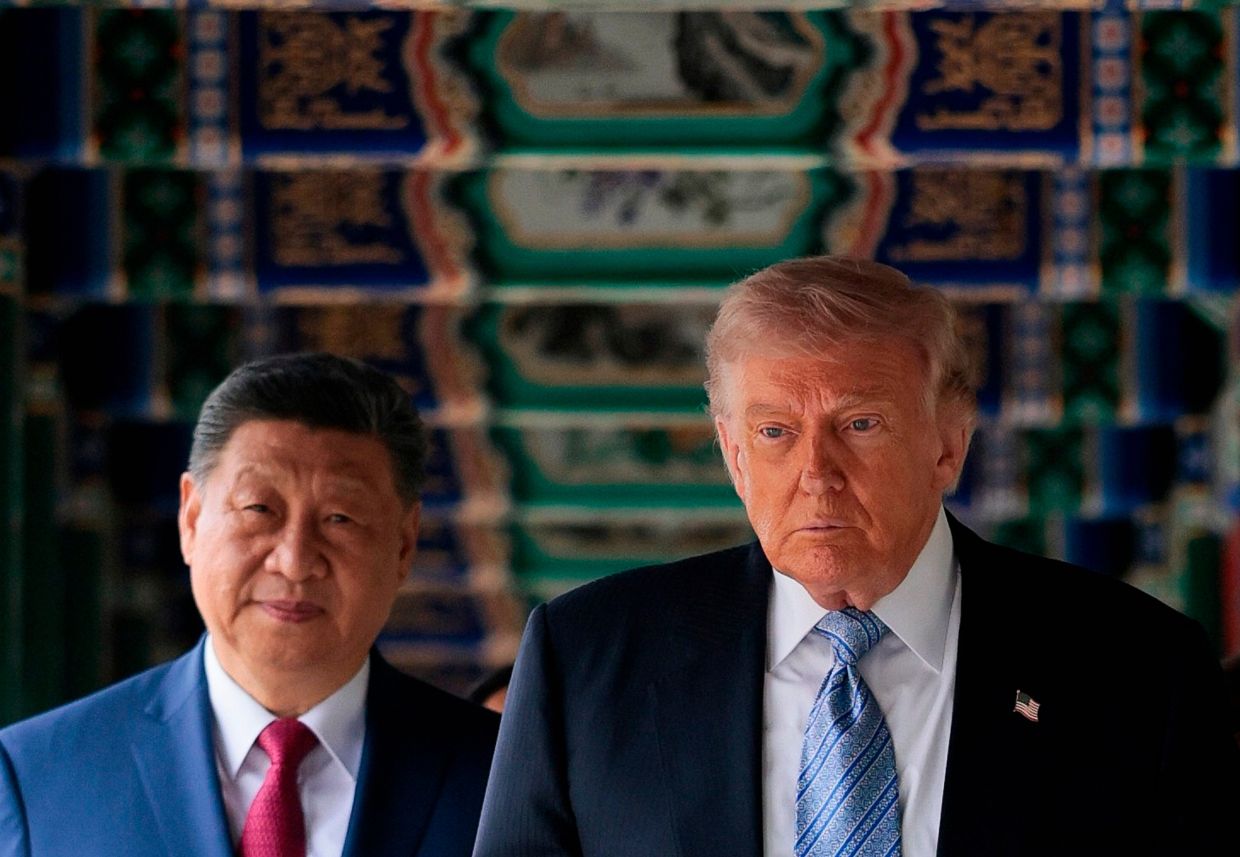
The Trump administration is projecting distinctly mixed signals toward Beijing as Chinese leader Xi Jinping prepares for a state visit to the United States on September 24, reflecting an inconsistent approach that has become characteristic of recent US-China relations. Trump's recent statements oscillate sharply between public accusations levelled at the Chinese government and efforts to maintain diplomatic rapport with Xi personally, creating uncertainty about Washington's actual strategic intentions toward its largest geopolitical competitor.
The latest flashpoint involves allegations that China has been supplying weapons to Iran through routes originating in western China and transiting Pakistan, with arms valued between US$60 million and US$70 million. When questioned about these reports, Trump expressed diplomatic caution, saying he would find such conduct "surprising" given Xi's purported assurances. In a carefully calibrated response that preserved the possibility of reconciliation, Trump stated that while Xi had assured him strongly that China would not participate in arming Iran, the US president would be "quite disappointed" if these reports proved accurate. This phrasing suggests Trump is attempting to give China an opportunity to deny the allegations while leaving room for continued engagement.
Beijing's Foreign Ministry swiftly rejected the weapons transfer allegations as "untrue and not factual at all", reiterating China's commitment to de-escalation in Middle Eastern conflicts. This represents a familiar pattern in the relationship, as Beijing previously dismissed similar accusations made before Trump's May visit to Beijing, including claims that China was supplying weapons to Iran at that time. The consistency of these denials, coupled with the absence of conclusive international verification, underscores how allegations in the US-China relationship often remain contested rather than resolved through concrete evidence.
Trump's public rhetoric on other fronts, however, has been considerably more aggressive. Hours before commenting on the weapons reports, the American president launched a comprehensive attack on longtime US health official Anthony Fauci through social media, reviving his longstanding assertion that Covid-19 originated in a laboratory in Wuhan. Trump claimed that Fauci had consistently attempted to "protect China" by disagreeing with the lab-leak theory from the outset. While Trump has persistently promoted the Wuhan laboratory theory, the broader scientific consensus has increasingly gravitated toward the natural spillover hypothesis, where the virus jumped from animals to humans rather than escaped from a research facility. This disagreement between the president's stated belief and mainstream scientific assessment reflects deeper politicisation of pandemic origins in American discourse.
These contradictions extend beyond immediate diplomatic exchanges into Trump's broader China policy approach. Just days earlier, Trump had publicly declared that in his assessment, neither China nor Russia were "participating" meaningfully in the war involving Iran. Yet he simultaneously claimed that Xi had promised during their May Beijing meeting that China would refrain from assisting Tehran under any circumstances. Trump framed his reliance on this assurance in personal terms, stating that "considering our relationship, I take him at his word", language suggesting Trump values his personal rapport with Xi as more reliable than formal mechanisms of verification or enforcement.
Yet even as Trump expressed confidence in Xi's trustworthiness, he simultaneously issued a veiled threat, warning that if China did provide assistance to Iran, the consequences would be severe and contrary to Beijing's interests. This combination of trust-building language and implicit deterrence reveals the fundamental tension running through Trump's China strategy: maintaining diplomatic channels while signalling capability and willingness to impose costs. The approach suggests Trump believes that personal relationships with foreign leaders can substitute for institutional constraints or clear policy frameworks.
The contrast between Trump's diplomatic restraint on the Iran weapons question and his aggressive public accusations on other matters is particularly striking when examined chronologically. Merely twelve days before his measured comments about the weapons reports, Trump delivered a prime-time address in which he accused China of executing what he termed "the largest compromise of election data in history". In that speech, Trump claimed Beijing had illicitly obtained the personal files of 220 million American voters, framing the alleged breach as an "unprecedented election security nightmare". He further declassified documents that he asserted supported his claims of Chinese election interference, creating the impression of a severe security crisis requiring urgent response.
However, the Trump administration's actions since that dramatic speech reveal the hollowness behind the rhetoric. No new sanctions have been imposed on Chinese entities or officials. No additional trade penalties have been announced. No significant diplomatic consequences have been implemented. Instead, the machinery of diplomacy has continued advancing Xi's September visit without apparent disruption, suggesting that Trump's public denunciations do not reflect genuine policy intention to confront Beijing decisively. This gap between accusation and action undermines the credibility of American warnings and invites questions about whether Trump's attacks serve domestic political purposes rather than substantive policy objectives.
For Southeast Asian observers and policymakers, these contradictions carry particular significance. The region has long sought to benefit from hedging between great power competition, but Trump's inconsistent approach complicates strategic calculation. When Washington simultaneously accuses China of the largest election interference in American history while planning continued high-level diplomatic engagement, it signals that grievances may be negotiable rather than fundamental. This dynamic could embolden Beijing's confidence in weathering American criticism without fundamental policy adjustment, potentially affecting how China calculates its regional conduct toward Southeast Asian nations dependent on balanced relationships with both superpowers.
The pattern of mixed signals reflects Trump's broader philosophical approach to international relations, which prioritizes personal relationships between leaders over institutional frameworks or consistent principles. By treating assurances from Xi as personally binding while simultaneously attacking Chinese government conduct publicly, Trump creates a diplomatic environment characterised by unpredictability. For allies and competitors alike, this makes long-term planning and strategic assessment considerably more difficult, as policy direction depends on the current state of Trump's personal assessment of foreign leaders rather than clear, consistent criteria applied universally.
Looking toward Xi's September visit, these contradictions will likely persist rather than resolve. Trump has demonstrated a capacity to maintain simultaneous positions that would ordinarily be considered mutually exclusive, and his administration's decision to proceed with the state visit despite recent accusations suggests that engagement remains the preferred pathway. Whether this reflects genuine optimism about resolving differences or merely tactical delay remains unclear, but the gap between Trump's public accusations and his diplomatic actions will continue to characterise US-China relations and reverberate throughout the Indo-Pacific region.

