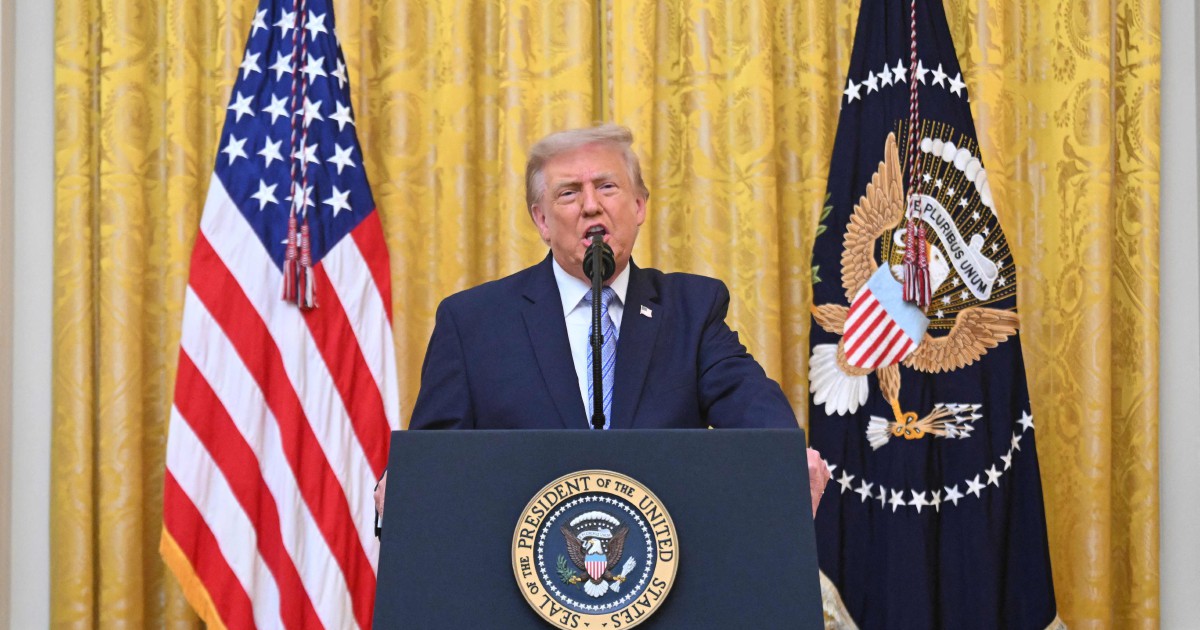
US President Donald Trump has once again promoted discredited narratives about the 2020 presidential election, alleging during a Thursday address that Beijing obtained millions of voter files and that Caracas possessed the technical capability to alter American voting systems. These claims revisit assertions that election authorities, judicial bodies, and independent investigators have thoroughly examined and rejected over the past several years.
The former president's continued promotion of these narratives reflects an ongoing pattern of election-related commentary that has persisted well beyond his initial departure from office. Such allegations have been the subject of extensive scrutiny by election officials across numerous states, federal law enforcement agencies, and courts at multiple judicial levels. The cumulative weight of these investigations has consistently produced the same conclusion: evidence substantiating fraud allegations has not materialized despite years of examination.
Domestic and international cybersecurity experts have similarly dismissed suggestions that Venezuela or any hostile foreign power possessed the capacity to manipulate voting machines on a scale that would affect electoral outcomes. The voting infrastructure across American states operates on a fundamentally decentralised basis, with security measures that have proven resilient against documented attempts at interference. Election security officials, both Republican and Democratic, have characterised the 2020 election as extraordinarily secure from a technical and procedural standpoint.
For Malaysian and Southeast Asian observers, Trump's reiteration of these claims underscores broader global trends regarding election integrity rhetoric and the challenges democracies face in managing false narratives about electoral processes. Nations across the region have grappled with their own election-related misinformation challenges, making the American experience particularly instructive. The sustained repetition of debunked claims, despite countervailing evidence and official determinations, demonstrates how electoral distrust can persist even when institutional mechanisms have addressed underlying concerns.
The legal consequences of these assertions have been minimal, with courts consistently dismissing cases lacking substantive evidence. Nonetheless, the rhetorical persistence of fraud claims has influenced public perception in significant portions of the American electorate. This disconnect between factual reality and public belief represents a substantial challenge for democratic governance, particularly when prominent political figures continue amplifying disputed narratives.
International election monitors and observers documented their assessments of the 2020 election, finding processes consistent with established American electoral standards and international norms for electoral conduct. These external perspectives provide additional independent verification that widespread fraud did not compromise the election's legitimacy. China specifically denied the voter file allegations, and Venezuelan officials have similarly rejected claims regarding their involvement in American electoral systems.
The persistence of these claims carries implications for American political stability and institutional confidence. When election results face sustained challenges unsupported by evidence, public trust in democratic processes becomes fragmented. This phenomenon has particular relevance for developing democracies in Southeast Asia, where electoral confidence remains crucial for political legitimacy and social cohesion.
Experts in election security and misinformation have analysed the rhetorical strategies underlying these repeated allegations, identifying patterns consistent with deliberate disinformation rather than good-faith inquiries into electoral integrity. The specificity of foreign actors named—China and Venezuela—combined with the lack of corresponding investigative findings suggests these claims serve primarily political rather than evidential purposes.
Moving forward, the American political system continues processing questions about election administration, though substantial evidence suggests existing systems function with considerable robustness. State election officials, many of whom hold partisan affiliation with Trump's party, have certified results and rejected fraud allegations based on their direct examination of voting records and procedures. This bipartisan consensus among election administrators carries particular weight, as these officials bear direct responsibility for electoral integrity.
For the broader regional context, the American experience illustrates challenges that transcend national boundaries. Southeast Asian democracies increasingly confront questions about electoral confidence, foreign interference allegations, and the role of prominent political figures in shaping public perception of election legitimacy. The sustained American debate, despite extensive institutional responses, suggests that technical and procedural election security improvements alone prove insufficient for building public confidence when political actors deliberately cultivate distrust.
The repeated airing of these claims, despite their consistent rejection through multiple institutional pathways, reflects deeper questions about political polarisation and the modern information environment. Viral narratives, once established, prove difficult to dislodge through factual correction alone, particularly when amplified through social media platforms and partisan media outlets. This dynamic has profound implications for democracies globally, including those in Southeast Asia where electoral processes increasingly face scrutiny and challenge.

