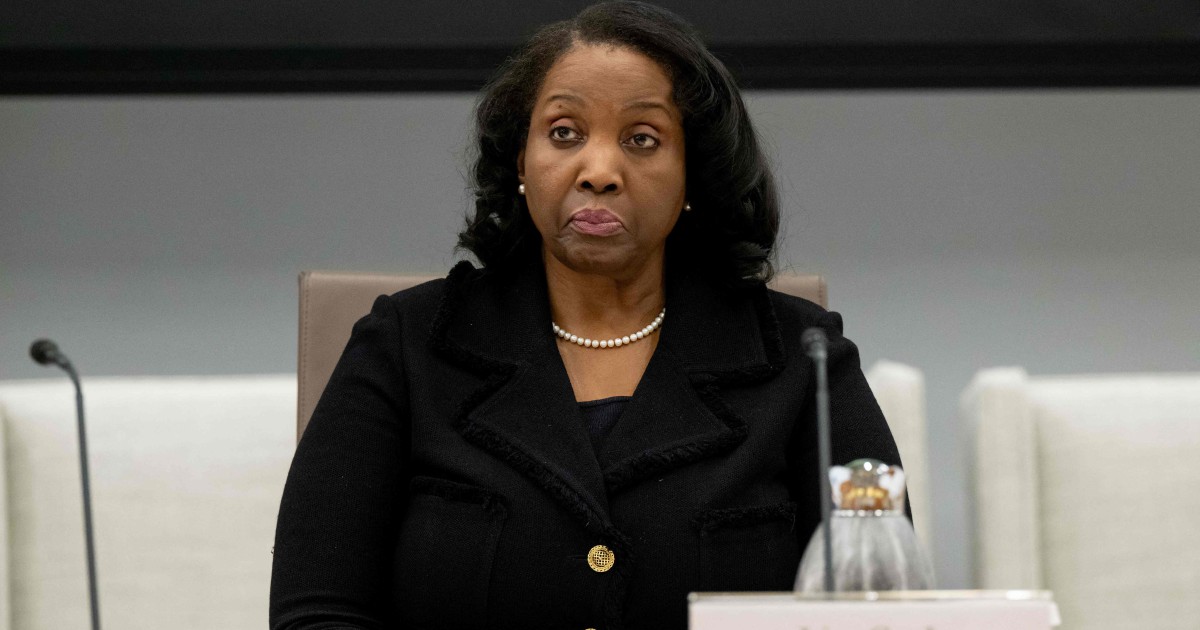
President Donald Trump is escalating efforts to force out Federal Reserve Governor Lisa Cook, invoking mortgage fraud allegations as grounds for her dismissal. The White House formally communicated this renewed initiative through a letter reviewed by AFP on Friday, marking a fresh chapter in an ongoing dispute between the executive branch and the nation's central banking authority. This latest manoeuvre follows a significant legal setback in June when the Supreme Court rejected Trump's previous attempt to remove Cook from her position, a rebuff that appeared to have temporarily halted the effort.
The Federal Reserve sits as a crucial institution within America's financial architecture, wielding tremendous influence over monetary policy, interest rates, and banking regulation. Governors serve 14-year terms specifically designed to insulate them from political pressure and allow them to prioritise economic stability over electoral cycles. Trump's attempts to remove Cook directly challenge this independence, raising fundamental questions about the separation of powers and the degree to which a sitting president can influence the central bank's leadership.
Lisa Cook earned her position as the first Black woman and first Latina to serve as a Federal Reserve Governor when she was confirmed in 2022 under President Joe Biden's administration. Her appointment marked a historic moment for diversity within the traditionally homogeneous upper echelons of American finance and monetary policy. As a prominent economist and scholar of innovation and productivity, her voice carries weight in Fed deliberations affecting everything from inflation control to employment levels.
The mortgage fraud allegations cited by Trump represent the ostensible legal foundation for removal, though observers have noted the apparent political dimensions of this campaign. Cook's tenure has coincided with elevated inflation and rising interest rates, economic conditions that have become politically contentious and associated with the Biden administration's broader policy record. The timing and persistence of removal efforts invite scrutiny regarding whether legitimate governance concerns or partisan considerations drive the initiative.
Trump's initial attempt faced court challenges that ultimately reached the Supreme Court, which determined that his previous approach lacked proper legal grounding. Rather than accept this judicial determination, the White House is apparently recalibrating its strategy, suggesting a sustained commitment to this objective despite prior legal obstacles. This tenacity reflects broader tensions within the Trump administration regarding institutional autonomy and presidential prerogatives.
The Federal Reserve's independence remains a cornerstone of American financial credibility internationally and domestically. Investors, markets, and trading partners worldwide rely upon the assumption that Fed decisions reflect economic analysis rather than political patronage. Any successful erosion of this independence could carry significant implications for confidence in American economic management and potentially for global financial stability. Emerging economies like Malaysia, which maintain substantial dollar holdings and depend on stable US monetary policy, have a vested interest in the Fed's operational integrity.
Cook's colleagues within the Federal Reserve have maintained their positions and authority despite similar controversies, suggesting that removing governors represents a challenging undertaking even for a sitting president. The statutory framework governing Federal Reserve governors was constructed deliberately to prevent politicisation of monetary policy decisions. Whether courts will ultimately validate Trump's renewed removal effort depends significantly on the legal arguments presented and how judges weigh executive authority against institutional independence.
The broader context includes Trump's well-documented scepticism toward the Federal Reserve's recent rate-hiking cycle, which he has publicly criticised as excessive and economically damaging. This ideological disagreement with Fed policy direction adds texture to questions about his motivations for pursuing Cook's removal. A sympathetic replacement might prove more receptive to presidential preferences regarding monetary accommodation and rate adjustments.
For Malaysian policymakers and economists monitoring American financial developments, the outcome of this confrontation carries practical significance. The Malaysian ringgit's exchange rate, capital flows, and borrowing costs all correlate with Fed policy and market perceptions of Fed independence. Weakening the Fed's autonomy could introduce greater volatility into global markets, affecting emerging market currencies and asset prices. Additionally, the precedent established regarding central bank independence might influence how other nations regard their own monetary authorities' operational space.
The Supreme Court's June decision against Trump did not permanently foreclose such removal efforts but rather required them to follow proper legal channels and evidence. The current White House communication suggests lawyers have presumably constructed arguments they believe can overcome the earlier objections. However, the judiciary has already signalled scepticism toward this approach, and lower courts may prove similarly unpersuaded by revised arguments.
Cook herself has not publicly commented extensively on the removal efforts, maintaining the professional discretion expected of Federal Reserve officials. Her continued service depends on navigating both the legal process and the political environment surrounding her tenure. Regardless of this particular dispute's outcome, the attempt to remove a sitting Fed governor based on contested allegations remains extraordinarily rare and potentially consequential for American institutional governance.
The renewed campaign also coincides with broader Republican scepticism toward progressive economic appointees and efforts to reshape the federal government according to Trump's vision. Cook's identity as a trailbaking minority appointment aligns her symbolically with the institutional changes and demographic shifts that motivate such initiatives. The convergence of political ideology, economic disagreement, and institutional questions makes this dispute representative of deeper tensions within American governance that extend far beyond monetary policy.

