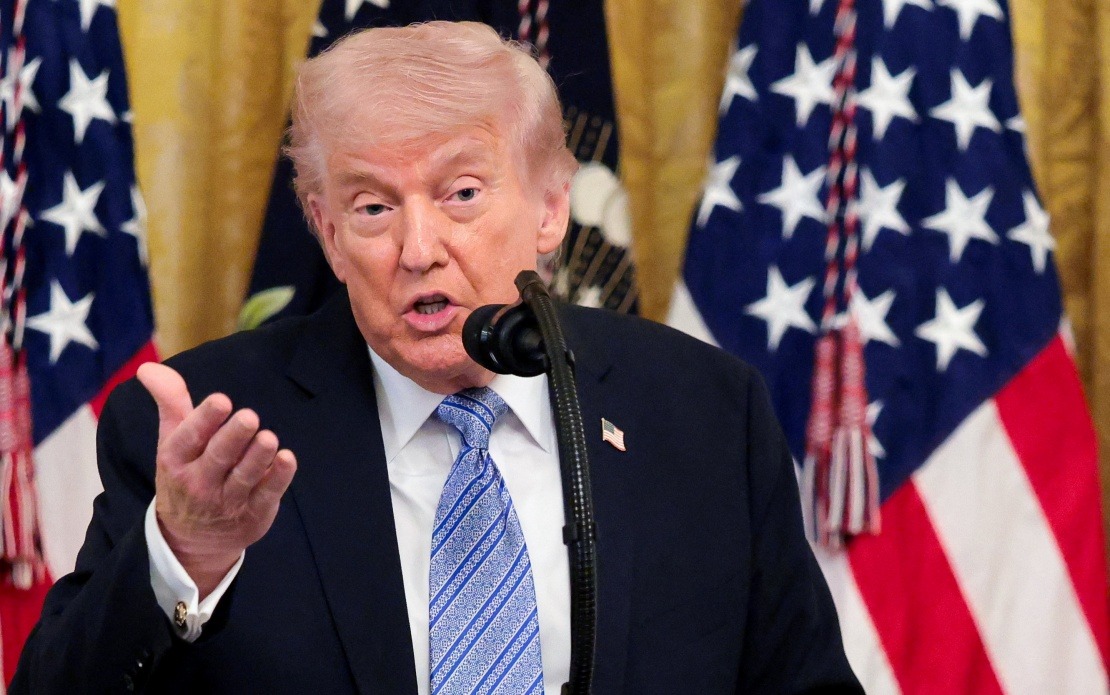
The Trump administration has set its sights on an unconventional choice for the United Nations' top post, with the US president reportedly backing FIFA President Gianni Infantino as the next secretary-general of the global body. According to reporting by the New York Post, Trump believes the 56-year-old Swiss-born administrator possesses the rare diplomatic credentials needed to unite fractious world powers around a common agenda, with sources close to the president emphasising that Infantino enjoys broad international respect and a demonstrated talent for bringing disparate parties to the negotiating table.
The potential candidacy represents a striking pivot towards sports administration at the highest echelons of international governance. Infantino's profile was significantly elevated during the 2022 World Cup in Qatar, when he cultivated an increasingly warm rapport with Trump, making deliberate moves to strengthen ties with the incoming American leadership. The FIFA chief's strategic outreach culminated in December when he presented Trump with FIFA's inaugural Peace Prize, a gesture that appeared calculated to position Infantino as someone capable of bridging international divides and facilitating dialogue on global flashpoints.
The path to the secretary-general's office, however, remains fraught with procedural and geopolitical obstacles that could derail the unconventional nomination. Under Article 97 of the UN Charter, the appointment requires a carefully choreographed sequence of approvals beginning with endorsement from the Security Council, where the five permanent members—China, France, Russia, the United Kingdom, and the United States—each wield absolute veto power. Any single permanent member's opposition would fatally undermine Infantino's candidacy before it reaches the broader General Assembly for final confirmation.
The timing is set for early 2027, when current Secretary-General António Guterres completes his term and the United Nations transitions to new leadership. The incoming secretary-general will assume office on January 1, 2027, inheriting all the accumulated challenges facing the international organisation during an era of great power competition and multifaceted global crises. The five-year term beginning in 2027 presents both significant opportunity and considerable risk for whoever assumes the role.
Trump's embrace of Infantino must be understood within the broader context of the US administration's increasingly critical stance towards established multilateral institutions. Since returning to the White House, the president has pursued an aggressive strategy of retrenchment from international frameworks, substantially curtailing American financial contributions to UN operations and orchestrating the withdrawal of the United States from several UN-affiliated bodies, most notably the World Health Organization. This pattern suggests that Trump views existing international structures as inadequate to addressing contemporary challenges and that he is exploring alternatives or reformed approaches to global governance.
The president has been particularly vocal about what he characterises as the UN's repeated failures in conflict resolution and peacekeeping operations. He has repeatedly criticised the organisation's apparent inability to meaningfully intervene in major international crises or broker lasting settlements between warring parties. This dissatisfaction prompted Trump to establish a separate, American-led Board of Peace, which sparked considerable speculation among observers about whether the administration intended to create a parallel institution to circumvent or compete with traditional UN processes.
When questioned about the existence of an alternative to the UN, Trump publicly denied harbouring such intentions, yet his administration's simultaneous pursuit of independent peace initiatives suggests a belief that traditional multilateral channels are insufficient for American diplomatic objectives. The proposal of Infantino reflects this underlying conviction that fresh approaches and unconventional figures might be needed to revitalise international cooperation and make progress on intractable geopolitical problems.
For Southeast Asian nations and the broader Asia-Pacific region, the nomination carries complex implications. A FIFA administrator with Infantino's background might bring different priorities and operational methods to UN leadership than career diplomats who have navigated traditional international relations frameworks. Regional powers would need to assess whether Infantino's diplomatic philosophy and approach to conflict resolution align with their strategic interests, particularly concerning disputes in the South China Sea, cross-strait tensions, and the evolving security architecture of Asia.
The Security Council dynamics surrounding such a nomination would prove revealing about current great power alignments. China and Russia, both permanent Security Council members, would evaluate whether Infantino's candidacy serves their interests or those of their Western counterparts. Their positions on such an unorthodox nomination could signal shifting calculations about international leadership and the future direction of multilateral institutions during a period of increasing rivalry.
Infantino's background as a sports administrator rather than a career diplomat presents both advantages and liabilities for the secretary-general role. While his experience in navigating the complex politics of international football federation provides evidence of organisational and diplomatic acumen, the secretary-general position demands expertise in armed conflict, humanitarian crises, development economics, and strategic relationships among nuclear-armed states. The question of whether skills developed in sports administration genuinely translate to managing the world's most fraught geopolitical tensions remains central to evaluating this proposal's viability.
The proposal also raises questions about the future direction of UN leadership selection. If Infantino were somehow to secure the necessary Security Council backing and General Assembly support, it would mark a significant departure from the historical pattern of appointing career diplomats and government officials to the secretary-general position. This could signal either a broadening of acceptable backgrounds for international leadership or simply reflect Trump administration preferences for unconventional appointments across multiple spheres of governance.
Regarding Malaysia's position, the country would ultimately need to assess whether Infantino's candidacy aligns with the nation's interests in a stable, effective UN capable of addressing regional security concerns and supporting development goals. As a member of the General Assembly voting on the successor to Guterres, Malaysia would participate in what could prove to be a contentious selection process if Trump's backing for Infantino meets resistance from other major powers or UN member states sceptical of the unconventional candidacy.

