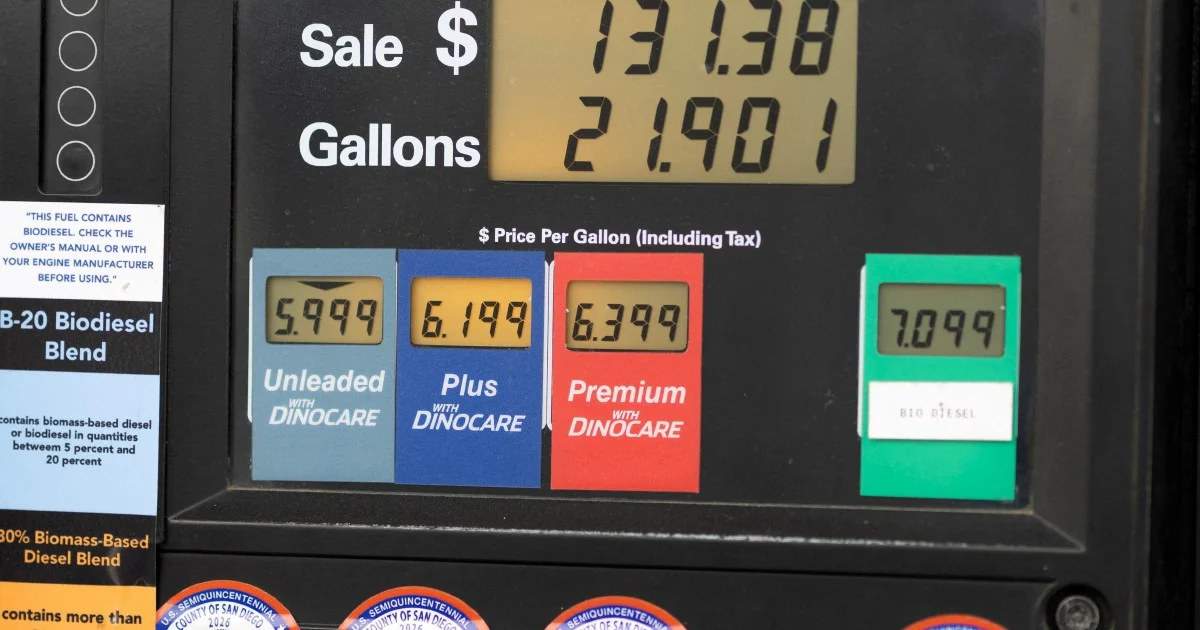
Donald Trump has directed authorities to investigate leading oil corporations over elevated gasoline prices that have resisted rapid declines, marking a fresh attempt to address public frustration over fuel costs amid escalating Middle East tensions. The directive comes as the US president faces mounting political pressure over energy pricing, a persistent concern for American households and a potential electoral vulnerability as his administration navigates regional conflict.
The investigation signals Trump's willingness to place responsibility for price movements on oil producers rather than attributing them solely to geopolitical factors beyond executive control. By publicly targeting major petroleum companies, the president positions himself as an advocate for consumer interests, a messaging strategy that resonates with voters sensitive to household energy expenses. This approach reflects a broader pattern where political leaders internationally have sought to influence or investigate fuel markets during periods of elevated costs.
The timing of the investigation merits attention given the current geopolitical landscape. Tensions in the Middle East, a region controlling substantial global oil supplies, have introduced uncertainty and volatility into energy markets. Producers and refiners often cite supply-chain disruptions, refinery constraints, and international market dynamics to justify pricing structures. By initiating a formal probe, Trump is signalling that he expects domestic producers to absorb some cost pressures rather than passing them entirely to consumers.
For Malaysian observers, this development carries particular relevance given Southeast Asia's energy economics. Malaysia itself is a petrochemical producer and exporter, and oil price movements significantly influence regional energy markets and inflation pressures. Higher global fuel costs can cascade through transportation, manufacturing, and logistics sectors across the region. An American investigation into domestic producers could theoretically influence global petroleum pricing dynamics, though the direct impact on Southeast Asian markets remains uncertain.
The investigation also reflects deeper tensions between the Trump administration and the energy industry. While Republicans traditionally maintain strong relationships with oil companies, the political calculus around fuel prices occasionally shifts when consumer sentiment becomes pronounced. Previous administrations of various ideologies have similarly pressured energy producers during periods of voter discontent, suggesting this represents a pragmatic political calculation rather than ideological positioning.
Oil markets have shown considerable resilience to policy interventions and criticism over extended periods. Investigations and threatened regulatory actions have historically produced limited lasting impact on pricing structures unless coupled with concrete policy changes or supply interventions. Producers typically operate within margins set by global supply-demand dynamics, refining costs, and transportation expenses. Without addressing underlying supply constraints or demand reduction, investigations alone may prove insufficient to achieve meaningful price reductions.
The geopolitical dimension cannot be overlooked. Middle East conflicts create genuine supply uncertainties that ripple through global energy markets. Insurance costs, shipping route risks, and production disruptions all contribute to price pressures independent of corporate profit margins. Trump's investigation, while politically beneficial domestically, does not directly address these external factors driving elevated prices across international markets.
Regional context matters here for Malaysian readers. Southeast Asia's energy sector, including Malaysia's significant oil and gas operations, exists within this global pricing framework. Any investigation or policy changes emanating from the United States could influence investment decisions, production strategies, and export pricing for regional energy companies. The precedent of governmental intervention in energy markets, even when ostensibly focused on one nation's producers, signals broader political willingness to regulate this sector.
The investigation raises questions about what constitutes appropriate corporate profit margins during periods of elevated commodity prices and geopolitical stress. Companies argue that higher prices reflect genuine cost increases and market conditions, while critics contend that excess profits warrant investigation or regulation. This philosophical divide, playing out in American politics, influences international discussions about energy pricing and corporate accountability.
Looking forward, the effectiveness of Trump's initiative will depend on investigation findings and any subsequent regulatory or legislative responses. Should the probe conclude that producers are charging inappropriately high prices, it could spark broader policy debates about price controls, profit restrictions, or tax adjustments. Conversely, if investigations reveal that prices align with legitimate market factors and cost structures, the administration faces pressure to identify alternative solutions.
For Malaysian stakeholders in energy, petrochemicals, and transportation, developments in American energy policy warrant close monitoring. While direct immediate impacts may be limited, precedents established through government investigations into oil pricing influence international energy governance discussions and investor confidence in the sector. The probe exemplifies how domestic political pressures in major economies can drive policies affecting global energy markets and regional industries reliant on stable, predictable energy pricing.
Ultimately, Trump's investigation represents a political response to genuine consumer concerns about fuel costs, reflecting the electoral significance of energy pricing across democracies. Whether such investigations effectively moderate prices or merely serve symbolic political purposes remains an ongoing question in energy economics and policy circles globally.