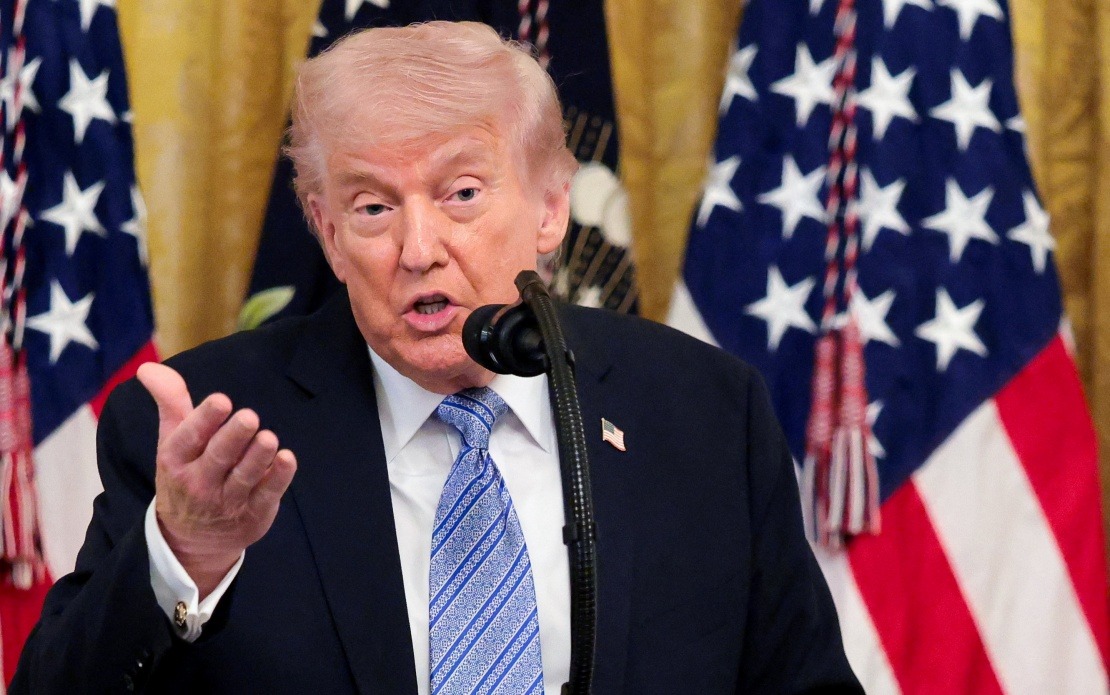
President Donald Trump announced Tuesday that the United States has suspended all dialogue with Iran, declaring that no negotiations are currently underway or scheduled with Tehran. The statement, posted on his Truth Social platform, represents a significant hardening of American posture toward the Islamic Republic after months of on-and-off diplomatic engagement and military tensions that have destabilized the Middle East and threatened global commerce through one of the world's most critical shipping routes.
In his announcement, Trump also reaffirmed Washington's continued military dominance in the Persian Gulf, emphasizing that the Strait of Hormuz remains fully operational under American naval supervision. He claimed that all maritime hazards, including water mines that might have been deployed during the earlier period of conflict, have been eliminated or neutralised. These assertions underline the Trump administration's determination to project strength in the region even as diplomatic channels have been frozen.
The decision to halt talks came after Trump instructed his top negotiating envoys—Vice President JD Vance, Middle East envoy Steve Witkoff, and senior adviser Jared Kushner—to cease engagement with Iranian counterparts. CNN reported that this directive followed a period in which the negotiating team had achieved what officials characterized as "positive discussions" with Tehran, suggesting that the breakdown was driven by strategic calculation rather than a complete impasse.
What makes this reversal particularly striking for regional observers is the documented shift in the administration's Iran policy framework. According to White House sources cited by CNN, the governing approach has pivoted from an initial posture of immediate and aggressive action—described as "hammer Iran ASAP"—toward a more protracted strategy focused on economic strangulation over time. This suggests a recalibration toward sustained containment and pressure rather than kinetic military operations, a distinction that carries profound implications for Middle Eastern stability.
The timing of Trump's announcement followed a diplomatic mission by Kushner to Israel, where he met with Prime Minister Benjamin Netanyahu to discuss pressing regional concerns, particularly the humanitarian crisis in the Gaza Strip. After this meeting, Kushner had offered a notably optimistic assessment to Fox News, claiming that US-Iran communication channels had become "more robust than ever," a characterization that now appears to have been overtaken by Trump's sudden reversal within days.
The current deadlock contradicts the trajectory of US-Iran relations over the preceding months. In April, Tehran and Washington had agreed to a ceasefire that temporarily halted years of military escalation, offering a glimmer of diplomatic possibility. This initial agreement was followed in June by a memorandum of understanding explicitly designed to terminate their military confrontation and establish a durable peace framework. For analysts monitoring Middle Eastern geopolitics, this represented an unusual window of de-escalation in an otherwise combustible relationship.
However, the arrangement proved fragile. The agreement unraveled last month as both sides resumed military operations, engaging in tit-for-tat strikes and counter-strikes for nearly two weeks. The cycle of escalation threatened to spiral into a broader regional conflict, prompting Trump to unexpectedly call a halt to American bombing operations. At that juncture, many observers believed the pause reflected a genuine commitment to reviving negotiations and rebuilding the collapsed framework.
Tuesday's announcement suggests otherwise. The sudden termination of talks indicates that the Trump administration has concluded that diplomatic engagement with Iran yields diminishing returns, at least under current conditions. The shift toward a "strangle them" long-term strategy rather than immediate military action reflects a pragmatic recognition of the costs associated with kinetic escalation while maintaining maximum pressure through economic, diplomatic, and military deterrence.
For Malaysia and Southeast Asian nations, these developments carry indirect but significant implications. Regional stability in the Middle East directly influences global oil markets, maritime security, and supply chain resilience—all factors central to the economic interests of trading nations throughout Asia. The Strait of Hormuz, through which approximately one-third of globally traded oil passes, remains vulnerable to disruption should US-Iran tensions reignite. Any deterioration in security conditions would ripple through regional shipping lanes and energy prices, affecting everything from fuel costs to manufacturing competitiveness across Southeast Asia.
Additionally, Trump's policy reversal underscores the unpredictability that characterizes current American foreign policy, a factor that regional governments must account for in their own strategic planning. The rapid oscillation from engagement to containment, combined with the centrality of personalities like Kushner and Witkoff in shaping Middle Eastern policy, creates an environment in which diplomatic assumptions can shift suddenly and dramatically.
The halting of direct negotiations also raises questions about the viability of any future diplomatic architecture in the region. If the Trump administration proves unwilling to maintain sustained dialogue even after achieving preliminary understandings, it suggests that future agreements may prove equally ephemeral. This instability complicates the calculations of other regional actors, including Saudi Arabia, the United Arab Emirates, and other Gulf states that have sought to balance relationships between Washington and Tehran.
The months ahead will reveal whether Trump's containment strategy succeeds in managing US-Iran competition without escalating into renewed conflict, or whether the absence of diplomatic channels increases the risk of miscalculation. For now, the American commitment to maintaining naval dominance in the Gulf remains clear, as does the administration's determination to resist Iranian regional expansion. Whether this approach ultimately stabilizes or destabilizes the Middle East remains to be seen.

