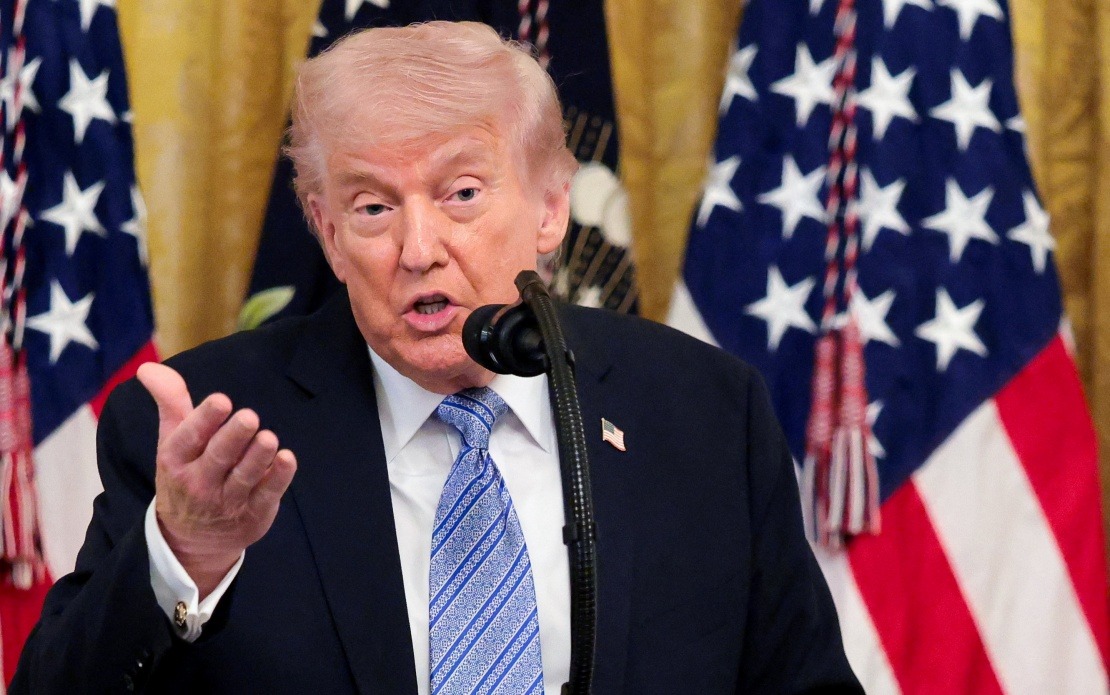
US President Donald Trump announced on Monday that he has held what he characterised as a productive dialogue with Andy Burnham, Britain's newly installed Prime Minister, signalling early engagement between Washington and London's fresh political leadership. The American leader made the announcement via his Truth Social platform, emphasizing the positive tone of the exchange and outlining his intention to deepen the bilateral relationship during what he described as an imminent in-person meeting.
The conversation between Trump and Burnham represents a significant opening diplomatic gesture at a time when both nations are navigating shifting geopolitical landscapes. For Malaysia and other Southeast Asian countries closely monitoring great power dynamics, such exchanges between Washington and London carry implications for regional security arrangements and trade frameworks that extend far beyond the bilateral relationship itself. The early cordiality suggests continuity in the traditionally close US-UK partnership, despite the recent change of government in Britain.
According to Trump's public statement, the two leaders discussed a surprisingly expansive agenda during their call, ranging from traditional security concerns to economic matters. The American President specifically mentioned North Sea oil production as a topic of conversation, reflecting renewed interest in energy security and independence that has become increasingly prominent in Western strategic thinking. This focus on energy resources aligns with broader efforts by developed nations to reduce reliance on unstable suppliers and diversify their fuel sources in response to global supply chain vulnerabilities.
Trade negotiations featured prominently in Trump's account of the discussion, underscoring the centrality of commercial relations to contemporary US-UK engagement. The timing of these trade-focused talks is particularly noteworthy, given that Britain's post-Brexit trajectory has seen the country actively seeking new commercial partnerships beyond the European Union. For regional observers, this bilateral trade emphasis signals that both nations are consolidating economic partnerships independent of multilateral frameworks, a trend that may reshape global commerce in ways that affect Southeast Asian economies.
Military alliance coordination constituted another pillar of the conversation, reflecting enduring security interests shared between Washington and London. Trump explicitly referenced this element, underscoring America's commitment to the defence partnership that has anchored Western security architecture for decades. The mention of military matters carries particular weight for Asia-Pacific nations, many of which depend on security guarantees and the stability provided by US and allied naval presence in regional waters.
Perhaps most intriguingly, Trump cited discussion of demining operations in the Hormuz Strait, one of the world's most strategically critical maritime corridors through which enormous quantities of petroleum transits daily. This reference to the Strait suggests that the two leaders touched upon Middle Eastern stability and the ongoing challenge of maintaining freedom of navigation in contested waters. For Malaysian maritime interests and those of other regional shipping nations, any collaborative efforts between Washington and London to ensure safe passage through critical chokepoints have direct ramifications for trade routes and energy supplies flowing through Southeast Asia.
The American President characterised the overall tenor of the call as positive, stating that the exchange proceeded smoothly and produced substantive engagement on multiple fronts. Trump's explicit wish of good fortune to Burnham suggests he is positioning himself as supportive of Britain's new administration, potentially easing any uncertainties that might arise from leadership transitions in allied capitals. This diplomatic courtesy is not insignificant, as it sets a constructive baseline for negotiations on more contentious issues that may emerge as the relationship develops.
Looking forward, Trump's indication that an in-person meeting would occur in the near term suggests both leaders recognise the value of face-to-face engagement on matters of strategic importance. Such summits typically provide opportunities to hammer out detailed agreements and establish personal rapport that can facilitate smoother diplomacy on thornier issues. For Southeast Asia, the outcomes of these high-level talks could influence everything from trade agreements to security cooperation frameworks that affect the region's stability and prosperity.
The breadth of topics discussed—spanning energy, commerce, defence, and regional stability—illustrates the complexity of contemporary great power relations. Unlike earlier eras when bilateral relations might have focused narrowly on military alliances or colonial-era hangover issues, modern US-UK engagement encompasses an integrated approach addressing interconnected challenges. This comprehensive diplomacy reflects the reality that economic security, military strength, and political influence are increasingly inseparable in international affairs.
For Malaysia and the broader Southeast Asian community, the significance of this Trump-Burnham exchange lies in what it reveals about the stability and direction of Western alliances. The apparent strength of US-UK coordination on multiple fronts suggests that traditional Western partnerships remain resilient and focused. At the same time, the specific mention of issues like Hormuz demining and trade frameworks indicates that even established allies are actively reassessing their priorities in response to shifting global conditions, from energy transitions to protectionist pressures and geopolitical realignment.

