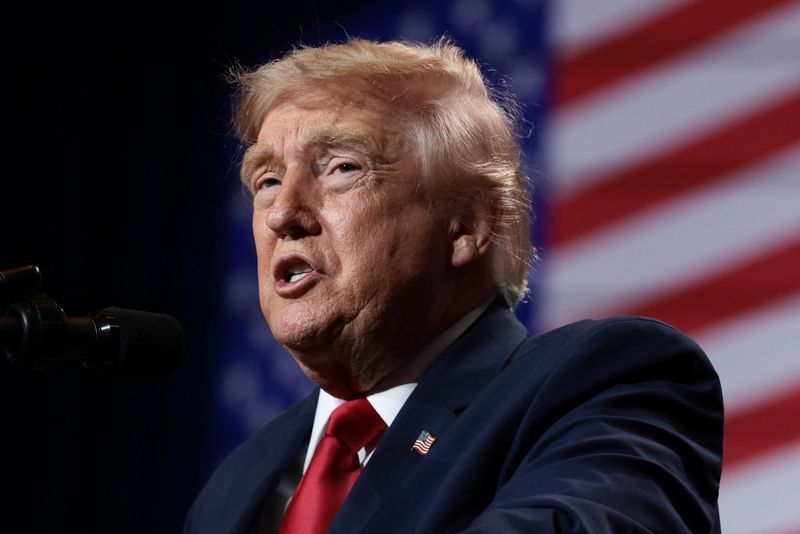
President Donald Trump has signed a national security presidential memorandum that fundamentally reshapes how the United States pursues cyber operations against transnational criminal organizations based overseas. The directive, issued on Wednesday, establishes a new framework that explicitly invites private sector participation in coordinated cyber activities targeting foreign-based criminal networks responsible for ransomware attacks, financial fraud schemes, and other cybercrimes that directly harm American citizens and institutions.
According to the White House, the memo aims to harness the technological expertise and innovative capabilities of private companies working in tandem with federal authorities. Rather than limiting offensive cyber capabilities to government agencies alone, the memorandum creates a structured pathway for private firms to propose and execute cyber operations against specified targets identified as transnational criminal organizations. This represents a deliberate policy choice to leverage market-driven innovation and private sector efficiency in pursuing national security objectives that fall outside traditional military or intelligence domains.
The operational structure established by the memorandum places clear federal oversight at its centre. The Department of Homeland Security, operating through the Homeland Security Task Force's National Coordination Center in partnership with the Department of Justice, will establish a dedicated program to coordinate and authorize specific cyber operations designed to disrupt foreign transnational criminal organizations. This dual-agency approach signals an attempt to balance the operational agility of private companies with the accountability mechanisms required for sensitive cyber activities conducted on American behalf.
Companies seeking to participate in these cyber operations face substantial vetting requirements and financial obligations. Any private firm approved to conduct cyber surveillance or cyber effects operations must maintain a bond or escrow account with a minimum value of one million dollars. This financial requirement serves as both a security deposit and a deterrent against unauthorized or reckless activities. The escrow mechanism theoretically provides recourse should participating companies exceed their authorized scope or cause unintended damage during operations.
The memo's definition of permissible cyber activities is notably broad. Beyond passive surveillance operations, private companies may conduct what the memorandum terms "cyber effects operations," which explicitly encompasses the potential manipulation, disruption, denial, degradation, or destruction of information systems, networks, and critical infrastructure controlled by digital systems. This encompasses both virtual and physical infrastructure, suggesting that the framework contemplates operations with tangible real-world consequences that extend beyond purely digital domains.
This policy development carries significant implications for Southeast Asia and the broader Indo-Pacific region. Malaysian cybersecurity professionals, financial institutions vulnerable to transnational fraud networks, and telecommunications infrastructure operators face both potential benefits and risks from this approach. If American-led cyber operations successfully disrupt criminal networks that target regional businesses and compromise Malaysian digital infrastructure, the region may experience improved security. Conversely, the potential for unintended consequences, collateral damage to innocent bystanders in neighboring jurisdictions, or escalatory cyber conflicts presents genuine concerns for regional stability.
The conceptual framework underlying this memorandum builds upon earlier experiments with private sector participation in cyber security operations, though such initiatives have historically generated controversy. Previous iterations of government-outsourced cyber capabilities have raised legitimate questions regarding escalation risks, unintended consequences affecting third parties, inter-agency coordination failures, and the potential for mission creep beyond the originally authorized scope. Critics worry that private companies operating under government supervision may lack the institutional constraints and diplomatic considerations that theoretically guide official government actions.
Southeast Asian governments and regional cybersecurity experts will likely scrutinize how this memorandum affects the information security landscape across the region. The participation of private American technology companies in offensive cyber operations raises questions about the territorial scope of these activities and whether operations targeting criminal organizations might incidentally penetrate or disrupt infrastructure located within allied nations. The prospect of American-authorized private companies conducting cyber operations in neighbouring jurisdictions without explicit consent from affected governments presents diplomatic complexities that multilateral cybersecurity frameworks have yet to adequately address.
The White House fact sheet justifying the memorandum emphasizes legitimate governance objectives: disrupting ransomware operations that generate substantial financial losses, combating sophisticated financial fraud schemes, and degrading criminal enterprises that exploit the borderless nature of cyberspace to attack American targets. These objectives resonate with concerns shared throughout Southeast Asia, where transnational criminal organizations similarly conduct cross-border cyber attacks that harm regional economies and compromise citizen security. The memo's emphasis on defeating adversaries who exploit geographical distance and jurisdictional gaps reflects genuine shared security interests.
However, the expansion of private sector cyber operations introduces novel accountability challenges that extend beyond traditional government structures. Unlike official military or intelligence agencies operating under established legal frameworks and congressional oversight mechanisms, private companies participating in authorized cyber operations occupy a ambiguous legal and institutional space. Questions about liability, authorization scope, appropriate escalation procedures, and remedies for unintended harm remain inadequately addressed in the memorandum itself, suggesting that implementation details will emerge through subsequent departmental guidance.
The timing of this memorandum reflects broader strategic calculations about American technological advantages and concerns regarding the growing sophistication of foreign criminal enterprises. Policymakers in Washington evidently believe that private sector participation offers operational flexibility and technical sophistication that purely governmental structures cannot achieve. Yet this calculation assumes that private companies, despite federal supervision, will exercise appropriate restraint and maintain operational discipline when conducting cyber activities that potentially extend into sovereign territory of other nations.
For Malaysia and other Southeast Asian nations, the key concern involves ensuring that American-authorized cyber operations targeting criminal organizations do not inadvertently compromise regional infrastructure or violate territorial principles governing international relations. Regional governments should seek clarity regarding the geographic scope of permitted operations, notification procedures when activities potentially affect neighbouring jurisdictions, and dispute resolution mechanisms should unintended consequences occur. Engaging with Washington through existing bilateral cybersecurity dialogue channels to establish explicit protocols governing cross-border private sector cyber operations would protect regional interests while demonstrating support for American counterterrorism and counter-crime objectives.
The memorandum ultimately represents an experiment in expanding American cyber capabilities by mobilizing private sector resources under federal direction. Whether this approach successfully disrupts transnational criminal organizations without generating diplomatic friction or unintended regional consequences will significantly influence how other advanced democracies approach similar policy questions. Regional observers should monitor implementation closely to understand how this framework affects cybersecurity, geopolitical dynamics, and international norms governing permissible cyber activities within the Indo-Pacific strategic environment.

