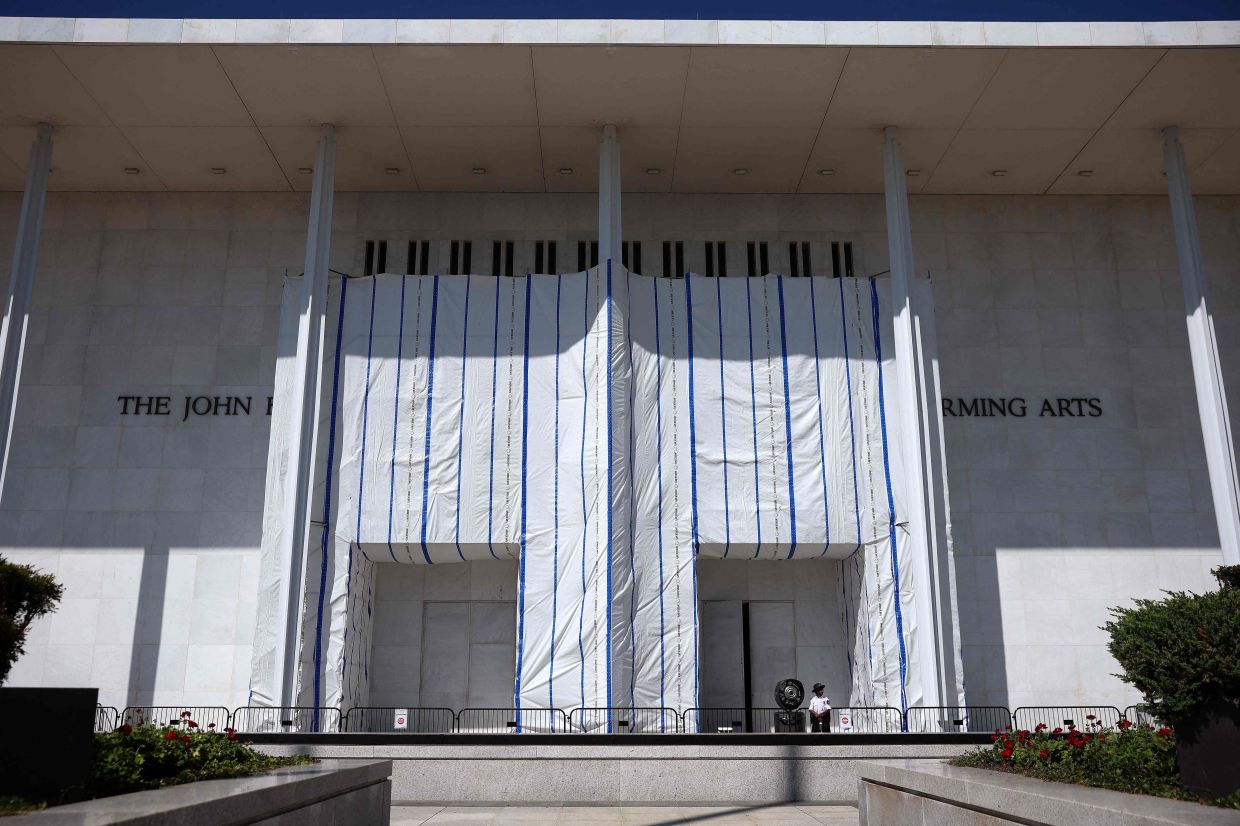
The Trump administration has escalated a contentious dispute over the Kennedy Center in Washington by suggesting the landmark performing arts venue could face demolition if legal challenges block the administration's renovation agenda and efforts to affix Trump's name to the building. The extraordinary threat appeared in court documents filed by the Justice Department on Tuesday, submitted in response to Democratic efforts seeking to halt the proposed two-year renovation programme and prevent the president's name being prominently displayed at the institution.
While the filing stops short of outlining an actual demolition blueprint, it frames the scenario as a potential consequence should courts reject Trump's restoration vision. Justice Department attorney Brantley Mayers contended that without the administration's intervention and fundraising initiative, the Kennedy Center would progressively deteriorate into an unsafe, potentially condemned structure requiring removal. The argument essentially presents Trump's involvement as essential to the building's survival, a characterisation that reflects the administration's broader effort to position the president as the sole viable saviour of the institution.
The Justice Department document paints an unflattering portrait of the current Kennedy Center, describing it as "structurally unsound, fundamentally unsafe, and embarrassing to the nation's capital." This language represents a sharp departure from previous official assessments by Kennedy Center leadership, who had characterised the necessary work in far less dramatic terms, focusing on routine upgrades to electrical systems, stage equipment, and water damage prevention without suggesting fundamental structural compromise or external alterations. The stark contrast between the two characterisations underscores the politicisation of the renovation process and raises questions about the actual condition of the 1971-built structure.
The administration's hypothetical demolition scenario includes a curious alternative proposal: replacing the iconic building with a large outdoor amphitheatre overlooking the Potomac River. Justice Department lawyers acknowledged that such a replacement would "fail to adequately honour" President John F. Kennedy, for whom the centre was established as a living memorial, but argued it would prove cheaper to construct and maintain. This acknowledgement of inadequacy combined with a cost-benefit argument reveals the administration's calculation that financial efficiency could justify erasing a nationally significant cultural institution from the landscape.
The conflict intensifies a bitter struggle over one of America's most recognisable performing arts venues. Trump's handpicked Kennedy Center board recently voted to inscribe "Restored and Renovated by President Donald J. Trump" beneath the institution's original name and to designate the surrounding plaza as "President Donald J. Trump Plaza." These naming decisions have triggered fierce legal pushback from Congresswoman Joyce Beatty, an ex officio board member who filed suit arguing that only Congress possesses the constitutional authority to name an institution established by Congress as a memorial to a deceased president.
A federal judge previously sided with Beatty's arguments, determining that the board lacked unilateral power to rename the centre and ordering the removal of earlier Trump signage. The Trump administration is currently appealing that ruling, setting up a direct confrontation between the judiciary, Congress, and the executive branch over institutional naming rights and governance authority. The scheduled Thursday hearing will determine whether courts will maintain their previous stance or permit the administration to proceed with its naming agenda.
The Justice Department's claim that Trump's administration has secured US$258 million (approximately RM1 billion) from Congress for restoration and assembled a fresh donor network forms a central pillar of its argument that the president deserves recognition. The administration contends that potential contributors expect public acknowledgement and that removing Trump's name would jeopardise future fundraising commitments. This rationale conflates philanthropic motivation with institutional integrity, suggesting that donors require presidential branding to justify their contributions to a public cultural treasure.
For Malaysian and Southeast Asian observers, this dispute offers instructive lessons regarding the intersection of governance, institutional autonomy, and executive overreach. The Kennedy Center case exemplifies how even well-established democracies struggle when presidents attempt to utilise public institutions for personal brand advancement. The administration's willingness to suggest demolition as a bargaining tool demonstrates the lengths to which political leadership may go when seeking to impose its will against legislative and judicial resistance.
The contrast between the Trump administration's apocalyptic framing and Kennedy Center officials' measured prior descriptions raises credibility questions that resonate beyond American borders. When government agencies dramatically recharacterise institutional conditions solely to support political arguments, public trust in official assessments deteriorates. This pattern—employing institutional neglect threats to pressure opponents—represents a familiar tactic in democratic contestation, yet it carries particular weight when applied to UNESCO-listed or nationally iconic structures.
The Kennedy Center dispute also illuminates tensions between presidential executive authority and institutionally embedded democratic constraints. While presidents in various systems wield significant power, the American framework provides multiple veto points—judicial review, congressional oversight, statutory limitations—that complicate efforts to unilaterally reshape public institutions. Beatty's legal challenge leverages these structural features precisely to contest executive initiative, a dynamic absent in more centralised political systems.
As Thursday's hearing approaches, the Kennedy Center case will likely influence broader conversations about institutional naming, presidential recognition, and the boundaries of executive prerogative in managing national patrimony. The willingness to threaten demolition over naming rights suggests a zero-sum political calculation that prioritises short-term symbolic victory over long-term institutional stewardship. Whether courts will permit such tactics to succeed remains uncertain, but the very prospect of destroying a cultural landmark to avoid conceding a naming dispute represents a troubling escalation in American political conflict.

