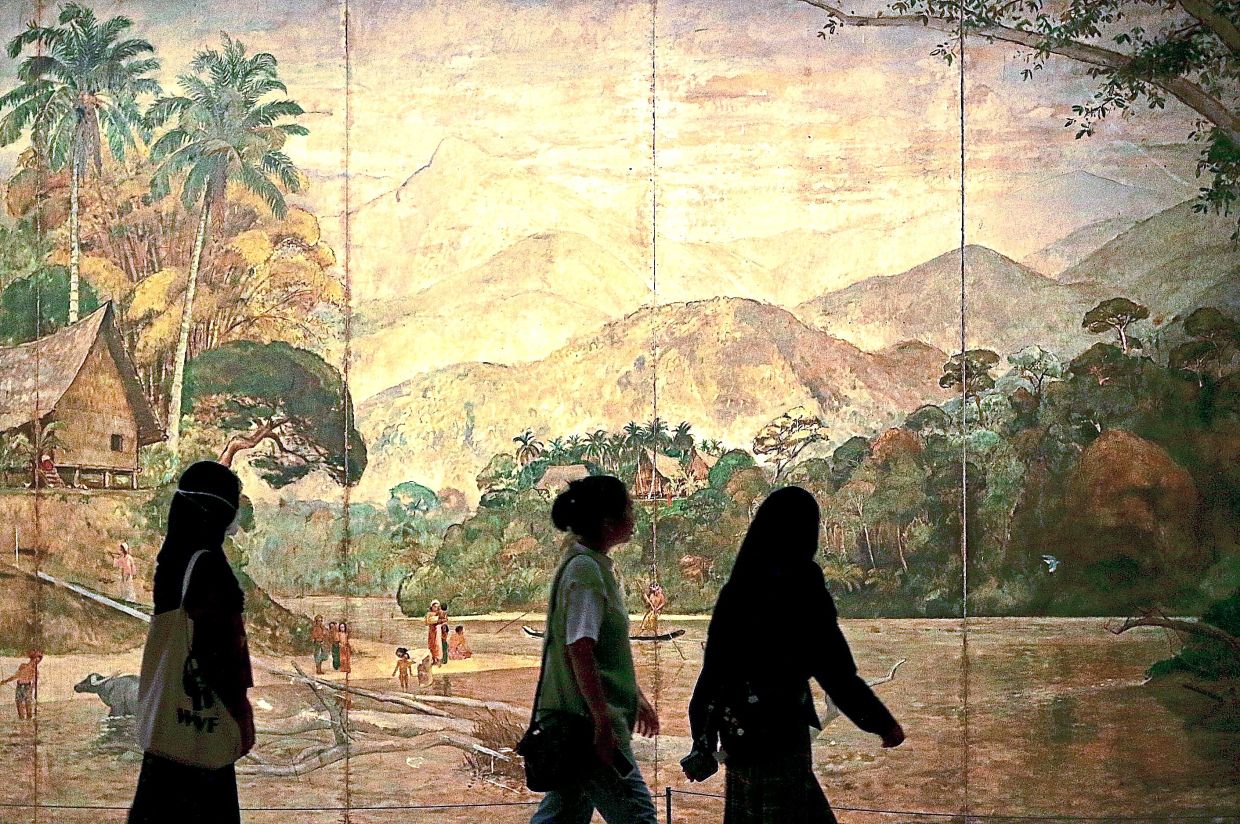
The National Art Gallery is drawing attention to an often-overlooked challenge facing Malaysia's cultural heritage: the destructive power of the country's tropical climate on priceless artworks. With humidity and ultraviolet light acting as silent corrosive agents, museum professionals are increasingly recognising that preserving paintings, textiles and sculptures requires a fundamentally different approach from conservation practices developed in temperate Western climates. This realisation is shaping how institutions across Southeast Asia protect their collections and has prompted a regional reckoning with what works best in local conditions.
Tan Hui Koon, senior chief curator of the Collection and Conservation section at the National Art Gallery, explains that Malaysia's environmental conditions create unique challenges for artwork preservation. The tropical climate's persistent humidity and intense natural light exposure combine to degrade materials in ways that conservators trained solely in Western techniques may not fully anticipate. Rather than treating this as merely a technical problem, Tan frames it as a matter requiring the same protective attention given to human skin. "Art objects, like humans, need sunscreen," she notes, underscoring the parallel between personal care and institutional preservation strategies.
The physical mechanisms of climate-induced damage are well understood but often underestimated. Organic materials including textiles, canvas and wood are particularly vulnerable, as they naturally absorb moisture from the air. In Malaysia's humid environment, this absorption is constant and substantial. The repeated expansion and contraction cycles that follow—as artworks absorb and release moisture in response to temperature and humidity fluctuations—gradually weakens the structural integrity of pieces. Paint layers crack, canvas becomes brittle, and wooden frames warp. The damage accumulates silently until irreversible deterioration occurs, making prevention infinitely more valuable than restoration.
Effective protection requires more than simply locking paintings away. Tan explains that tinted glass or museum-standard glass specifically designed to reflect ultraviolet light forms the first line of defence. However, merely using the right materials is insufficient without comprehensive environmental management. Climate-controlled storage spaces, careful monitoring of temperature and humidity levels, and protocols for handling and display all contribute to a preventive conservation philosophy that has become the gold standard among leading institutions. This holistic approach recognises that conservation is not a single intervention but an ongoing institutional commitment.
When damage does occur despite preventive measures, restoration presents inherent limitations. Once an artwork loses material—whether paint, canvas fibres or wood—that loss is permanent. Complete restoration to original condition becomes impossible. Instead, conservators focus on stabilising remaining materials and making pieces suitable for exhibition again. This sobering reality drives home why prevention remains far superior to cure, and why institutions must invest in environmental controls and proper storage long before crisis management becomes necessary.
Recognising these regional challenges, the National Art Gallery will host the seventh Asia-Pacific Tropical Climate Conservation Art Research Network conference from December 7-9 in Kuala Lumpur and Ipoh. The gathering brings together conservation specialists from Malaysia, Thailand, Singapore, Australia and the Philippines to collectively examine how Western paintings and other artworks respond specifically to tropical conditions. This cross-national dialogue reflects growing acceptance that conservation expertise cannot simply be imported wholesale from Europe or North America but must be adapted to local geographical and climatic realities.
The conference programme extends beyond theoretical discussions to include practical field experiences. Participants will visit heritage sites in Lenggong through a specially arranged programme developed jointly with the Islamic Arts Museum Malaysia, the Department of National Heritage and People of Remarkable Talents. These site visits allow conservators to observe how historical structures and artefacts have weathered Malaysia's climate over centuries, providing empirical knowledge that complements laboratory-based research and international best practices.
This year's edition places particular emphasis on localised knowledge systems and knowledge transfer across generations. Rather than simply adopting Western conservation models wholesale, the network increasingly values understanding how communities in the region have traditionally preserved cultural materials. Discussion topics include disaster response methodologies tailored to tropical climates, conservation techniques adapted to specific national contexts, climate change impacts on heritage, disaster management protocols, artificial intelligence applications in conservation work, and materials research using advanced technology. Ethics in conservation—questions of who decides how artworks should be preserved and for whom—will also feature prominently.
Tan stresses that the research network serves a crucial mentoring function for emerging conservators across the region. By facilitating knowledge exchange among experienced practitioners and younger professionals, the network ensures that hard-won expertise does not remain siloed within individual institutions. This generational transfer is particularly vital in Southeast Asia, where conservation as a professional discipline is still developing compared to established programmes in Europe and North America. The network also highlights conservation's inherently interdisciplinary character, combining art history, chemistry, materials science, engineering and technological innovation into a unified practice.
The conference represents a milestone in Malaysian conservation history, allowing participants to reflect on progress since the network's founding in 2008. Over fifteen years, the Asia-Pacific region has developed increasingly sophisticated responses to tropical climate challenges, moving away from blind adherence to external models toward home-grown expertise. This trajectory matters far beyond museum walls—it establishes Malaysia as a centre of knowledge generation rather than merely a consumer of external expertise. As the country develops its cultural institutions and attracts international visitors seeking to experience Southeast Asian art, effective conservation becomes essential infrastructure for cultural diplomacy and heritage preservation.
Strenthening international conservation networks also positions Malaysian expertise and artistic heritage on the world stage. By hosting this conference and leading regional research, Malaysia demonstrates that conservation challenges in tropical climates have generated solutions with potential global relevance. As climate change accelerates and museums worldwide confront environmental stresses, Malaysia's accumulated knowledge about protecting artworks in humid, high-light conditions becomes increasingly valuable internationally. This positions the National Art Gallery not merely as a custodian of national treasures but as a contributor to global conservation science.

