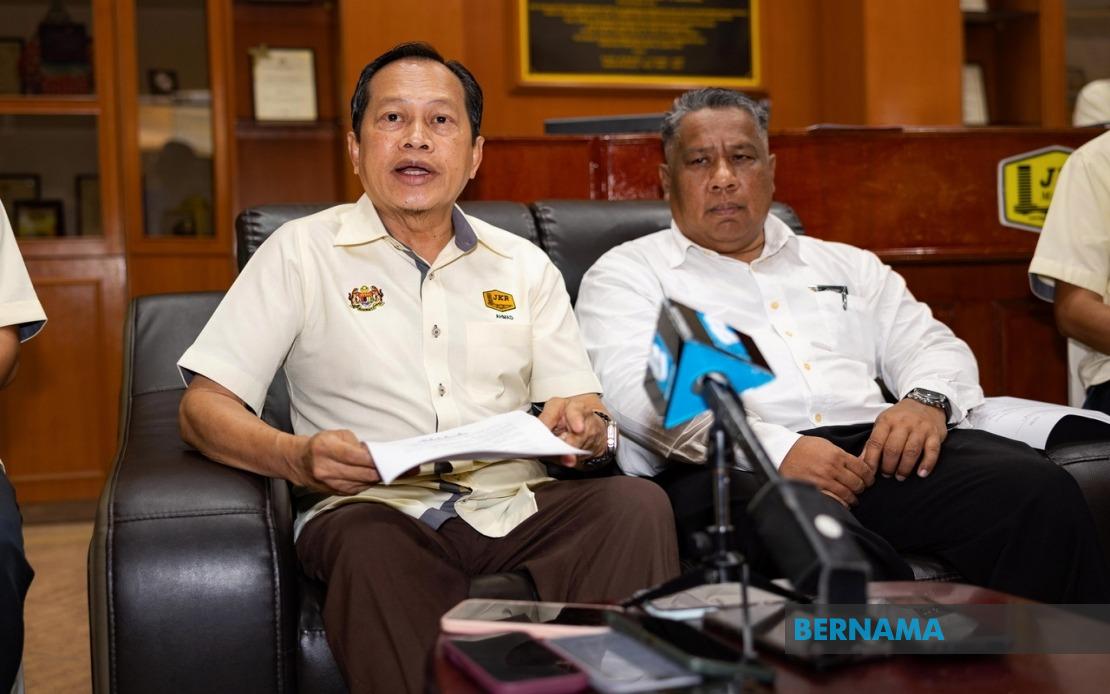
The responsibility for managing trees along Malaysia's federal roads rests with local authorities rather than the Public Works Department, according to Deputy Works Minister Datuk Seri Dr Ahmad Maslan, who emphasised this distinction during a working visit to Lumut. The clarification comes as the government faces scrutiny over tree safety protocols following a tragic incident in which four family members were killed by a falling tree along the FT68 Bentong-Kuala Lumpur Old Road.
Ahmad Maslan's statement references Section 101(b) of the Local Government Act 1976 (Act 171), which explicitly grants local authorities the power to plant, prune, and remove trees within their administrative jurisdictions. This legal framework extends to trees situated on federal road reserves where local authorities hold administrative control, creating a clear demarcation of responsibilities. The deputy minister stressed that this arrangement does not represent an abdication of JKR's commitment to road safety, but rather reflects the statutory framework that governs Malaysia's administrative structure.
The JKR's position on tree management is further constrained by the terms of its concession agreements with private maintenance companies. Under these contractual arrangements, removing trees is permitted only after they have already fallen, at which point clearing them becomes a necessary maintenance function. This restriction means that proactive tree management—including pruning of overhanging branches or assessment of structural integrity—falls outside the scope of JKR's mandated responsibilities under the concession model. Ahmad Maslan clarified that trees themselves are not considered road furniture or road signage, which form part of JKR's standard maintenance portfolio.
The minister's comments came in direct response to concerns raised by Bentong MP Young Syefura Othman, who had urged JKR and maintenance concession companies to strengthen their partnerships with certified tree experts. Young Syefura's call for periodic technical assessments of mature trees and slope stability along federal roads gained traction following the tragic incident that claimed four lives. Her proposal suggests that collaborative frameworks between technical specialists, local authorities, and road maintenance agencies could enhance preventative safety measures before disasters occur.
Despite the legal distinction between JKR and local authority responsibilities, Ahmad Maslan made clear that the Public Works Department and its concessioning partners remain willing to collaborate with local authorities to advance road safety objectives. This cooperative stance reflects recognition that public safety transcends administrative boundaries and that inter-agency coordination can yield practical improvements even within existing legal frameworks. The deputy minister's positioning suggests potential for enhanced dialogue between state and federal levels to address the systemic issues highlighted by recent tragedies.
The clarification of responsibility carries significant implications for Malaysian municipal administrations, which now face clearer expectations regarding their statutory obligations for vegetation management on federal roads. Local authorities operating within their jurisdictions will need to ensure adequate resourcing and expertise to fulfil these responsibilities effectively. The incident in Bentong underscores potential consequences when tree management lapses, placing additional pressure on PBTs to prioritise safety assessments and maintenance scheduling.
During his visit to the Manjung District Engineer's Office, Ahmad Maslan also emphasised the importance of strengthened coordination between the Ministry of Works at federal, state, and district levels. He highlighted that continuous monitoring and cooperation between these tiers are essential to ensure all infrastructure projects and maintenance activities meet required specifications, schedules, and budgetary allocations. This emphasis on systematic oversight suggests the ministry views organisational alignment as critical to service delivery standards.
The deputy minister reiterated the Ministry of Works' broader commitment to maintaining Malaysia's public infrastructure in safe, functional condition. His statement that KKR would continue strengthening monitoring and coordination mechanisms across all JKR levels indicates an institutional response to concerns about infrastructure safety. This commitment extends beyond tree management to encompass the full spectrum of public infrastructure maintenance upon which millions of Malaysian road users depend daily.
Looking forward, the incident that prompted these clarifications may catalyse more proactive engagement between federal and local authorities. While the legal framework clearly assigns tree management responsibilities to local authorities, the gap between statutory responsibility and operational capacity remains a practical challenge. Bentong MP Young Syefura Othman's advocacy for expert technical assessments represents a reasonable pathway toward bridging this gap, potentially establishing best-practice protocols that could be adopted across Malaysia's diverse local authority landscape.
The concession agreement limitations on proactive tree removal also merit examination as part of broader infrastructure safety policy. If contractual frameworks prevent maintenance companies from conducting preventative vegetation management, policy makers may need to consider whether these terms adequately serve public safety interests. Ahmad Maslan's openness to collaboration with certified experts suggests official receptiveness to evolving these arrangements in response to identified safety risks.
Ultimately, the clarification of tree management responsibilities represents a necessary step toward accountability and improved safety outcomes. By clearly delineating which agencies bear responsibility for different aspects of road safety, Malaysian authorities can establish clearer performance expectations and accountability mechanisms. However, responsibility must be paired with adequate resources, technical expertise, and inter-agency coordination mechanisms to translate statutory duties into real-world safety improvements that protect the millions of people who travel federal roads daily.

