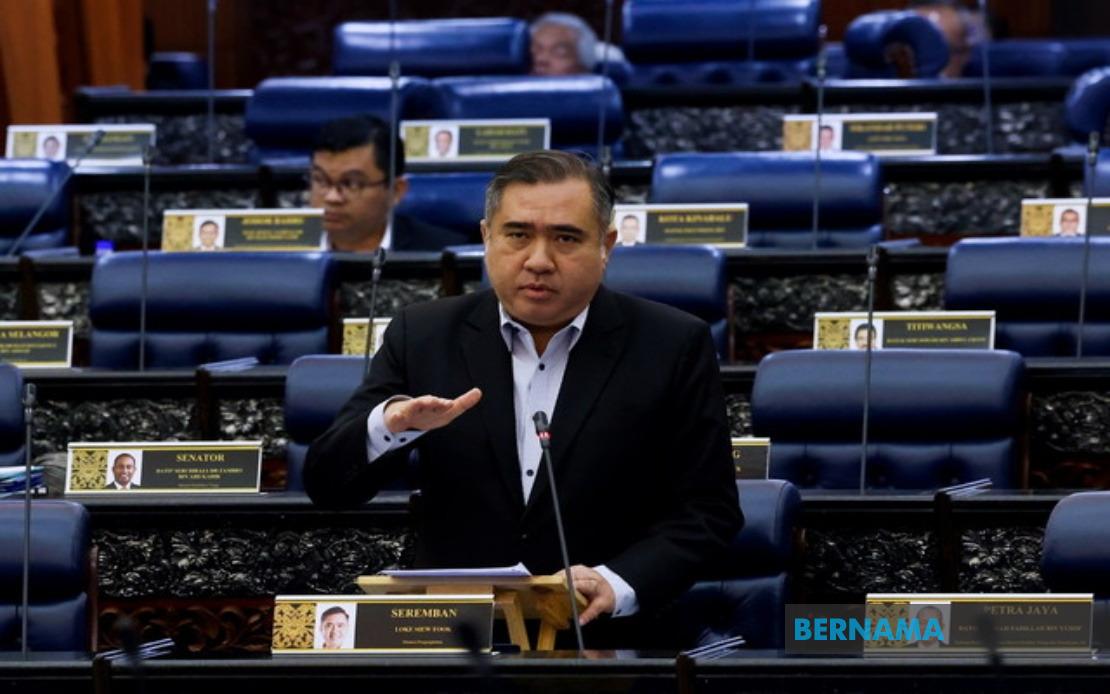
The Transport Ministry has initiated legislative amendments aimed at establishing a structured compensation framework for victims of fatal and serious road accidents, signalling a shift towards holding dangerous drivers financially accountable for their actions. Minister Anthony Loke presented the proposal to parliament on July 14, outlining provisions that would grant courts discretionary power to mandate offenders convicted under the act to pay compensation based on the specific circumstances surrounding each case. This represents a departure from Malaysia's traditional approach to traffic offences, where financial penalties have typically flowed to the state rather than to injured parties or bereaved families.
Under the proposed framework, judicial officers would assess compensation claims by examining multiple variables, including the severity of injuries sustained, the permanence of any disabilities incurred, documented financial losses suffered by victims, and the convicted offender's demonstrated capacity to meet payment obligations. This multi-factor approach acknowledges the reality that road accidents impose substantial costs beyond medical treatment, encompassing lost income, ongoing care requirements, psychological trauma, and the immeasurable grief experienced by families. The mechanism recognises that while criminal penalties serve a deterrent function, they do nothing to restore the financial security of families devastated by preventable tragedies.
Parallel to this compensation initiative, the government has advanced the Road Transport (Amendment) Bill 2026, which parliament approved earlier this year. The legislation introduces a dedicated offence category for illegal racing activities through a new Section 42A, fundamentally restructuring how authorities address street racing phenomena. Previous enforcement capabilities were reactive, requiring that accidents occur before charges could be brought against participants. The amended framework enables preventive action, allowing police to arrest and prosecute individuals engaged in illegal racing activities regardless of whether collision or injury has occurred, effectively closing a significant legal loophole that had frustrated enforcement efforts for years.
The penalty structure established by the amendments reflects government determination to deter participation in illegal racing through proportionate consequences. First-time offenders face financial penalties ranging from RM2,000 to RM10,000, imprisonment lasting up to two years, or a combination of both sanctions. Repeat offenders confront substantially harsher consequences, with fines escalating to between RM5,000 and RM20,000, coupled with potential imprisonment extending to five years. This graduated penalty system aims to transform illegal racing from a minor infraction into a serious criminal concern, thereby elevating public perception of the activity's legal and social consequences.
Recent enforcement operations demonstrate the scale of illegal racing activity within Malaysia's cities and towns. A targeted operation conducted in Johor resulted in 16 arrests and the seizure of 260 motorcycles involved in illegal racing incidents. These figures underscore both the prevalence of the phenomenon and the visible public disorder created by uncontrolled street racing. The ministry's intensified nationwide enforcement programme indicates recognition that sporadic, isolated interventions prove insufficient to address organised or habitual racing communities that operate across multiple jurisdictions.
The policy response has been catalysed by specific tragic incidents that galvanised public concern. A June 1 collision occurring at Kilometre 27 of Jalan Renggam-Simpang Renggam in Johor claimed five lives, prompting the Attorney-General's Chambers to direct investigations under Section 302 of the Penal Code, which addresses culpable homicide. This classification elevates the matter beyond standard traffic violations, recognising that deaths resulting from reckless behaviour constitute criminal conduct of the highest order. Such cases illuminate the fatal consequences of street racing and justify the legislative hardening reflected in the amendments.
Minister Loke emphasised that enforcement mechanisms, though essential, represent only one dimension of a comprehensive road safety strategy. Malaysia's annual road fatality toll exceeds 6,000 deaths, a figure substantially above international benchmarks and comparisons with other developed economies in the region. Addressing this mortality burden requires sustained behavioural change among drivers, anchored in public awareness campaigns that articulate the devastating human and economic costs of reckless driving. Educational initiatives must reach diverse demographic groups, from young drivers establishing formative habits to experienced motorists who may have developed complacency regarding traffic rules.
The minister explicitly called for depoliticisation of road safety discourse, appealing to stakeholders across the political spectrum to prioritise public protection over partisan positioning. This appeal reflects tension between road safety as a technical policy domain requiring evidence-based solutions and the tendency for safety incidents to become flashpoints in political debate. Achieving measurable improvements in accident prevention requires sustained cross-party consensus and the allocation of resources without interruption caused by electoral cycles or changes in government. The invitation for broader societal engagement extends beyond government ministries to community leaders, civil society organisations, and citizens themselves, acknowledging that regulatory measures cannot succeed without corresponding shifts in cultural attitudes toward dangerous driving.
The proposed amendments and enforcement escalation must be contextualised within Southeast Asia's broader road safety challenges. Regional economies have experienced dramatic increases in motorisation over recent decades, with vehicle populations growing far more rapidly than road infrastructure expansion or driver education capacity. Many nations in the region, including Malaysia, face a critical window during which road safety outcomes will be determined by policy choices made today. The Transport Ministry's legislative agenda suggests a calculation that stricter penalties combined with victim compensation mechanisms may prove more effective than incremental adjustments to existing frameworks that have patently failed to reduce fatalities at desired rates.
For Malaysian businesses and families, the compensation mechanism carries significant implications beyond the immediate parties involved in accidents. Insurance markets will likely respond to the new liability landscape by adjusting premium structures and coverage parameters. Employers with vehicle fleets will face heightened pressure to implement driver training and safety protocols, recognising that their organisations could bear financial exposure for employee-caused accidents. Insurance companies may demand evidence of corporate safety initiatives before offering competitive rates. The psychological and financial security provided by statutory compensation mechanisms could reduce reliance on protracted civil litigation, allowing grieving families to access support more rapidly and predictably.
The establishment of compensation mechanisms also addresses a recognised gap in Malaysia's approach to traffic justice. Unlike some jurisdictions that maintain victim compensation funds financed through general taxation or levies on fuel and vehicle registration, Malaysia has relied primarily on victims pursuing civil claims against offenders or their insurers. This approach places substantial burdens on bereaved families to navigate complex legal proceedings while managing trauma and grief. Empowering courts to mandate compensation as part of criminal sentencing streamlines the process and ensures that at least a portion of damages will be recovered directly from offenders themselves, reinforcing the accountability principle inherent in criminal law.
Implementation of these reforms will require careful coordination among multiple government agencies, including the Royal Malaysia Police, the Public Prosecutor's office, the courts, and the Transport Ministry itself. Training programmes must ensure that investigating officers understand the new offence category and can gather evidence meeting the evidentiary thresholds required for prosecution. Prosecutors require guidance on how to quantify compensation claims and present victim impact evidence in a manner that assists judicial determination. The judiciary needs clarity regarding precedents and sentencing guidelines to ensure consistency in compensation awards across different cases and jurisdictions. Without these institutional preparations, legislative amendments risk remaining declaratory without producing material improvements in outcomes for accident victims.
The broader trajectory evident in Malaysia's road safety policy suggests a shift toward recognising road accidents as matters of serious criminal concern rather than administrative violations. This conceptual reframing aligns with international evidence suggesting that certainty of punishment and perceived severity of consequences influence driver behaviour more significantly than the abstract lethality of roads. By coupling stricter criminal sanctions with accessible victim compensation and accelerated enforcement capabilities, the government has constructed a multi-layered deterrence architecture designed to address not only the most egregious offences like illegal racing but also the broader culture of traffic law compliance. Whether these reforms produce measurable reductions in fatalities will depend substantially on the consistency and resourcefulness of implementation across Malaysia's diverse jurisdictions.

