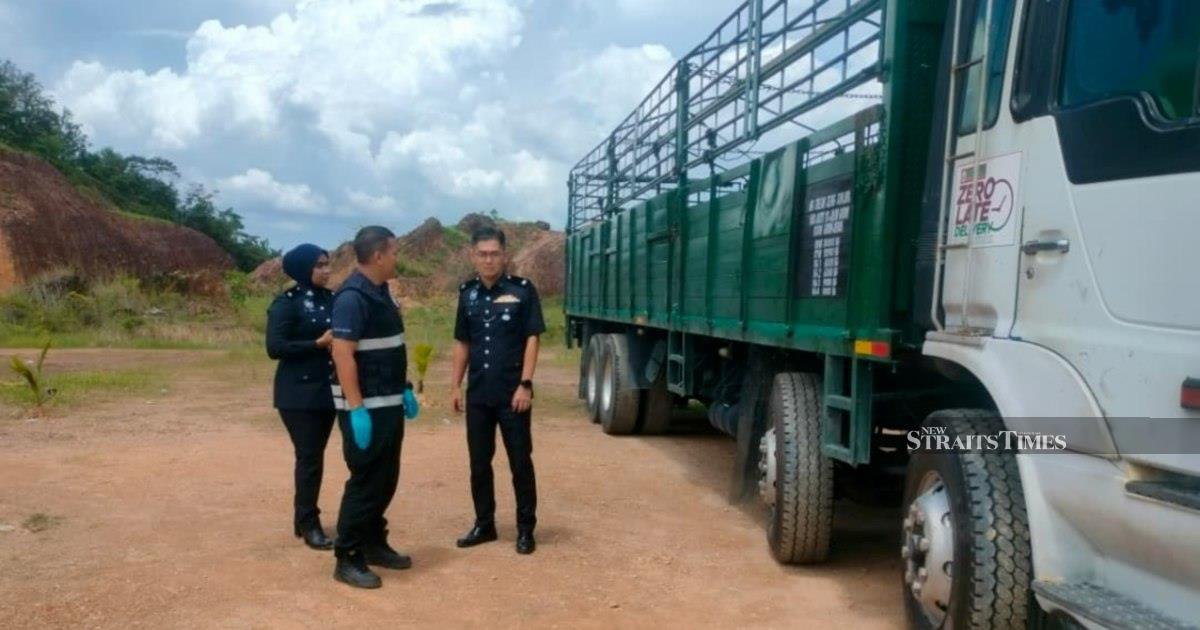
A devastating incident unfolded in a residential compound in Sungai Petani today when a two-year-old girl lost her life after being struck by a reversing heavy goods vehicle operated by her grandfather. The accident occurred at the family home in Kampung Bukit Kuang, transforming what should have been an ordinary day into a tragedy that has left the community in shock. Police have since taken the 61-year-old grandfather into custody as part of their ongoing investigation into the circumstances surrounding the child's death.
The incident highlights the inherent dangers present in domestic settings where vehicles are being maneuvered in confined spaces. Driveway accidents, though often overlooked in public safety discussions, represent a significant hazard for young children who may be playing or moving about unsupervised in areas where vehicles are regularly parked or operated. The reversing motion of larger vehicles, such as lorries, creates significant blind spots that can obscure a small child from the driver's view, even when the operator is exercising reasonable care.
Such tragedies underscore the importance of heightened vigilance when children are present near vehicles. Many preventable accidents occur because there is insufficient communication between those operating vehicles and those responsible for child supervision in shared spaces. The presence of multiple occupants in a household, particularly extended family members spanning different generations, sometimes creates situations where responsibility for child welfare becomes ambiguous or diffused among family members.
The detention of the grandfather is a standard procedural step in cases involving unexpected deaths. Investigating officers will need to establish the precise sequence of events, determine whether any mechanical failures occurred with the vehicle, and assess whether any safety protocols or precautions were breached. Toxicology reports and witness statements will form part of a comprehensive examination of the incident.
This incident will likely prompt renewed discussions about residential safety measures and the importance of implementing physical barriers around driveways, particularly in homes where young children reside. Many developed nations have implemented stricter guidelines around driveway safety, including the installation of bollards, raised garden beds, or other visual markers that define vehicle operating areas and create physical separation from play zones.
For Malaysian families, the tragedy serves as a sobering reminder of the need for constant supervision of toddlers in and around the home environment. The vulnerability of young children—their height, their unpredictable movements, and their limited understanding of danger—makes them particularly susceptible to accidents in areas where vehicles are present. Parents and caregivers must ensure that play areas are completely removed from spaces where vehicles are regularly operated.
Community awareness campaigns in many regions have emphasized the risks associated with reversing vehicles, yet such accidents continue to occur with disturbing regularity. The problem is compounded when vehicles are operated in residential settings where the driver may become complacent due to familiarity with the space, potentially reducing their level of attentiveness compared to driving in external, higher-traffic environments.
The Sungai Petani district, like many areas in Kedah, contains a mix of traditional village settlements and more modern residential developments. Many homes in such areas feature compact layouts with limited space between structures and access roads, creating inherent challenges for safe vehicle maneuvering. These environmental factors may have contributed to the incident, though full details remain to be established through the police investigation.
The loss of a young child impacts not merely the immediate family but sends ripples through the broader community. In Malaysian society, where extended family structures remain common and multigenerational households are the norm, such incidents often affect numerous relatives and raise questions about shared responsibility and communication within family units. The psychological impact on all those present during or immediately after the accident will likely require support services.
As investigations proceed, authorities will examine whether any criminal negligence occurred or whether this was a tragic accident with no culpability attached. The distinction matters significantly for the grandfather, whose own life has been forever altered by this event. Regardless of legal determinations, the family will be confronted with lasting grief and the permanent absence of a young life cut tragically short.
The incident underscores why child safety experts consistently recommend that young children never be left unsupervised in areas adjacent to vehicle parking or maneuvering zones, regardless of how brief an absence might be. A moment of inattention or a miscalculation in estimating the location of a small child can have irreversible consequences. As the investigation unfolds, the facts emerging from Sungai Petani may yet offer insights that could help prevent similar tragedies in the future.

