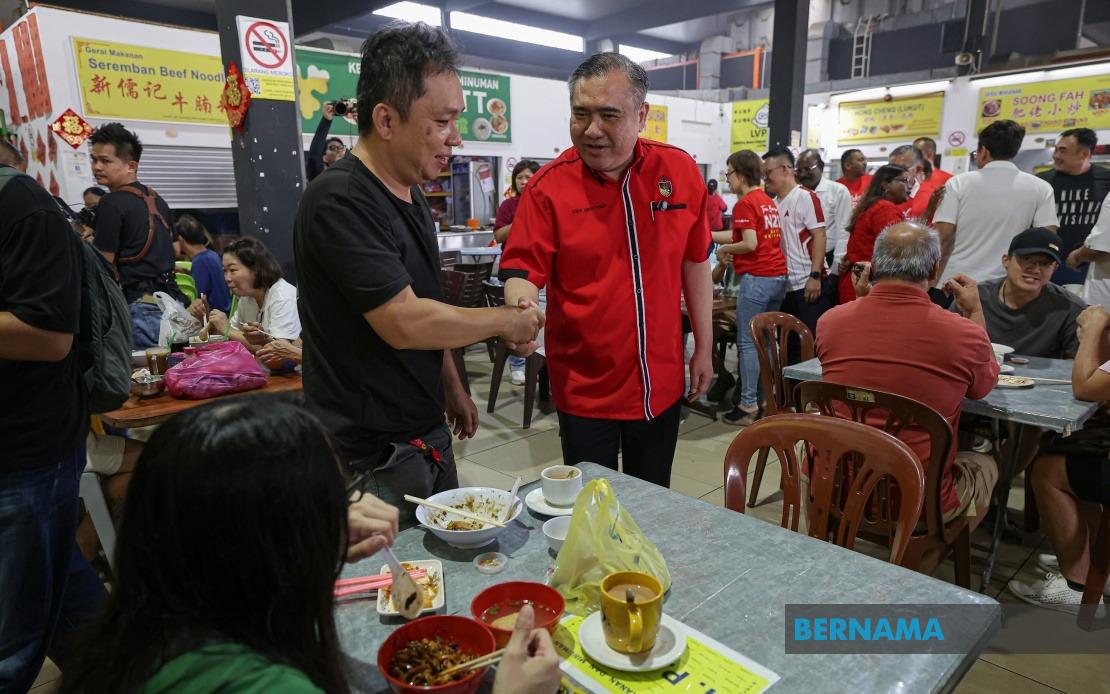
Transport Minister Anthony Loke has issued a firm directive that strict adherence to traffic regulations and road safety standards is non-negotiable during the 16th Negeri Sembilan state election campaign. Speaking in Seremban on July 19, Loke underscored that maintaining order and preventing accidents during the campaign period is paramount, with all parties and candidates expected to set the standard for public conduct.
The DAP secretary-general has taken a personal approach to enforcement, instructing his party's campaign teams to wear safety helmets at all times when operating motorcycles during the election period. This directive reflects broader concerns about campaign-related road incidents that have marred previous election cycles across Malaysia. Loke's emphasis on this basic safety measure illustrates how electoral enthusiasm, while valuable, must never compromise the fundamental duty of care that organisers owe to supporters and the public.
During a walkabout with Pakatan Harapan candidates in Seremban's Pasar Besar district, Loke recounted his personal involvement in enforcing these standards. On nomination day, when he led a motorcycle convoy from Pekan Titi to Kuala Klawang, he established a clear prerequisite: no helmet, no participation in the convoy. This bottom-line approach has become his hallmark as he oversees the campaign compliance efforts for his coalition's candidates competing across the state.
Loke's warning extended to another dangerous practice increasingly observed during campaign activities—supporters riding on the tailgates or exterior surfaces of moving four-wheel-drive vehicles. He characterised this practice as reckless and indefensible, regardless of the political momentum it might generate. The visibility and enthusiasm generated by such stunts do not justify the genuine risk to human life, a principle Loke has made explicit in his public statements.
The broader context for this intervention involves the substantial voter participation expected in this election. The Election Commission has registered 889,490 eligible voters across Negeri Sembilan, comprising 867,151 ordinary voters alongside 16,884 military personnel and their spouses, and 5,455 police officers who are eligible for early voting. With such numbers mobilised across the state, the cumulative effect of campaign activities on road safety becomes statistically significant.
The Negeri Sembilan state assembly was dissolved on June 5, setting in motion the electoral calendar that culminates in polling day on August 1, with early voting scheduled for July 28. This compressed timeframe means campaign activities will intensify significantly, increasing the interaction between campaign convoys, regular traffic, and the public. Loke's intervention comes at a critical juncture when campaign momentum is building and the risk of safety violations peaks.
For Malaysia, where road fatality rates remain a persistent public health concern, the integration of traffic safety messaging into political campaigns represents an important opportunity for cultural messaging. When high-profile politicians like Loke visibly enforce helmet usage and discourage dangerous practices, they model behaviour that extends beyond the election period into everyday driving habits. The election campaign becomes a platform for normalising road safety, particularly among younger voters and motorcycle users who are statistically overrepresented in traffic accident statistics.
Loke's call for all parties and campaign leaders to lead by example acknowledges that political behaviour sets expectations across society. Opposition parties, similarly positioned candidates, and their supporters will observe how Pakatan Harapan enforces these standards. This creates an implicit competitive pressure for others to match or exceed these safety standards, potentially elevating road safety practices across all campaign activities in the state.
The specific instruction to Pakatan Harapan candidates Ho Weng Wah of Temiang, Lee Kai Yet of Mambau, Siau Meow Kong of Rahang, Nicole Tan of Bukit Kepayang, S. Mugunthan of Seremban Jaya, and Chew Seh Yong of Lobak establishes clear accountability within the coalition. These candidates become ambassadors for the safety directive, responsible not only for their own conduct but for ensuring their campaign teams and supporters understand that compliance is mandatory, not optional. This cascading accountability structure increases the likelihood that safety standards will be observed throughout the campaign machinery.
From a broader Southeast Asian perspective, road safety during electoral periods remains understudied despite its public health implications. Malaysia's approach, with explicit ministerial oversight of campaign safety protocols, could serve as a model for other democracies in the region where election campaigns frequently involve high-risk activities. The integration of transport ministry oversight into electoral administration represents an innovative governance approach that prioritises citizen safety without infringing on democratic participation rights.

