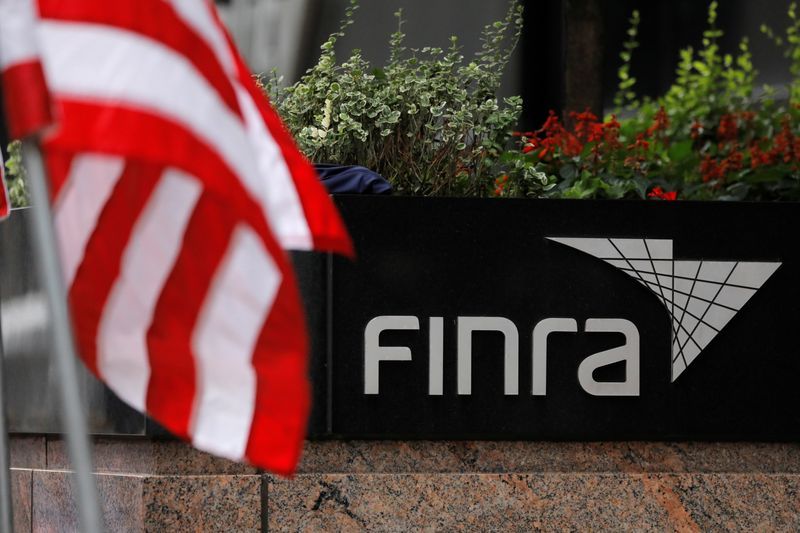
Steven Price, who spent six years as senior vice president of market investigations at FINRA, the primary self-regulatory organization overseeing US broker-dealers, has stepped down to assume the role of chief compliance officer at Finalis, a San Francisco-based fintech platform specializing in dealmaking infrastructure. The departure, confirmed by Finalis to Reuters on Thursday, represents another high-profile transition of regulatory expertise into the rapidly expanding fintech sector, where artificial intelligence and streamlined processes are fundamentally reshaping how investment banking operates.
During his tenure at FINRA, Price oversaw one of Wall Street's most consequential enforcement operations, supervising thousands of investigations into potential breaches of securities regulations. His portfolio encompassed probes into serious misconduct including insider trading and market manipulation, positioning him as one of the financial industry's top enforcement officials. This experience places him among a growing cadre of regulatory veterans transitioning to the private sector, bringing institutional knowledge about compliance frameworks and investigative protocols directly into emerging fintech business models.
Among Price's most significant contributions at FINRA was the development and launch of the National Cause Program, an initiative that deployed artificial intelligence to fundamentally restructure how the watchdog identifies and processes potential violations. Rather than relying on fragmented reporting channels and manual analysis, the system centralized complaints, tips, and referrals into a unified database that AI could analyze for patterns suggesting coordinated misconduct or systemic risks. This innovation demonstrated how technology could enhance regulatory detection capabilities—a lesson Price now brings to Finalis's compliance infrastructure.
Finalis, founded in 2020 by Federico Baradello, a former mergers and acquisitions lawyer at prominent firm Kirkland & Ellis, has rapidly positioned itself as a critical intermediary in the evolving dealmaking ecosystem. The platform has facilitated approximately $34 billion in transaction value to date, underpinning a business model that provides licensing frameworks and compliance infrastructure enabling boutique investment banks and individual dealmakers to operate with institutional-grade capabilities. This infrastructure allows smaller firms to compete with traditional Wall Street giants by automating functions historically requiring large back-office teams.
Price's appointment as chief compliance officer reflects Finalis's strategic imperative to build credibility with regulators and institutional clients as the fintech dealmaking space matures. Hiring a former FINRA executive signals serious commitment to maintaining compliance standards, particularly important given heightened regulatory scrutiny of fintech platforms handling securities transactions. For Finalis, acquiring someone with intimate knowledge of FINRA's investigative methodologies and regulatory expectations provides competitive advantage in navigating the complex approval processes required for new dealmaking platforms.
The broader context of Price's move illustrates a significant realignment occurring across the financial services landscape. As fintechs leverage AI and automation to compress administrative overhead, traditional investment banking is experiencing fragmentation, with experienced dealmakers increasingly launching independent boutiques that rely on platforms like Finalis rather than building internal infrastructure. This model democratizes access to dealmaking capabilities previously confined to large institutions, creating new competitive dynamics that legacy firms must address.
Price himself articulated the appeal of joining Finalis, emphasizing how regulatory experience directly translates to fintech optimization. "Being able to take some of the lessons I learned at FINRA on how you can make things faster and connect the right information to the right parties... This was a really attractive opportunity for me," he explained during an interview. This statement underscores how regulatory specialists increasingly view the private sector as a venue for applying institutional knowledge at scale, potentially influencing how entire business sectors operate rather than constraining individual actors.
For Malaysian and broader Southeast Asian markets, this pattern carries important implications. As US fintech models export globally, the quality and orientation of compliance leadership determines whether these platforms can legitimately operate across multiple jurisdictions. A former FINRA executive at Finalis's helm suggests the company is positioning itself for potential expansion into regulated markets beyond the United States, potentially including Asia-Pacific regions where dealmaking platforms are nascent but growing. Understanding these personnel movements provides insight into which fintech platforms are likely to gain regulatory approval and expand into new markets.
The development also reflects deeper transformations in how financial regulation functions. When talented enforcement officials transition to fintech companies, they potentially bridge the historical gap between regulatory objectives and commercial innovation. Price's experience directing AI-driven compliance systems at FINRA could enable Finalis to implement detection mechanisms exceeding those at some traditional brokerages, creating an unexpected dynamic where fintech platforms outpace legacy institutions in compliance sophistication. This inversion challenges conventional assumptions about regulatory capture and fintech regulation.
FINRA declined to comment on Price's departure, a standard response that nonetheless obscures questions about succession planning and institutional continuity at the organization's critical investigations division. Given the seniority of Price's position and the thousands of ongoing investigations, his exit likely necessitates significant restructuring within FINRA's enforcement operations. The timing of such departures, when multiple senior regulatory officials transition within a compressed timeframe, can create temporary capability gaps that market participants may exploit.
Price's transition also illuminates how regulatory expertise increasingly functions as portable capital in financial services. Unlike operational banking experience, which remains institution-specific, knowledge of regulatory frameworks and compliance architectures can transfer readily across organizations. This portability creates incentives for regulators to offer compensation and career progression competitive with private sector opportunities, or risk continuous brain drain of their most talented officials. The fintech sector's ability to rapidly absorb regulatory expertise suggests structural imbalances in resource allocation between oversight organizations and industry participants.

