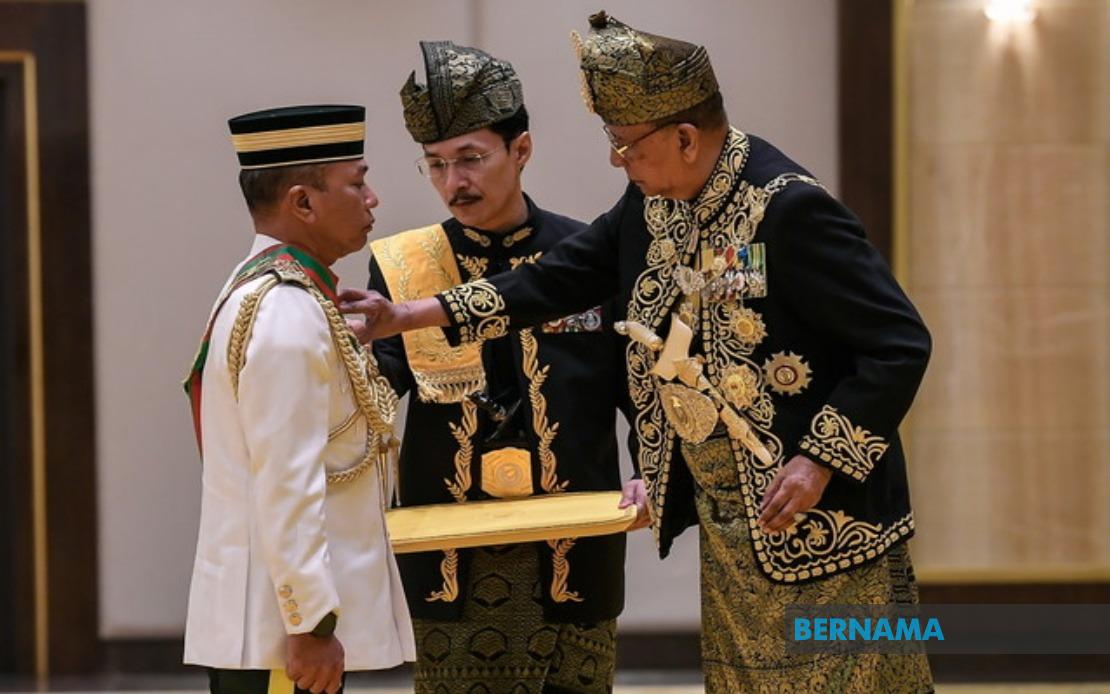
Malaysia's top military and police leadership has been prominently featured in the annual honours list released by the Sultan of Kedah, Al Aminul Karim Sultan Sallehuddin Sultan Badlishah, during celebrations marking his 84th birthday on July 5. The two most prestigious recipients were Chief of Defence Forces General Tan Sri Malek Razak Sulaiman and Inspector-General of Police Tan Sri Mohd Khalid Ismail, both elevated to the Darjah Dato' Seri Setia Pahlawan Yang Amat Dihormati, a distinction that reflects their seniority and contributions to national security and public order. The ceremony, held at Istana Anak Bukit in Alor Setar, demonstrated the monarchy's continued recognition of institutional leaders whose roles transcend regional boundaries to serve the entire nation.
Beyond the two senior security officials, the honours system revealed a carefully calibrated approach to recognising different spheres of public service and leadership across Kedah state. Datuk Syed Khairol Anuar Syed Abidin was elevated to the position of Orang Besar Enam Belas, a traditional title within the Kedah feudal hierarchy that carries historical significance beyond ceremonial value. Similarly, Datuk Mohamad Che Nai received the title of Orang Besar Tiga Puluh Dua, positions that reflect the state's adherence to traditional administrative structures even within modern governance frameworks. These recognitions underscore how Malaysian sultanates continue to integrate customary hierarchies with contemporary state institutions, a practice that maintains cultural continuity while adapting to evolving administrative needs.
The Darjah Dato' Setia Diraja Kedah tier of honours saw four individuals recognised, while Kedah's chief police officer Datuk Adzli Abu Shah received the Darjah Dato' Setia Pahlawan—a recognition of law enforcement's critical role at the state level. This distribution reflects how honours lists typically balance recognition across security, administrative, and civil service domains, ensuring that those responsible for maintaining public safety and order receive formal acknowledgement from the state's ceremonial leadership. The inclusion of police leadership at multiple tiers demonstrates the institution's standing within the Kedah hierarchy and the Sultan's support for law enforcement efforts throughout the state.
Political figures also featured prominently in the honours roll, with the Darjah Setia Sultan Sallehuddin Kedah conferred upon Major (Retired) Mansor Zakaria, a state executive council member, and Afnan Hamimi Taib Azamudden, chief of PAS Youth. The inclusion of a senior figure from the opposition Pakatan Harapan component party alongside state government representatives illustrates Malaysia's monarchical tradition of remaining above partisan politics while honouring individuals across the political spectrum. This practice reinforces institutional expectations that the crown recognises merit and service regardless of political affiliation, a principle increasingly important in Malaysia's competitive multiparty landscape where cross-cutting honours can help moderate political tensions.
Religious and civil service sectors received substantial recognition through the Darjah Setia Diraja Kedah awards distributed to nine recipients. Syeikh Mohamad Subhi Abdullah, director of the Kedah State Islamic Religious Affairs Department, exemplified recognition of Islamic institutional leadership, reflecting the critical role such departments play in matters of religious policy, halal certification, and Islamic education across Malaysia. The inclusion of healthcare professionals such as Dr Adam Mohd Zakaria and Dr Manisekar K. Subramaniam from Sultanah Bahiyah Hospital, along with Dr Jamaliah Omar from the Health Ministry's Dental Health Programme, acknowledged the essential contributions of medical professionals to public wellbeing. These recognitions underscore how Malaysian honours systems extend beyond political and military circles to encompass the full range of state service.
Development and infrastructure leadership also received formal recognition, with Maznim Ismail, deputy CEO of the Langkawi Development Authority, and Ir Mohd Fisal Ismail, director of the Kedah Public Works Department, both honoured. Such recognitions reflect the state's commitment to acknowledging those managing critical economic and infrastructure projects, particularly significant in Langkawi's case given the island's importance as a tourism and free trade zone asset. Zulkifli Romli, general manager of the Muda Agricultural Development Authority, was similarly recognised, reflecting agriculture's enduring importance to Kedah's economy despite decades of economic diversification. These selections indicate that honours systems increasingly encompass technical and developmental expertise alongside traditional categories.
The private sector and professional associations were not excluded from the honours framework, with Yeoh Su Guan, chairman of the Real Estate and Housing Developers Association for Kedah and Perlis, and Jaffri Ahmad, president of Bismi Empire Sdn Bhd, receiving recognition. This inclusion reflects how modern honours systems have evolved to encompass business leadership and private sector contributions to economic development, a shift that acknowledges the interdependence between government initiatives and private enterprise in achieving state development objectives. The broader honours list continued with 31 recipients of the Ahli Mahkota Kedah, 31 of the Bintang Perkhidmatan Cemerlang Kedah, and 43 of the Bintang Kebaktian Masyarakat, creating a comprehensive recognition structure that extends honourable acknowledgement across multiple levels of public contribution.
Additional tranches of awards maintained this inclusive approach, with 55 individuals receiving the Pingat Perkhidmatan Cemerlang Kedah, 40 the Pingat Jasa Kebaktian, and 15 the Pingat Perkhidmatan Lama. The concentration of recipients across these mid-to-lower tier categories indicates how honours systems function as institutional mechanisms for recognising sustained service and commitment across the broader civil service and community organisations. Five recipients of the Ahli Cemerlang Semangat Jerai Kedah and five of the Ahli Setia Pahlawan rounded out the distribution, creating a pyramid structure where exceptional service receives appropriate hierarchical recognition. This architecture reflects sophisticated understanding of how symbolic rewards can motivate institutional commitment and public service ethics across large populations.
For Malaysian observers and regional analysts, these honours lists serve functions beyond ceremonial recognition. They signal the monarchy's continued relevance in modern governance structures, demonstrate the state's commitment to acknowledging diverse forms of contribution to public welfare, and reflect evolving expectations about which sectors and individuals merit formal state recognition. The prominence of defence and police leadership, combined with recognition spanning from Islamic institutions to healthcare professionals to business leaders, illustrates how contemporary Malaysian sultanates navigate the balance between preserving traditional prerogatives and adapting to the realities of modern governance. Such lists also provide insight into state priorities and the distribution of institutional prestige, offering constituencies ranging from civil servants to business professionals assurance that their contributions are potentially subject to formal recognition.

