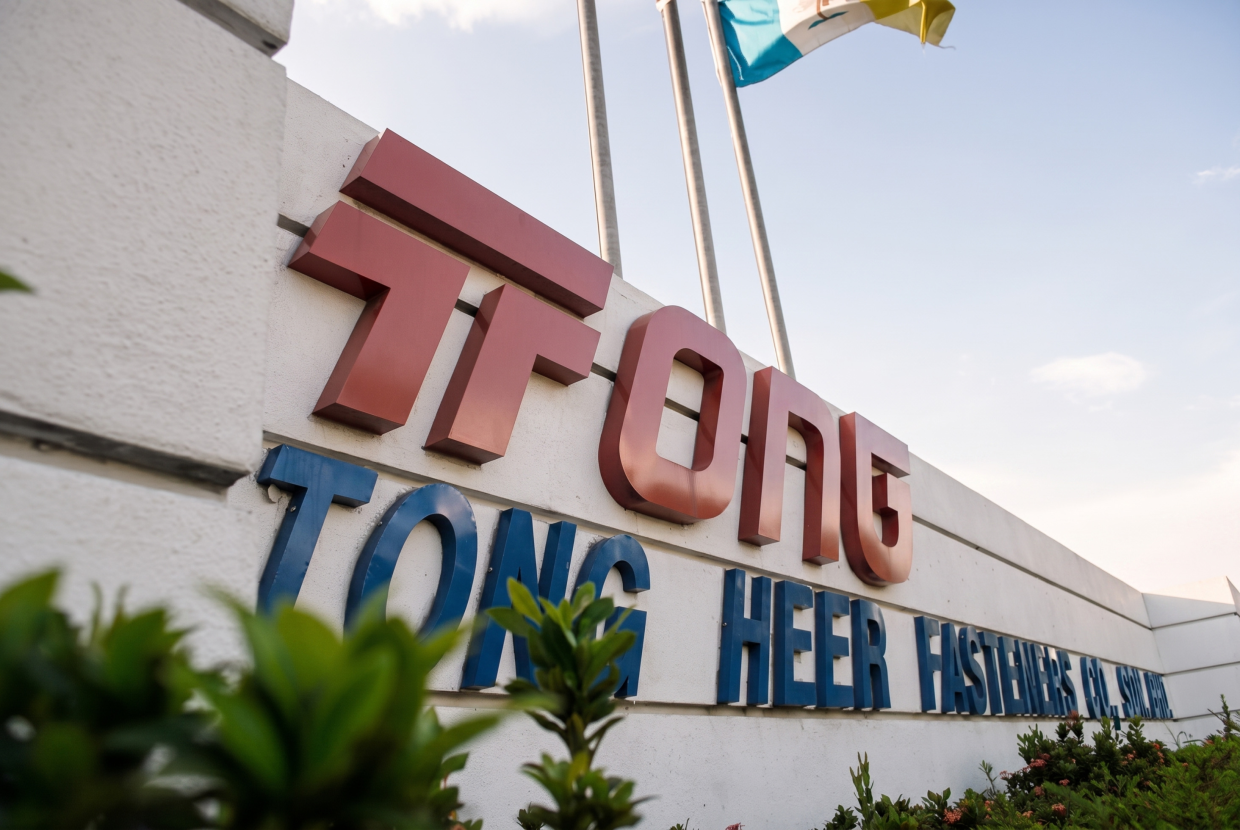
Tong Herr Sdn Bhd faces a major corporate restructuring as its principal shareholders have tabled a privatisation proposal valuing the stainless steel fasteners and aluminium extrusions manufacturer at RM2.55 per share. The offer represents a significant 34.2% uplift from the company's closing price of RM1.90, signalling an attempt to fairly compensate remaining investors before the business is delisted from Bursa Malaysia's Main Market. The proposal, formally announced to regulators, marks a pivotal moment for the 55-year-old fasteners firm as controlling interests chart a new course away from public market operations.
Allrich Corp and Richard Holdings Ltd, which collectively command 71.63% of Tong Herr's equity, have initiated the privatisation plan alongside joint ultimate offerors and persons acting in concert, bringing their combined stake to 114.38 million shares or approximately 74.5% of issued capital. The substantial ownership concentration underscores the feasibility of the transaction, though minority shareholders retain meaningful veto rights embedded within Bursa Malaysia's regulatory framework. This majority-minority dynamic will prove crucial as the proposal advances through approval processes requiring both shareholder consent and judicial oversight.
The pricing mechanism reflects a considered valuation methodology. The RM2.55 offer price incorporates closing price and volume-weighted average price data stretching back to August 5, 2026, yielding a 41.7% premium to the RM1.80 closing valuation recorded on that benchmark date. This dual-layered premium structure—both the 34.2% uplift from immediate pre-announcement prices and the 41.7% adjustment from the longer-reference date—demonstrates an intent by controlling shareholders to provide material inducement for minority holders to approve the scheme. The carefully calibrated pricing suggests prior engagement with corporate advisers evaluating fair value across multiple reference points.
Mechanically, the privatisation will proceed through a selective capital reduction and repayment exercise rather than a conventional share buyback or tender offer. This structural choice carries important implications for the company's balance sheet and shareholder treatment. By deploying the SCR mechanism, Tong Herr can efficiently reduce its share capital while returning value to participating shareholders in a tax-efficient manner under Malaysian corporate law. The approach also streamlines the path to delisting once minority approval and High Court confirmation are secured, avoiding protracted tender offer procedures that might delay the withdrawal of listing status.
The controlling shareholders articulated several strategic rationales for the privatisation move, centering on operational flexibility and capital efficiency. They contend that public company status imposes substantial ongoing compliance costs and diverts management attention from core business development and growth initiatives. For a manufacturing enterprise competing in competitive global fasteners and extrusions markets, the ability to redeploy resources previously allocated to investor relations, regulatory compliance, and quarterly earnings management toward product innovation and market expansion represents a tangible operational advantage. This logic resonates particularly within industrial manufacturing segments where long-term investment cycles often conflict with quarterly capital market expectations.
Liquidity constraints have emerged as a secondary but material justification. Tong Herr's trading activity has languished persistently, with average daily volumes of merely 21,075 shares recorded across the preceding three years—representing just 0.05% of the company's free float. This anaemic trading profile reflects a market perception that Tong Herr lacks sufficient public investor interest to warrant sustained listing, a phenomenon common among mid-sized manufacturers with concentrated ownership structures. The shallow trading environment imposes a dual penalty: minority shareholders encounter genuine difficulty exiting positions without market impact, while controlling interests bear the full cost burden of maintaining listing infrastructure to service a largely dormant public float. The privatisation proposal thus functions as a liquidity event for minority investors while addressing the inherent inefficiency of maintaining a public listing for a business lacking institutional following.
The transaction pathway demands approval across multiple gatekeepers before completion. Non-interested shareholders must vote in favour via extraordinary general meeting, requiring both a simple majority in shareholder count and 75% support by voting value among the non-interested class. Additionally, the proposal must not be rejected by more than 10% of voting value held by all non-interested shareholders—a stringent constraint designed to protect minority interests from potential abuse of controlling position. Beyond shareholder approval, High Court confirmation represents a critical final hurdle, ensuring judicial scrutiny of fair dealing and minority protection. These multi-layered approvals, while administratively burdensome, provide meaningful safeguards embedded within Malaysian corporate governance frameworks.
Tong Herr's independent directors have signalled their intention to thoroughly deliberate the proposal before committing to a corporate position. This measured approach reflects fiduciary obligations to examine whether the offered price appropriately reflects the company's intrinsic value and growth prospects, considerations particularly relevant given the stainless steel fasteners and aluminium extrusions sectors' exposure to infrastructure spending cycles and manufacturing sector cycles. The deliberation process may ultimately culminate in independent director recommendations either supporting or opposing the scheme, materially influencing minority shareholder voting behaviour and the transaction's ultimate fate.
The privatisation proposal carries broader implications for Malaysia's corporate landscape, where mid-sized manufacturers increasingly face pressure to choose between sustaining costly public listings or consolidating under private ownership. For investors holding minority stakes in thinly traded industrial companies, Tong Herr's proposal offers a rare exit opportunity at material premium valuations. Conversely, should minority shareholders reject the scheme, the company would persist in public markets with unchanged operational challenges and continued shareholder frustration over illiquidity. The coming weeks will reveal whether Tong Herr's controlling interests have calibrated their offer sufficiently to secure the supermajority support necessary for delisting and organisational transition.

