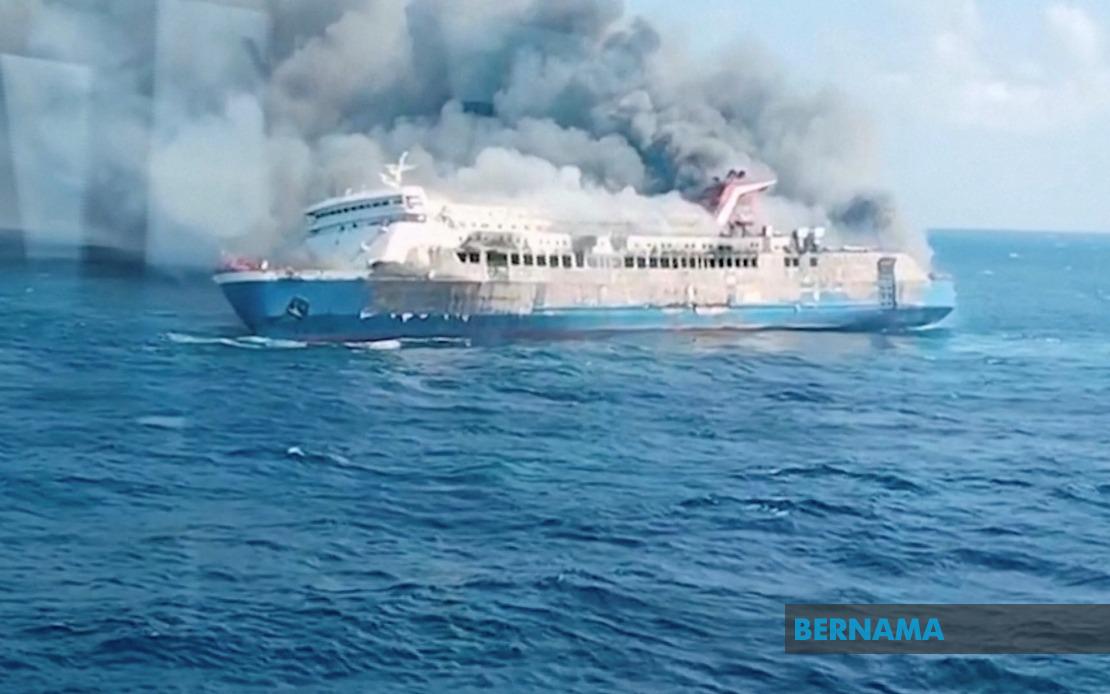
A major maritime disaster unfolded in Indonesian waters north of Madura when the passenger ferry KMP Mutiara Sentosa II caught fire during morning operations, prompting an intensive multi-agency rescue effort that entered its second day with expanded naval and air resources brought into the operation.
The incident occurred at approximately 8:24 am local time on August 2 when the vessel, which was ferrying 232 passengers and 39 crew members through the waters north of Sumenep, suddenly became engulfed in flames. The rapid spread of fire consumed much of the ferry, creating an urgent maritime emergency that captured the attention of multiple Indonesian authorities. By the following day, search and rescue operations had evolved into a coordinated deployment involving the nation's military alongside civilian maritime assets.
According to Nanang Sigit, the Chief of the Surabaya Search and Rescue Office, the expanded operation on August 3 drew upon significantly increased resources to locate those still unaccounted for. The deployment included the Indonesian National Armed Forces warship KRI Bung Hatta-370, the State Ship Grantin P.211, and patrol vessel Manyar 5003. Complementing the surface assets, a helicopter from the East Java Police was also mobilised to conduct aerial reconnaissance of the search zone, allowing rescue teams to cover a broader expanse of water more effectively.
The scale of the evacuation effort underscores both the severity of the situation and the rapid response of maritime authorities. By the second day of operations, 229 survivors had been systematically evacuated in stages and brought to Tanjung Perak Port in Surabaya for medical evaluation and treatment. This represented the successful rescue of the vast majority of those aboard, though the operation remained incomplete as dozens of individuals had yet to be located.
The human toll of the disaster was made evident through the recovery of five victims, whose bodies were transported to Bhayangkara H.S. Samsoeri Mertojoso Hospital in Surabaya for formal identification and examination. The disparity between the number of survivors evacuated and the total number of people aboard—271 in total—meant that nearly 40 individuals were still being sought by rescue teams as operations continued into their second full day.
This incident reflects the ongoing challenges faced by Indonesian maritime authorities in managing passenger safety across the archipelago's busy shipping lanes. The Madura waters north of Sumenep carry considerable traffic, and ferries operating in this region serve as vital transportation links for communities across East Java. The rapid deployment of military assets, while necessary in this emergency situation, also highlights the resource constraints often faced by civilian search and rescue agencies when responding to large-scale maritime emergencies.
For Malaysian observers and the broader Southeast Asian maritime community, such disasters serve as important reminders of the critical importance of maintained vessel safety protocols and crew preparedness. The successful evacuation of the majority of those aboard suggests that emergency procedures, whether mandated by international maritime law or implemented through local regulation, functioned adequately under extreme circumstances. However, the number of missing individuals indicates that gaps may exist in either the execution of safety measures or the design of evacuation protocols.
The involvement of the TNI warship, alongside state-operated maritime assets and regional police resources, demonstrates the integrated approach Indonesian authorities have adopted for large-scale maritime rescue operations. This multi-agency coordination model has become increasingly sophisticated in recent years, though the speed and comprehensiveness of response can still be constrained by factors such as the distance of vessels to the incident location and the availability of specialised equipment for operations in challenging sea conditions.
As search operations continued on August 3, the focus remained on locating those still missing and clarifying the full circumstances of how the fire originated and spread so rapidly through the vessel. Preliminary observations indicated that substantial portions of the ferry had been destroyed by flames, suggesting a fire that overcame the vessel's structural integrity relatively quickly. Understanding these dynamics will be crucial for Indonesia's maritime regulatory authorities as they conduct their inevitable post-incident investigation.
For regional stakeholders involved in maritime commerce and passenger transport throughout Southeast Asia, the KMP Mutiara Sentosa II incident will likely prompt renewed scrutiny of fire safety systems aboard older vessels still operating on regional routes. As economies in the region continue to depend heavily on maritime transport for both cargo and passenger movement, ensuring that vessels meet contemporary safety standards remains an ongoing challenge that affects multiple nations across the region.
The tragedy also underscores the importance of coordinated emergency response capabilities at both national and potentially regional levels. While Indonesian authorities demonstrated their ability to mobilise resources quickly, the incident highlights how maritime disasters—by their nature occurring in jurisdictions that span national boundaries—may benefit from pre-established protocols for mutual assistance that could enhance response capabilities beyond what individual nations can provide in isolation.

