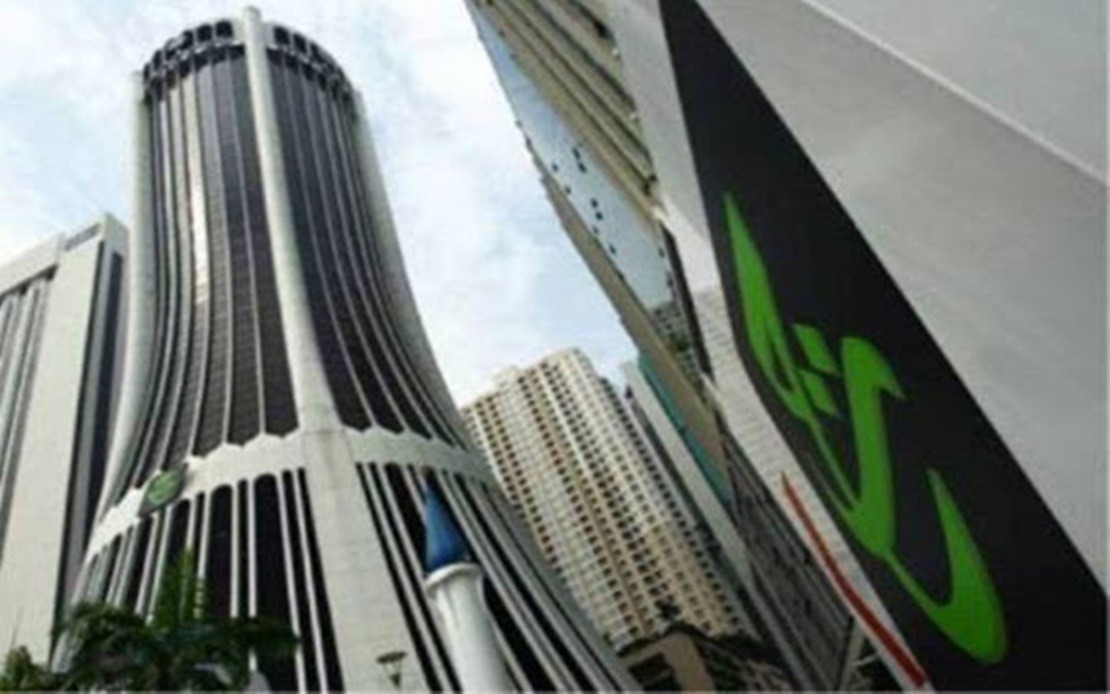
The Royal Commission of Inquiry's examination of Tabung Haji's operations between 2014 and 2020 has uncovered a troubling gap in the institution's asset valuation methodology, with economists warning that reliance on internal management estimates rather than independent professional appraisals creates substantial financial risks for Malaysia's pilgrimage fund. According to the RCI report released in late July, only RM556 million of the total RM4.6 billion property asset valuation for 2017 was supported by reports from qualified professional valuers, leaving RM4.044 billion dependent entirely on management estimates—a practice that experts say exposes the institution to systematic overstatement of asset values.
Prof Emeritus Dr Barjoyai Bardai from Malaysia University of Science and Technology argues that when management determines asset valuations without external verification, the institution becomes vulnerable to what he describes as "overly optimistic" valuations. The fundamental problem lies not in proving deliberate misconduct has occurred, but rather in recognizing that internal estimates, however well-intentioned, cannot provide the rigour and independence that comes from qualified external valuers. This distinction matters because managers inherently have a vested interest in how their institution's financial health is presented to depositors and regulators, creating an incentive structure that may unconsciously bias valuations upward.
The consequences of inflated asset values ripple through TH's entire financial framework. When the Realisable Asset Value appears artificially high because properties are valued above their actual market realisable worth, the institution's financial position can appear substantially stronger than underlying economic reality suggests. This optical illusion then creates capacity for dividend distributions—known as hibah payments—at levels that prudent financial management would not ordinarily permit. Depositors might receive distributions that exceed what the institution's true asset base can sustainably support, effectively distributing borrowed capital rather than genuine returns, a practice that jeopardizes long-term institutional viability.
Barjoyai recommends a comprehensive restructuring of TH's valuation governance framework, arguing that high-value properties must be subjected to independent valuations using consistent methodologies anchored to verifiable market evidence. Beyond individual appraisals, the Realisable Asset Value calculations themselves require governance reform—clear standards that are independently audited and verified by specialized committees comprising investment professionals and qualified accountants. The principle he articulates is fundamental to institutional finance: figures used to determine distribution capacity must be conservative rather than optimistic, verifiable through multiple independent sources, and insulated from the influence of parties with financial incentives in the outcomes.
Prof Dr Ahmed Razman Abdul Latiff of Putra Business School extends this critique to institutional governance structures themselves. The board of directors and audit committees bear fiduciary responsibility to scrutinize management assumptions with appropriate scepticism before permitting those assumptions to drive material financial decisions. When estimates carry significant implications—as asset valuations do for an institution's financial position and dividend capacity—they should traverse multiple layers of independent review rather than receiving cursory approval. The stakes were particularly high in TH's case because Realisable Asset Value directly determines compliance with Section 22 of the Tabung Haji Act 1995, the statutory framework governing how much of depositors' funds may be distributed as hibah payments.
Ahmad Razman raises a troubling question about the preceding audit process: why did professional external auditors, reviewing these figures in prior years, not flag the concentration of asset valuations on management estimates as a material governance concern requiring higher scrutiny? The RCI's findings suggest that external audit oversight may have been insufficient, failing to properly challenge TH management's valuation methodologies or to demand the level of independent verification that responsible financial stewardship requires. This raises the possibility of either internal control failures within the audit function, potential misrepresentation of asset values, or in a more serious scenario, deliberate manipulation of figures to present a stronger financial position than actually existed.
The technical mechanics of the valuation problem compounds these governance failures. According to audit documentation cited by the RCI, TH management calculated Realisable Asset Value based on management estimates rather than market prices for listed shares or independent professional property valuations. Notably, RM2.294 billion relating to TH Plantations Berhad was incorporated into these calculations despite the absence of robust supporting valuations, representing nearly half of the property asset valuation figure. More troublingly, when TH determined profit distributions to depositors, it deliberately departed from asset and liability figures that appeared in its own audited financial statements, instead using the higher Realisable Asset Value figures to meet statutory requirements. This selective application of valuation methodologies suggests a systematic approach to generating higher distribution capacity, whether intentional or through organizational bias toward optimistic interpretations.
TH management defended its methodology by arguing that Section 22 of the Tabung Haji Act 1995 did not provide explicit definitions of which assets should be included in calculations, therefore claiming discretion to determine valuation approaches independently. This legalistic interpretation, even if technically defensible, reflects a troubling approach to fiduciary responsibility—treating ambiguity in legislation as authorization for management discretion rather than as an invitation to exercise heightened conservatism. The approach created an asymmetry in how TH treated favorable and unfavorable valuations: rising asset values were incorporated into Realisable Asset Value calculations, yet investments whose market prices had fallen to very depressed levels were not adjusted downward, further skewing the valuation framework toward presenting stronger financial positions.
For Malaysian depositors and the broader financial system, these findings carry substantial implications. Tabung Haji serves millions of Malaysian Muslims saving for pilgrimage, representing accumulated lifetime savings for many families. When valuation frameworks are sufficiently loose to permit management to generate inflated asset values, the institution's capacity to meet future obligations becomes uncertain. Should market conditions deteriorate or should depositors need to withdraw funds on a larger scale than anticipated, an institution that has distributed hibah based on overstated asset values could face a liquidity crisis. The RCI's examination thus exposes not merely a technical accounting problem but a fundamental institutional risk affecting financial security for a substantial portion of Malaysian households.
The governance framework that TH requires moving forward must embed conservatism as an institutional principle rather than treating ambiguous legislation as license for optimistic interpretation. Asset valuations should reflect realistic prices that could be achieved in orderly market transactions, not best-case management scenarios. Standards for calculating distribution capacity should be transparent, subjected to independent verification, and guided by qualified specialist committees rather than management alone. The RCI's findings suggest that without such reforms, TH risks allowing accumulated financial pressures to build invisibly within its balance sheet until crisis forces recognition of the gap between presented financial position and underlying economic reality. For other major Malaysian institutions handling public funds or managing beneficiary assets, the TH experience offers a cautionary lesson about the governance risks that emerge when professional valuation standards are subordinated to management discretion.

