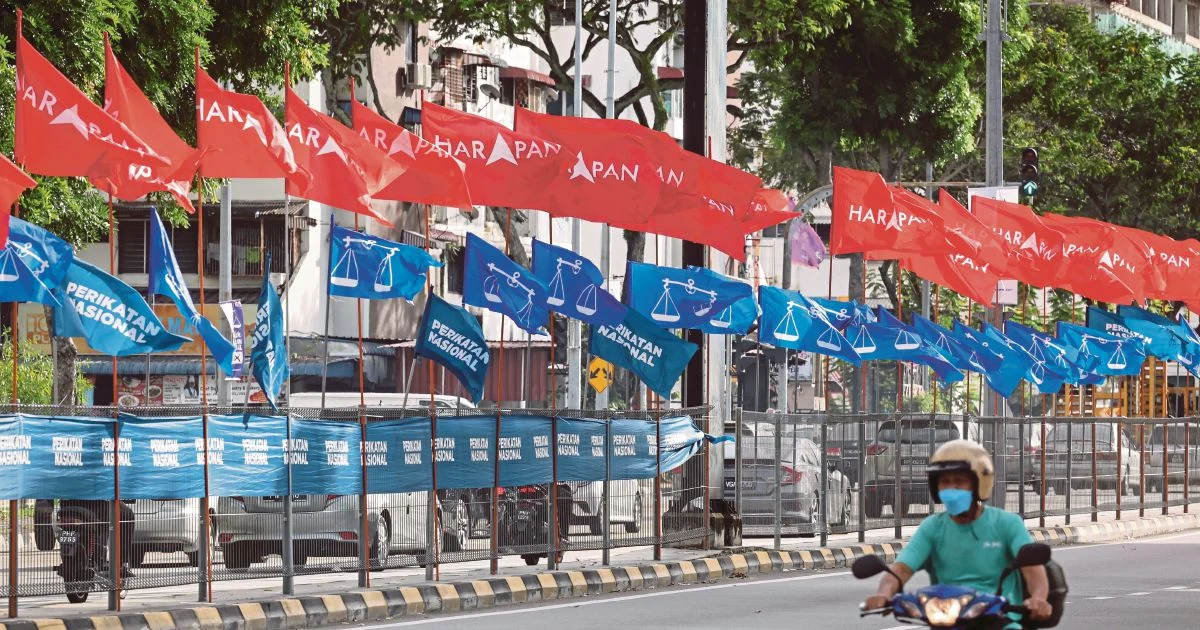
The Johor state election next month will feature unprecedented three-way contests across nearly 60 per cent of all constituencies, with Barisan Nasional, Pakatan Harapan and Perikatan Nasional each fielding candidates in the same 33 seats. This concentration of multi-cornered battles reflects the shifting political dynamics in Malaysia's southern heartland, where the traditional dominance of BN faces serious challenges from two competing opposition alliances simultaneously.
The emergence of such widespread three-cornered contests marks a significant departure from Johor's electoral history, where BN has traditionally maintained control through a more fragmented opposition vote. The simultaneous presence of PH and PN across nearly two-thirds of the state's constituencies indicates both coalitions view Johor as crucial to their national political trajectories. For PH, retaining ground gained in the 2022 federal election is essential; for PN, establishing a foothold in the resource-rich state could reshape its status as a kingmaker or potential government alternative.
Barisan Nasional enters the contest as the incumbent state government, having governed Johor continuously since independence except for brief periods. However, its performance in recent federal elections has revealed declining support among younger voters and urban communities, particularly in constituencies surrounding Kuala Lumpur and Johor Baru itself. The party faces the dual challenge of defending traditional rural strongholds while attempting to recapture urban areas where PH made significant inroads. The concentration of three-way contests in 33 seats suggests BN believes it can retain majority support even when split between two opposition challengers, yet this assumption carries considerable risk if either PH or PN emerges as the dominant alternative voice.
Pakatan Harapan's strategy centres on consolidating the urban and semi-urban constituencies where it performed strongly in 2022, while attempting to expand into middle-ground areas where voter sentiment remains fluid. The fact that PH is contesting all three-cornered races indicates confidence in its ability to mobilise sufficient support despite splitting the anti-BN vote with PN. The coalition's narrative emphasises reform, fighting corruption, and delivering promised development projects, themes that resonate particularly with younger Johoreans and professional classes. However, PH must navigate the risk that three-way contests could inadvertently benefit BN if the anti-incumbent vote fragments.
Perikatan Nasional's decision to contest 33 of these three-way battles reflects its ambition to expand beyond Peninsular Malaysia's northern and east-coast states, where it currently maintains strongholds. For PN, particularly its dominant component Bersatu, Johor represents an opportunity to build a southern counterweight to PH's growing influence. The coalition's appeal to Malay-Muslim voters and its anti-establishment positioning have generated momentum, especially among rural communities frustrated with economic pressures and perceived inequities. PN's presence in Johor could fracture Malay-Muslim support traditionally consolidated under BN, potentially shifting seat distributions dramatically.
The regional implications of Johor's election extend well beyond state boundaries. Johor's economy, manufacturing base, and position as Malaysia's gateway to Singapore make it strategically vital to any government's development agenda. An election outcome that strengthens PH or PN could indicate shifting national sentiment, particularly if either alliance significantly erodes BN's dominance. Conversely, a strong BN performance despite the three-way contests would signal that the coalition's organisational machinery and rural networks remain resilient against fragmented opposition challenges. For Southeast Asia's broader political context, Johor's result may influence how Malaysian politics positions itself relative to ASEAN partners increasingly concerned about democratic stability and institutional integrity.
The concentration of three-way contests in 33 constituencies means that vote efficiency becomes critically important for all three coalitions. In such contests, a candidate need not secure a majority but merely more votes than any individual opponent, making tactical voting and candidate selection decisions exceptionally consequential. Small variations in turnout, demographic shifts, or last-minute campaign momentum could swing multiple seats unexpectedly. Constituencies where all three blocs have mounted serious campaigns are likely to see elevated voter interest but also higher levels of campaign spending and potential electoral disputes.
For Malaysian voters, particularly those in Johor, the proliferation of three-way battles introduces both opportunities and complications. On one hand, voters gain genuine choices among distinct political visions and leadership teams. On the other, the absence of clear two-coalition frameworks may confuse messaging, particularly among less politically engaged citizens. The Johor election will test whether Malaysian electorates can navigate complex multi-cornered contests while maintaining focus on local development priorities, service delivery, and accountability—factors that often determine actual governance quality regardless of party labels.
As election preparations intensify over the coming weeks, the strategic positioning of BN, PH and PN across Johor's 56 seats will become clearer. The concentration in 33 three-way contests suggests organisers expect a competitive election where no coalition can assume victory on traditional strength alone. This outcome reflects Malaysia's evolving political maturity, where voter preferences have become less predictable and more responsive to immediate governance performance than historical party loyalty. For Malaysia's democracy, such fluidity carries both risks and rewards, testing institutional capacity while potentially improving overall responsiveness to citizen demands.

