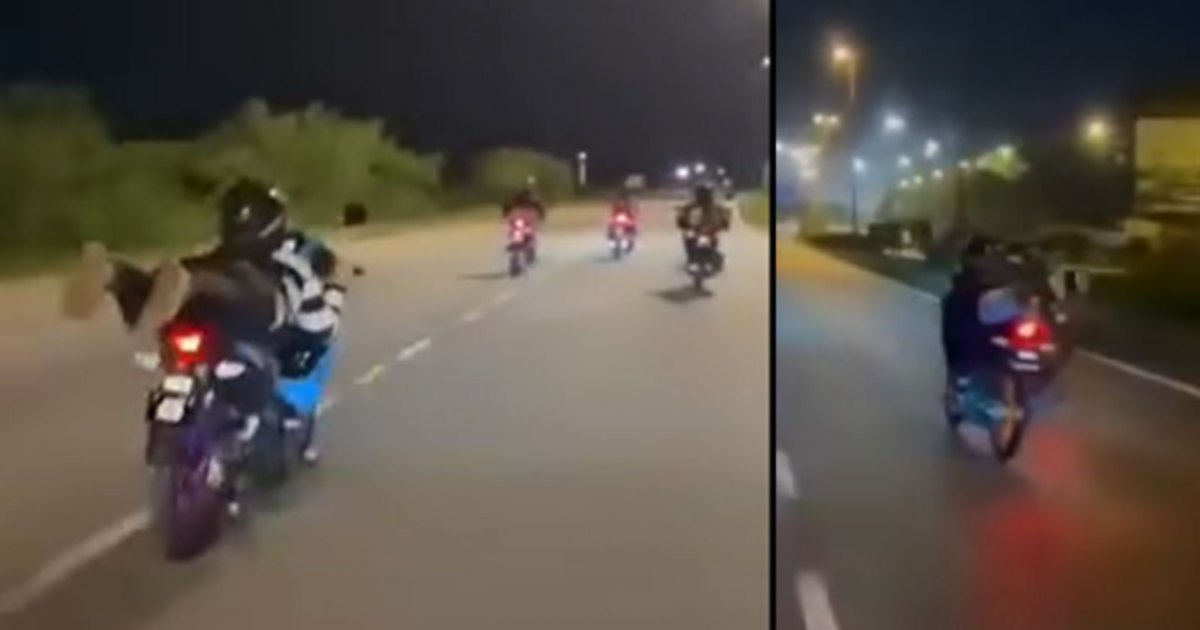
Police in Kuantan have detained three teenage girls following their involvement in viral motorcycle stunts that caught the attention of authorities last week. The reckless behaviour, which involved performing 'Superman' manoeuvres on a motorcycle along Jalan Kuantan Bypass-Gebeng road, generated significant social media attention and prompted law enforcement intervention. The arrests represent an escalating concern among Malaysian authorities regarding dangerous stunt-riding that puts young people and the public at serious risk.
The 'Superman' stunt, a dangerous motorcycling trick where riders stand upright on their seats or lean dramatically off motorcycles while vehicles remain in motion, has become increasingly prevalent among youth across Southeast Asia. These acrobatic displays, though eye-catching, eliminate rider control and create unpredictable hazards for other road users. The viral nature of such content on social media platforms has transformed these dangerous acts into status symbols among teenagers, encouraging imitation and escalation of risky behaviours.
The incident on Jalan Kuantan Bypass-Gebeng road is particularly concerning given the road's heavy traffic volume and high-speed traffic patterns. This major thoroughfare, connecting Kuantan to surrounding industrial areas, handles thousands of vehicles daily, making it an especially inappropriate and hazardous location for such stunts. The decision by these teenagers to perform such dangerous manoeuvres in a high-traffic zone suggests alarming judgement and raises questions about road safety awareness among younger riders.
In Malaysia, motorcycle-related incidents already constitute a significant portion of road fatalities and injuries. According to recent traffic data, two-wheeler accidents represent roughly one-third of all road deaths nationally. Young riders aged 16-25 are disproportionately represented in these statistics, often due to inexperience, overconfidence, and engagement in risky riding practices. The emergence of stunt-riding trends amplifies these existing dangers and creates additional burdens on emergency services and healthcare systems already stretched by conventional traffic incidents.
The viral amplification of such stunts through social media platforms presents a modern challenge for law enforcement and child safety advocates. When dangerous behaviour gains online visibility, it creates a self-reinforcing cycle where peers feel compelled to replicate and document similar acts to gain social recognition. This phenomenon has prompted authorities across the region to increase surveillance and enforcement around accident-prone areas while simultaneously working with digital platforms to remove glorifying content.
The detention of these three teenage girls serves as a reminder of the legal consequences associated with reckless riding. Malaysian traffic laws impose penalties for dangerous driving practices, and law enforcement has increasingly prioritised prosecuting stunt-riders following high-profile incidents and fatalities. These cases set important precedents and signal that authorities take motorcycle safety violations seriously, regardless of the age of perpetrators.
Parental responsibility and educational interventions remain crucial components in addressing this issue. Many parents remain unaware of their teenagers' online activities and the risks they may be taking on roads. Schools and community organisations increasingly incorporate motorcycle safety education and digital literacy programmes to help young people understand consequences and make better decisions. The involvement of teenage girls in this incident, though smaller in absolute numbers, reflects the broadening demographic of young riders engaging in risky behaviour.
Road safety advocates and traffic experts have repeatedly warned that viral social media trends featuring dangerous stunts contribute to a normalisation of risky behaviour among youth. The temporary thrill and social media validation associated with such acts carry negligible benefit compared to the genuine risks of serious injury or death. Medical professionals regularly treat young patients with life-altering injuries sustained from motorcycle accidents, many involving preventable stunts or reckless riding.
Beyond immediate enforcement, addressing the motorcycle stunt phenomenon requires multi-faceted approaches encompassing stricter platform moderation policies, enhanced driver education curricula, increased visible policing on high-risk routes, and community awareness campaigns. Authorities across Malaysia and Southeast Asia increasingly recognise that treating symptoms through arrests alone proves insufficient; understanding and addressing underlying motivations—peer pressure, desire for recognition, and inadequate risk perception—becomes essential for sustainable change.
The incident underscores the ongoing challenge Malaysian authorities face in balancing youth freedom with public safety. While teenagers possess natural inclinations toward exploration and risk-taking, societal responsibility requires creating environments where such impulses do not translate into actions endangering both themselves and innocent road users. The case of these three Kuantan teenagers will likely inform ongoing discussions regarding juvenile sentencing, rehabilitation approaches, and preventative strategies targeting vulnerable populations susceptible to dangerous social media trends.

