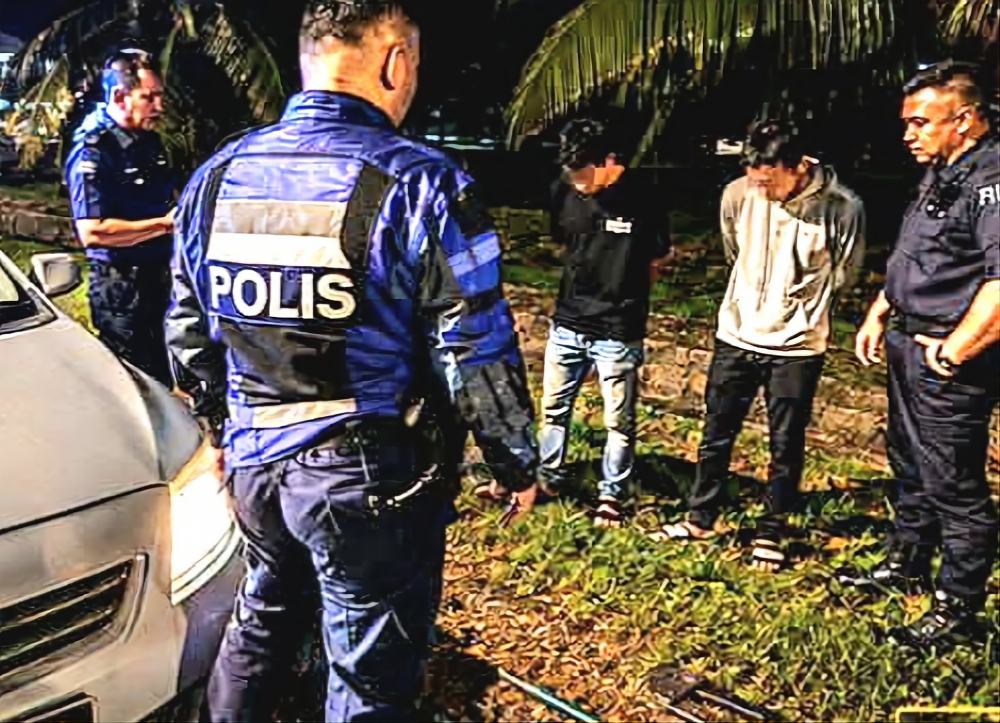
Three men from Sibu were taken into custody on August 7 following a dramatic pursuit that saw police chase their vehicle through the streets of the Sarawak capital. The incident began when officers attempted to stop the vehicle for inspection, but the occupants chose instead to evade law enforcement, prompting a chase that tested both driver skill and police response capabilities in the town.
The pursuit tested local law enforcement's resources as the vehicle weaved through Sibu's traffic before eventually being intercepted by officers. Police sources indicated that the decision to flee rather than comply with a routine stop raised immediate suspicions about the men's activities and intentions. The chase itself drew attention from residents and demonstrated the seriousness with which local authorities treat non-compliance with police directives.
Once apprehended, the three suspects were transported to a local police station for questioning and processing. Authorities have not yet disclosed the specific reasons officers initially sought to stop the vehicle, though the men's choice to flee suggested they may have anticipated legal difficulties. Investigations typically intensify significantly once a suspect attempts to evade police, as such behaviour often indicates awareness of wrongdoing.
The incident highlights ongoing law enforcement challenges in Sibu, where traffic monitoring and vehicle compliance checks remain routine but sometimes yield unexpected complications. Police in the town have increasingly deployed resources toward traffic and public safety operations, particularly on main routes where vehicle checks are conducted. The ability of officers to successfully conclude such pursuits without major incident reflects the training and coordination among Sibu's police units.
Situations like these are not uncommon in Malaysian towns, where police conducting standard vehicle inspections occasionally encounter drivers unwilling to cooperate. The decision to flee rather than stop compounds the severity of any initial suspected offence, automatically introducing charges related to evading police and obstructing justice. Prosecutors often view such behaviour as demonstrating consciousness of guilt and use it as evidence in subsequent legal proceedings.
The three men now face questioning regarding both the initial reason for the police stop and the circumstances of the chase itself. Authorities will seek to determine whether the vehicle was involved in previous incidents, whether passengers were wanted for other matters, or whether the vehicle itself was subject to security concerns. Documentation checks and criminal history reviews form standard components of such investigations in Malaysian jurisdictions.
For Sibu residents, incidents of this nature serve as reminders of the risks inherent in traffic enforcement work and the unpredictable nature of routine police stops. Officers conducting such operations must balance thoroughness with personal safety, knowing that vehicles they approach may be operated by individuals with reasons to avoid detection. Training protocols emphasise de-escalation and backup coordination to minimise dangers during such stops.
The arrest also reflects broader patterns in Sarawak's law enforcement landscape, where state and federal police coordinate on matters spanning traffic, public order, and criminal investigation. Sibu, as a major commercial hub, experiences significant vehicle movement, making systematic monitoring and compliance checks essential to maintaining road safety standards and preventing criminal activity. The police presence in such centres must remain both visible and effective to deter violations.
The case will now proceed through the Malaysian criminal justice system, with the suspects either charged with specific offences or released pending further investigation. The charges they ultimately face will likely include fleeing police, evading a lawful stop, and potentially related traffic or criminal offences depending on what authorities discover during their inquiry. Such cases typically move through the courts within weeks, with outcomes dependent on evidence quality and witness testimony.
This incident underscores the importance of complying with lawful police directives in Malaysia, where refusing to stop for authorised checks carries serious legal consequences. Citizens who attempt to evade police invariably face additional charges beyond any original suspected offence, substantially increasing their legal jeopardy. Public education about the consequences of non-compliance remains an ongoing priority for Malaysian law enforcement agencies across all states.

