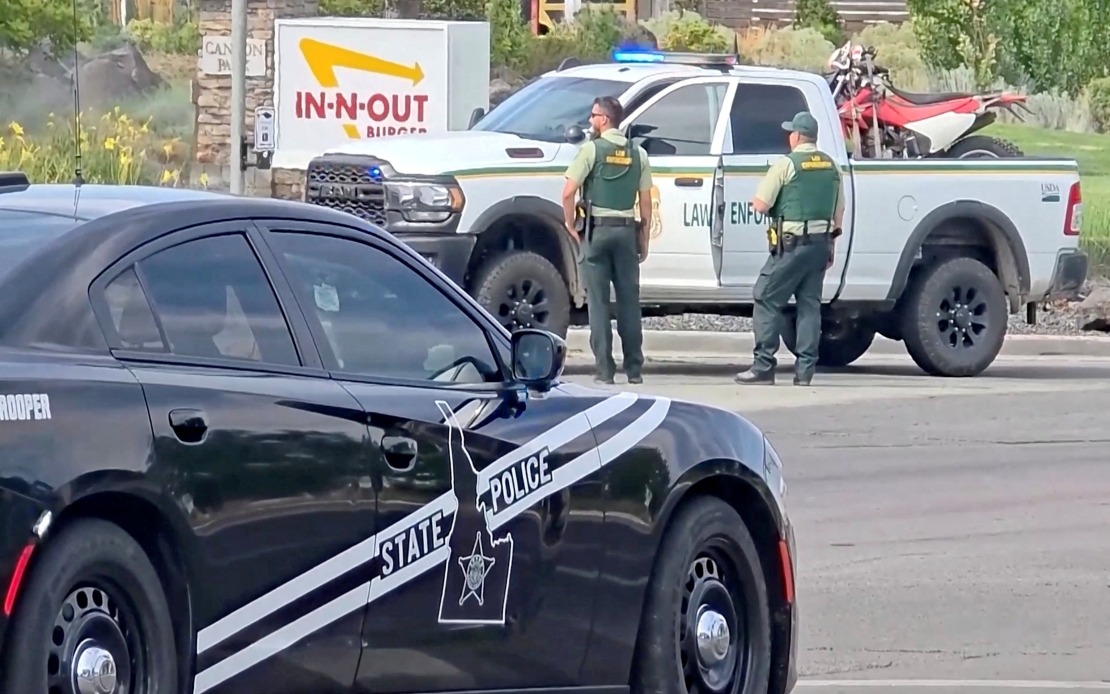
A shooting rampage at an In-N-Out Burger restaurant in Twin Falls, Idaho has left three people dead and seven more wounded, authorities reported following the incident on Saturday afternoon. The attack unfolded in a busy shopping plaza during peak hours, with hundreds of shoppers and diners in the vicinity when gunfire erupted around 2 pm local time.
Police responded swiftly to the scene, where they subsequently located the body of the suspected shooter in an area adjacent to the restaurant. Twin Falls Police Chief Matthew Hicks announced at a press conference that law enforcement believed the immediate threat to the community had been neutralised, though investigators stressed that identifying the gunman and determining his motive remained priorities in the ongoing investigation.
According to Joshua Palmer, the city's public information coordinator, several of those injured sustained critical wounds requiring immediate medical attention. The full extent of injuries across the seven wounded victims had not been fully disclosed at the time of reporting, though hospital officials were expected to provide updates as treatment progressed.
The location of the shooting—a busy commercial shopping district—meant that a substantial number of bystanders were present during the attack. Palmer noted that hundreds of people occupied the area at the time, creating a chaotic scene as emergency responders arrived and secured the perimeter. The density of shoppers in the vicinity also complicated initial police operations as officers worked to locate and contain the threat.
Authorities had not yet released the identities of the deceased or injured victims at the time of the announcement, citing the need to notify families first. This standard protocol, while necessary from a humanitarian perspective, meant that the immediate aftermath saw significant public uncertainty regarding who had been affected. The investigation's ongoing nature also meant that police were still gathering evidence and witness statements to establish a comprehensive timeline of events.
The shooting represents another instance of gun violence in the United States, where mass casualty incidents at public venues have become an recurring concern. Idaho, traditionally viewed as a safer state compared to national averages, has nonetheless experienced its share of such incidents in recent years. The attack at the busy restaurant raised immediate questions about public safety in commercial spaces and whether additional security measures might be warranted at high-traffic locations.
Twin Falls, a city of approximately 50,000 residents in southern Idaho, has historically maintained lower crime rates than many comparable communities. The shooting in the downtown shopping plaza therefore came as a shock to residents accustomed to relative safety in their community gathering spaces. Questions regarding the shooter's identity and any potential connections to the area remained unanswered as police pursued their investigation.
The incident occurred during weekend afternoon hours when such establishments typically experience heavy foot traffic. The timing meant that families with children were likely present, adding another tragic dimension to the event. Police maintained a significant presence at the scene for hours following the shooting as forensic teams gathered evidence.
For Malaysia and Southeast Asian readers, this incident underscores the broader debate surrounding gun access and public safety that has intensified in the United States. While Malaysia maintains strict firearm regulations that make such mass casualty shootings virtually non-existent, the American context of widespread gun ownership creates vastly different public safety challenges. The incident also highlights how sudden violence can strike even in seemingly safe, ordinary commercial spaces, a reality that resonates with concerns about personal security in public areas globally.

