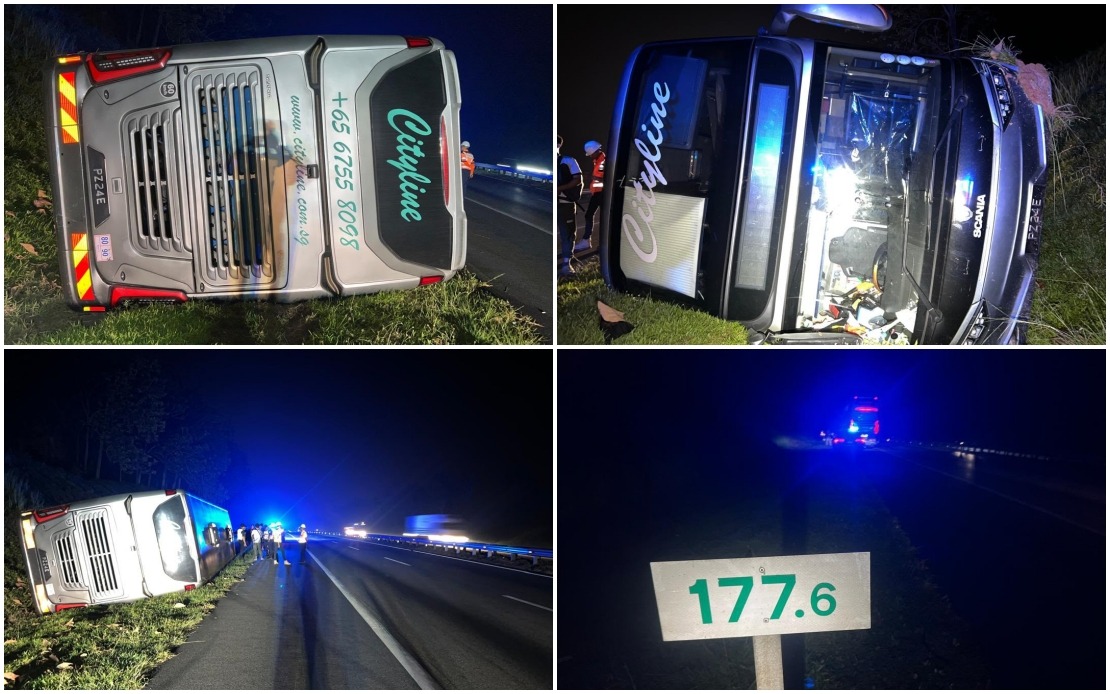
An early morning accident on the North-South Expressway's northbound carriageway has left three people requiring hospital treatment after a tour bus carrying international visitors overturned near Jasin in Melaka. The incident occurred at Kilometre 177.6 when the bus, which was transporting tourists from Singapore towards Kuala Lumpur, veered sharply to the left before rolling over. Authorities responded to reports of the accident shortly after 5 am, finding the vehicle on its side with multiple injured passengers requiring immediate attention.
According to Jasin district police chief Supt Lee Robert, the three injured individuals sustained head and leg injuries that necessitated hospital care. The victims included a 59-year-old Malaysian tour guide employed on the bus, a 62-year-old Singaporean passenger, and a 42-year-old British national. All three were transported to Jasin Hospital for treatment and assessment of their injuries. The severity of their conditions and current medical status remain to be detailed by hospital authorities.
Investigations into the accident's cause have revealed a sequence of events that painted a picture of a driver making a sudden evasive manoeuvre. The tour bus had been carrying a total of 12 people including the driver and the tour guide when the incident occurred. As the vehicle travelled northbound on the expressway, a heavy lorry ahead of it suddenly reduced speed. The bus driver, faced with the prospect of a rear-end collision, took immediate action to avoid striking the heavier vehicle by steering sharply to the left.
However, this sudden steering input proved disastrous. Rather than successfully passing the lorry, the bus lost directional stability and veered completely off the left side of the expressway. The sequence of events unfolded with alarming speed, and within moments the vehicle had overturned, leaving it stranded at the roadside in an unstable position. The rapid escalation from what should have been a routine overtaking manoeuvre to a serious accident highlights the dangers of high-speed navigation on Malaysia's expressway network, particularly when drivers must make split-second decisions with large, heavy vehicles that have limited manoeuvrability.
The North-South Expressway is one of Malaysia's busiest and most important transportation corridors, connecting major cities and handling substantial volumes of both commercial and passenger traffic daily. The expressway's high speeds and heavy vehicle concentration create inherent risks, and incidents like this accident underscore the importance of vehicle spacing, speed management, and driver vigilance. For tour operators managing long-distance journeys, the accident serves as a sobering reminder of the hazards inherent in moving passengers safely across the country's extended highway network.
International tourist incidents on Malaysian expressways carry particular significance given the country's reliance on tourism revenue and the importance of maintaining visitor confidence in local transportation safety standards. The involvement of a Singaporean and a British national in this accident reflects the substantial cross-border travel that takes place along the North-South Expressway, with many tourists utilising coach services to explore Malaysia's attractions. Such incidents inevitably generate concerns among potential visitors regarding the safety standards of Malaysian public transport operators and the conditions of the nation's highway infrastructure.
The police investigation into the accident will likely examine multiple factors beyond the immediate cause. Authorities may scrutinise the tour bus operator's safety procedures, the driver's experience and fatigue levels given the early morning timing, vehicle maintenance records, and whether the bus was operating within prescribed speed limits. The investigation will also consider whether the lorry driver's sudden braking was justified and whether there were any visibility or road condition factors that contributed to the sequence of events.
From a broader transportation safety perspective, this accident highlights ongoing concerns within Malaysia's logistics and tourism industries regarding highway safety management. Tour operators managing international passengers face particular responsibility in ensuring their vehicles, drivers, and operational procedures meet international safety standards. The expressway system itself continues to experience periodic incidents involving heavy vehicles and coaches, prompting recurring discussions among industry stakeholders about whether current safety standards are adequate or whether additional interventions are needed.
For passengers injured in such incidents, the path to recovery extends beyond immediate medical treatment. While the three victims have been admitted to hospital for their physical injuries, the psychological impact of experiencing a vehicle rollover often presents longer-term challenges. International tourists, in particular, may face complex considerations regarding medical follow-up, insurance claims, and their future willingness to travel by coach in Malaysia. Tour operators will need to support affected passengers and manage potential reputational consequences.
The incident occurred during the early morning hours when expressway traffic typically transitions from overnight volumes to morning peak periods. At 5 am, the northbound carriageway would have featured moderate traffic density with a mix of long-distance travellers, international tourists, and commercial vehicles. The timing and circumstances of this accident suggest that maintaining constant alertness and defensive driving techniques remains essential for all expressway users, particularly those operating large vehicles with multiple passengers depending on their navigation skills.

